Latest News Updates

img
14 April 2026
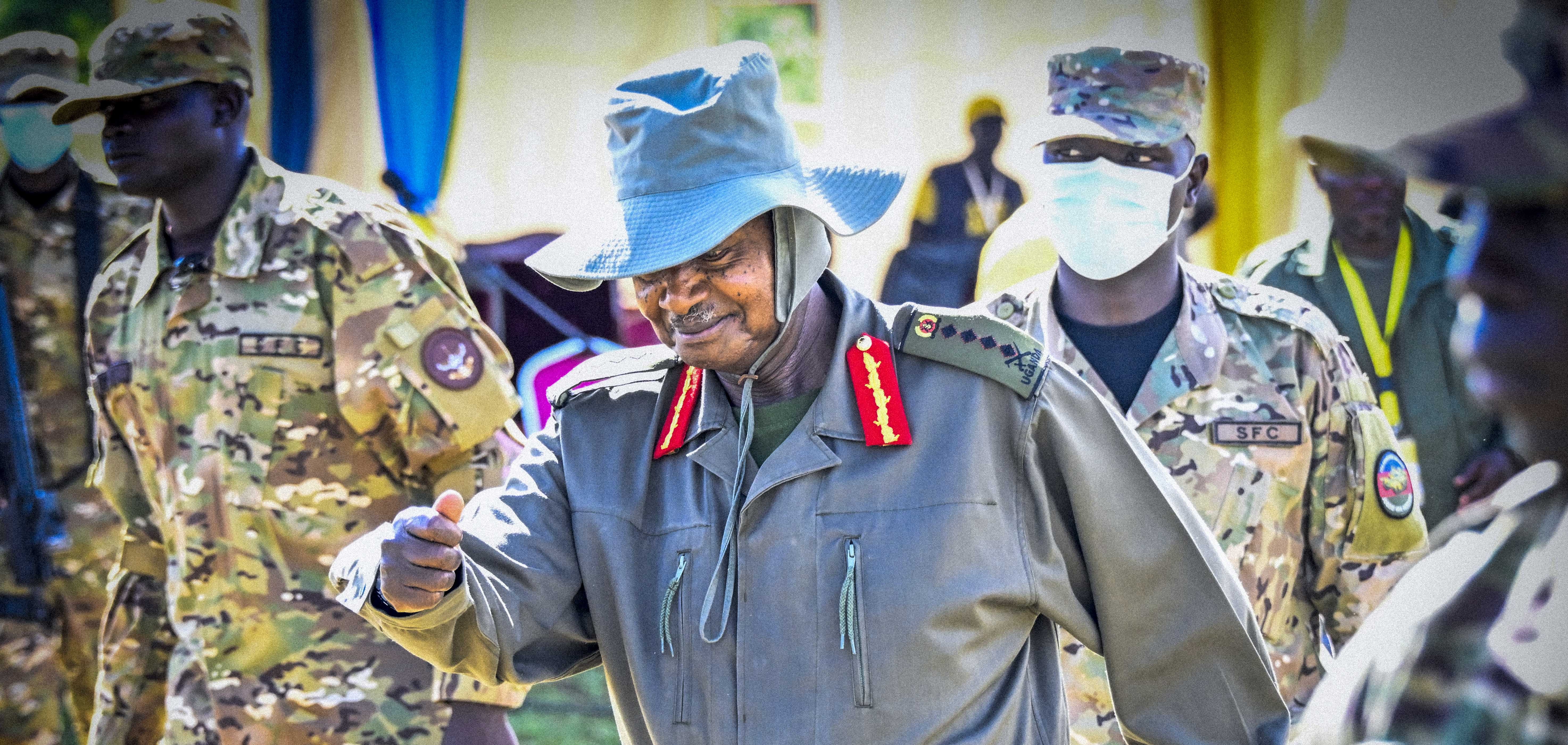
GENERAL MUHOOZI KAINERUGABA’S 52ND BIRTHDAY RUN

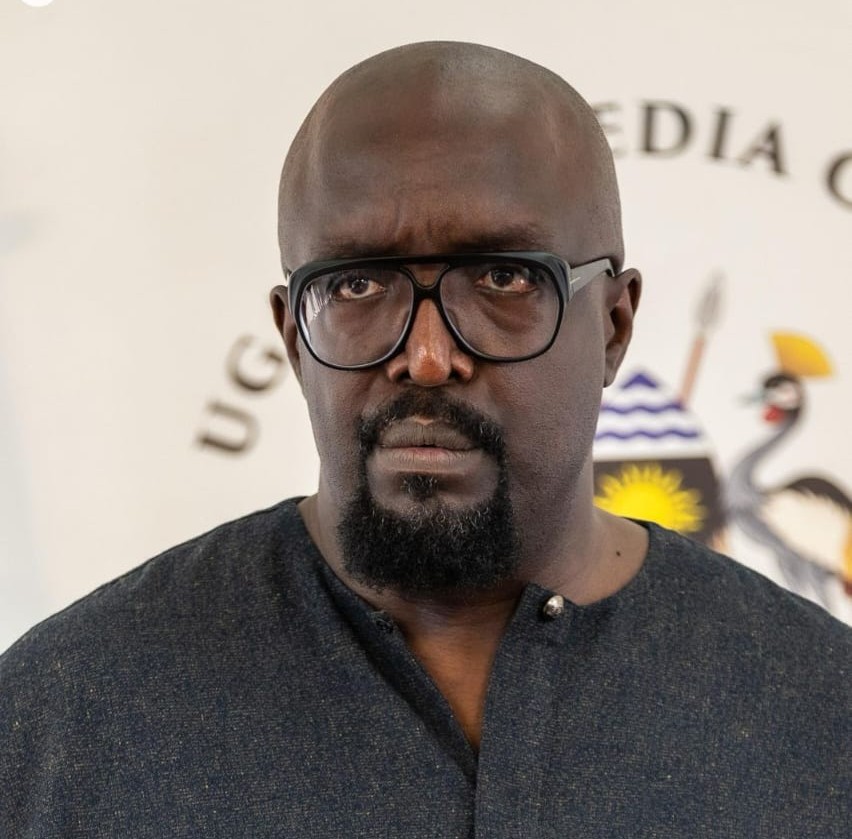
By Josepha Jabo The Executive Director of Uganda Media Centre, Alan Kasujja, announced the 52nd Birthday Run of Chief of Defence Forces (CDF) of the Uganda Peoples’ Defence Forces (UPDF), General Muhoozi Kainerugaba, to be held two days after his birthday on Sunday, April 26, 2026 at Kololo Independence Grounds from 6am-12pm. Addressing journalists and well-wishers at a press conference held at Uganda Media Centre on Tuesday, April 14, 2026 Kasujja revealed that the CDF will be the Chief Runner at the event. “We are here this morning to support the 52nd birthday run that honours the birthday of the CDF, Gen. Muhoozi Kainerugaba. This is a civic engagement, which reflects the relationship the general has with the people. Rather than celebrating on his own, he has decided to give back to the community, hence this event. It’s a non-partisan event. We are announcing a celebration worthy of a servant leader. The theme, this year, is ‘Run for Charity, Run for Hope’ and 52 years is 52 reasons to run,” he said. Kasujja revealed that the CDF will be the Chief Runner. “The general himself will be the Chief Runner. We are looking forward to having him running side by side with fellow Ugandans on the road. I am going to try to run, even though you can see running is not my biggest strength, but we shall see what happens on that day,” he promised. For all those who are interested in sponsoring this event, Kasujja said financial contributions towards the birthday run can be made to MTN MoMo 55445766, Airtel 4405201. “In moments like these, there are people who try to take advantage. There are fraudsters, who emerge from all corners and say they are fundraising for this event. That should not happen this time. If you want to make a financial contribution towards this cause, your contribution is welcome and it should go to those two codes,” he explained. Kasujja invited all Ugandans to participate in the event. “This birthday belongs to every Ugandan. We invite all of you, wherever you are, to come and take part. I encourage every Ugandan, to show up in large numbers. Ugandans are strongest when we run together; ‘One Uganda, One Finish Line!’” Spokesperson of the UPDF, Colonel Chris Magezi, appealed to young people to attend the birthday run. “The MK Birthday Run, which has turned into an annual event, is for a good cause. We appeal to young people in Kampala and neighbouring areas to come and participate in this run. This event is gaining traction every year. The general, like others in his position, could have chosen to celebrate his birthday privately, but the general is the rallying point for millions of young Ugandans and it is something he has embraced over time. That is why the MK birthday run is becoming an exciting annual event. We want to continue to use it, to engage the young people for community causes,” he said. Police Spokesperson, ACP Kituuma Rusoke, assured the general public of security during the event. “The birthday run, of our CDF, is a very noble cause. In due course, we shall give you a comprehensive picture of our entire route, but the generic statement that I can make now is that Uganda Police Force shall control traffic along the routes and roads that will be affected. We will certainly have access control measures. Whoever intends to come to Kololo, we shall guarantee you security. We shall deploy along the routes, at venues and at any place security assessment deems necessary to be deployed,” he concluded. Each running kit costs UGX 20,000. The kits are available now at Kololo Independence Grounds. The proceeds that will come from the purchase of these kits will go towards orphans. The general will support orphans with the proceeds and financial contributions. The writer works for Uganda Media Centre

img
14 April 2026
PRESIDENT MUSEVENI CLOSES NRM MPs’ RETREAT IN KYANKWANZI, URGES LEADERS TO FIGHT CORRUPTION

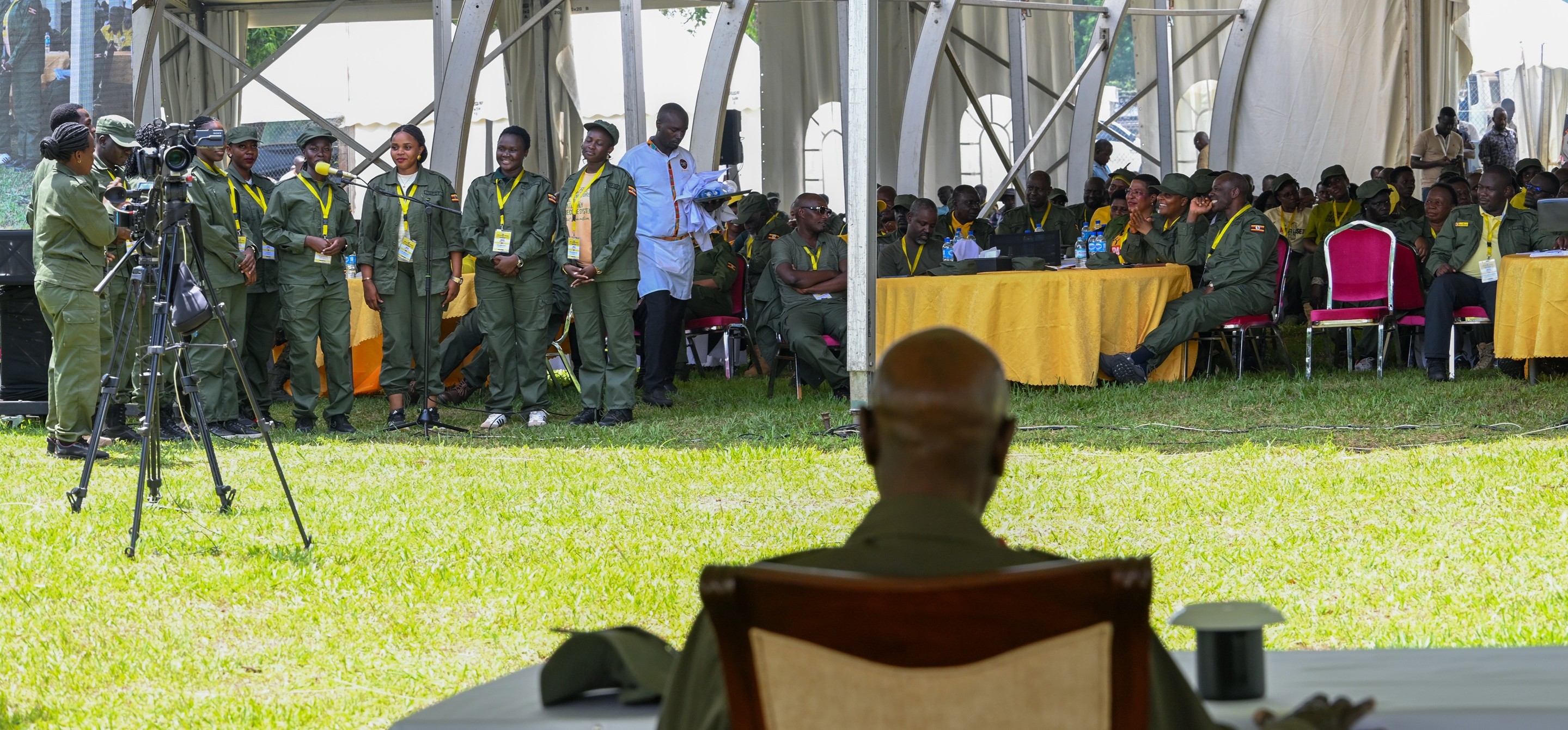
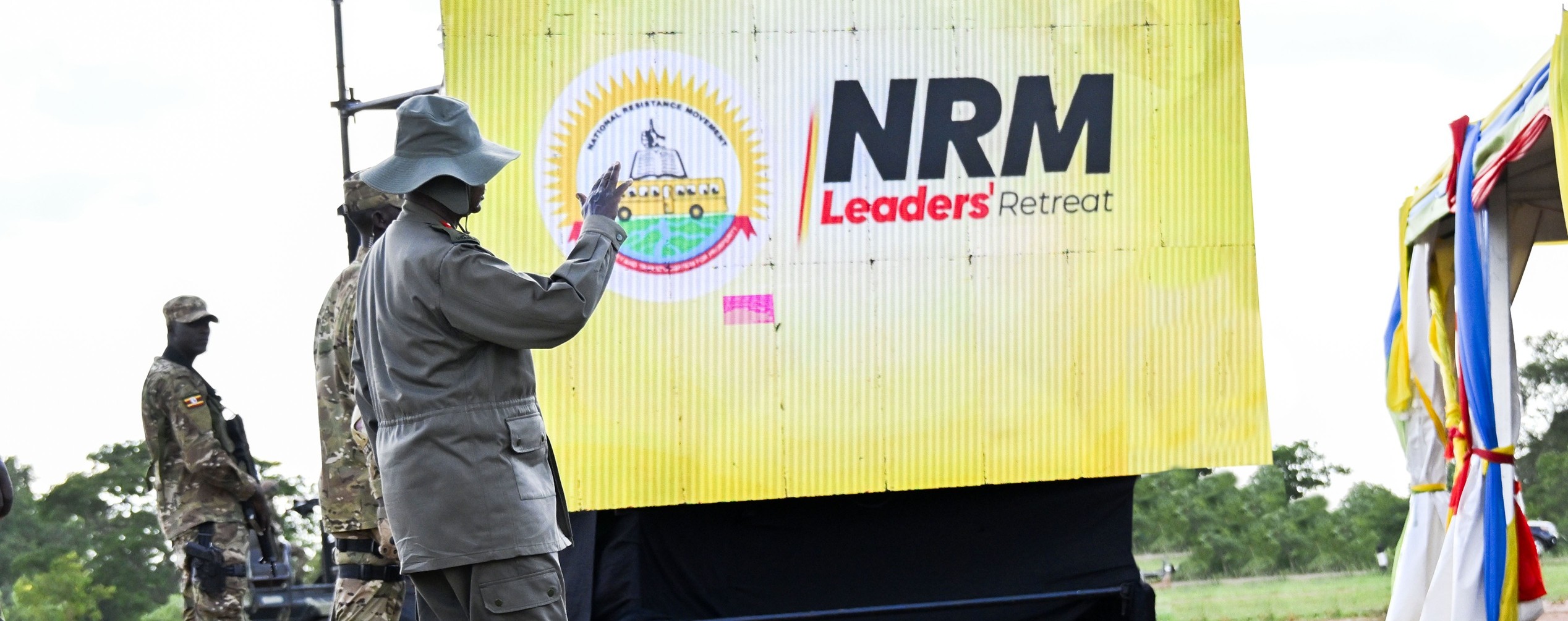
President Yoweri Kaguta Museveni has officially closed the 2026 NRM Members of Parliament retreat held at the National Leadership Institute (NALI) in Kyankwanzi, calling on leaders to reject corruption and actively participate in wealth creation initiatives. The week-long retreat, which started on April 7, ended today,14th April 2026, under the theme: “Aligning the NRM leadership towards protecting the gains and making a bold, qualitative leap towards a higher middle-income status society.” Before the close of the retreat, President Museveni hosted the MPs at Ngoma State Lodge and Farm, where he led them on a tour of the farm. The group walked through the cattle fields and proceeded to the bridge between River Mayanja and River Kafu, an area the President described as historically significant in Uganda’s liberation struggle. Speaking during the final session, the President emphasized the historical and strategic importance of Kyankwanzi. “This place is very important for two reasons,” he said. He recalled that on February 20, 1984, the National Resistance Army (NRA) mobile brigade, led by Gen. Caleb Akandwanaho (Salim Saleh), attacked and overran Masindi Barracks after trekking for days from Kanyara. “They had walked for many miles and attacked Masindi Barracks. We were monitoring through the radio, and I intercepted communications from Obote’s forces saying they had been attacked and overrun,” he said. President Museveni added that he immediately set off on foot to link up with the fighters. “I left at about 10:00am and walked. We slept near a place nearby and later crossed into Kyankwanzi, where we linked up with Saleh’s force,” he noted. He revealed that after the war, he decided to secure the land for national purposes. “After the war, I said I will buy this land for the movement because it was a good area. Eventually, the government acquired it, and that is why we are here today,” he said. The President noted that the area’s geography, surrounded by rivers such as Mayanja and Kafu, makes it ideal for reflection and ideological orientation. “That is why I always bring you here,” he added. Shift to the money economy: President Museveni reiterated his long-standing message of transitioning Ugandans from subsistence living to the money economy. “By the time of independence, only about 9% of homesteads were in the money economy. The rest were producing just for the stomach,” he explained. Drawing from his upbringing in Ntungamo, the President said most families, including his own, were not engaged in commercial activity. “We had cows and bananas, but they were only for consumption. There was no selling,” he said. He emphasized that since the 1960s, there has been a consistent push to transform livelihoods. “Our message has always been that our people must enter the money economy,” he added. The President highlighted progress in the cattle corridor, which stretches from Isingiro through Kazo, Kiruhura, Sembabule, Gomba, Kyankwanzi, Nakasongola, and Masindi. “When we came into government in 1986, we intensified this message. We encouraged smallholder farmers to adopt dairy farming and other income-generating activities,” he said. He noted that the strategy has yielded visible results. “The cattle corridor has transformed because people changed their mindset and followed the message,” President Museveni said. He cited farmer John Matongo as one of the beneficiaries. “He was outside the money economy, but now he has transformed and became a wealthy man,” he noted. However, he urged farmers to embrace pasture improvement for increased productivity. “If you plant improved pasture on one square mile, you can keep up to 300 cows,” he advised. President Museveni also pointed to ongoing efforts to improve infrastructure in the area. “We shall continue working on the roads connecting Luwero, Ngoma, and Kyankwanzi to improve accessibility,” he said. Strong warning against corruption: The President issued a stern warning against corruption, particularly within Parliament. “I do not want to hear of corruption in Parliament. If there is corruption in Parliament, how will you control others? You are the oversight body,” he said. He warned that corruption poses a serious threat to national development. “It will kill Uganda. It is suicide and must not be tolerated,” he stressed. President Museveni further revealed reports of bribery linked to budget approvals. “I have heard that some people demand money before passing budgets. One official refused and reported the matter. This must stop,” he said. He cautioned that anyone found engaging in bribery for positions would be disqualified. “If we hear that you are giving bribes to get office, you will be disqualified,” he warned. On the Parish Development Model (PDM), the President urged proper utilization of funds. “This money we are sending to the people can change their lives if used properly,” he said. He also advised citizens to avoid unnecessary borrowing. “Do not rush to money lenders or banks because of pressure. Use the resources you have wisely,” he cautioned. On her part, the Vice President, H.E Jessica Alupo commended the Members of Parliament-elect for completing the retreat, describing it as a key platform for strengthening ideological grounding and leadership discipline. She said the Kyankwanzi training was essential in aligning leaders with the Movement’s long-term vision of socio-economic transformation. “We appreciate the commitment shown by the MPs throughout this retreat. It is important that leaders remain grounded in the ideology of the Movement as they serve the people,” she said. She urged the legislators to translate the knowledge gained into practical service delivery and improved accountability at all levels. The Secretary General of the NRM, Rt. Hon. Richard Todwong, presented the official resolutions of the retreat on behalf of the NRM Members of Parliament and party-leaning Independents. “We gathered here as NRM Members of Parliament-elect and NRM-leaning Independents to reflect on our role in protecting the gains of the revolution and advancing Uganda towards a higher middle-income status,” he said. He noted that the retreat followed the NRM’s electoral victory in the 2026 general elections. “We acknowledge the resounding victory of the NRM Party and its Presidential candidate, Gen. Yoweri Kaguta Museveni, and appreciate the role played by the party structures under the stewardship of the Secretary General and the entire leadership,” he added. Todwong said the MPs benefited from ideological guidance by President Museveni, who delivered a keynote address on understanding the NRM Revolution and party ideology, as well as a series of leadership materials authored by the President. “We were guided by the wisdom and leadership of the National Chairperson and inspired to recommit ourselves to the mission of the Movement,” he said. Presenting the resolutions, Todwong said MPs had resolved to uphold discipline, accountability, and ethical leadership. “We commit to institutionalizing a culture of discipline, accountability, and results-oriented leadership aligned to the NRM manifesto,” he said. He emphasized that leaders would prioritize national interest over personal gain and reject mediocrity. “We also resolved to support firm and decisive measures in the fight against corruption at all levels of government,” he added. The MPs further committed to strengthening anti-corruption institutions and enforcing strict accountability mechanisms. “We reaffirm a zero-tolerance on corruption, inefficiency, and abuse of office,” Todwong said. On the economy, Todwong said MPs pledged to support policies aimed at accelerating socio-economic transformation. “We have committed to aligning all our decisions with the National Development Plan IV and supporting policies that expand access to affordable credit, markets, and infrastructure,” he noted. He added that MPs would support the government's tenfold growth strategy and efforts to double the economy every five years. “We shall promote value addition, export orientation, and import substitution as key drivers of Uganda’s transition to a higher middle-income economy,” he said. Meanwhile, the Member of Parliament for Nakaseke North, Prof. Wilber Manyisa Ahebwa, commended President Museveni for his leadership and contribution to national development. “I thank you, Your Excellency, for the sacrifices you have made for this country,” he said. He noted that Nakaseke strongly supported the President in the recent elections. “This constituency gave you overwhelming support, and we remain committed to the Movement,” he added. Prof. Manyisa highlighted key economic activities in the area, including cattle keeping and tea growing, and pledged to continue mobilising communities for government programmes.

img
14 April 2026
NITA-U, MINISTRY OF ICT & NATIONAL GUIDANCE ANNOUNCE LAUNCH OF NATIONAL IP PEERING EXCHANGE (NIPX), ACHIEVING TRUE DIGITAL SOVEREIGNITY

By Catherine Namuddu National Information Technology Authority-Uganda (NITA-U) in collaboration with the Ministry of ICT and National Guidance, has officially announced the upcoming launch of the National IP Peering Exchange (NIPX). The announcement was made at a press conference at Uganda Media Centre on Tuesday, April 14, 2026. The NIPX launch will take place during an awareness and engagement workshop on Friday, April 17, 2026 at Speke Resort Munyonyo, Kampala. In his address, Hon. Godfrey Kabbyanga, Minister of State for ICT and National Guidance highlighted NIPX’s strategic importance. “Today marks a bold and historic milestone in Uganda’s digital journey. With the launch of the National IP Peering Exchange (NIPX), Uganda is taking a decisive step toward achieving true digital sovereignty. The ministry has fulfilled its role as an enabler, by working closely with NITA-U to deliver this critical national infrastructure, which will firmly position Uganda as a competitive ICT hub within the East African region,” he said. Furthermore, Kabbyanga urged all Internet Service Providers, content providers and digital businesses to actively collaborate with the NIPX so the government and private sector can work together to build a faster, cheaper, more secure and resilient Internet for every Ugandan. The minister’s remarks highlighted how the NIPX will attract investment, stimulate innovation, and create new economic opportunities, particularly for the youth and digital entrepreneurs. The NIPX is Uganda’s first neutral and open Internet Exchange Point (IXP). It enables Internet Service Providers (ISPs), content providers, cloud platforms, data centres and government networks to exchange Internet traffic locally and efficiently within the country. By keeping local traffic local, the platform is expected to significantly reduce latency, lower the cost of Internet services, enhance network resilience, and strengthen Uganda’s digital sovereignty. The launch represents a key deliverable, under the Digital Uganda Strategy and Vision 2040. It addresses long-standing inefficiencies, where even domestic internet traffic is routed through expensive international pathways before returning to Uganda, a situation that increases costs and reduces performance. Representing the Executive Director NITA-U, Dr. Hatwib Mugasa the Director Technical Services, Mr. Richard Obita, provided technical insight into the platform. “The NIPX has been deliberately designed under neutral ownership, where it is neither owned nor controlled by the government. Hence ensuring that no single entity holds controlling interest. This creates a genuine level playing field for all participants,” Obita said. “Instead of routing local traffic, through expensive international carriers, networks can now interconnect directly within Uganda. This delivers three immediate benefits; significantly lower latency for faster user experience, reduced operational costs by minimising reliance on international bandwidth and greater reliability even during international link disruptions. For the ordinary Ugandan, this means smoother video calls, faster access to e-government services, improved online learning and eventually more affordable data packages,” he continued. Speaking on behalf of the private sector, Chairman of the Internet Service Providers Association of Uganda (ISPAU), Mr. Godfrey Sserwamukoko, applauded the development saying, “On behalf of the Internet service industry, we commend the Ministry of ICT and NITA-U for this initiative. NIPX provides a neutral and open platform that has the potential to optimise local traffic exchange and bring meaningful cost efficiencies. We look forward to active collaboration, with all stakeholders, to ensure maximum participation, to realise the full benefits of faster and more affordable Internet services for businesses and citizens across Uganda.” Lastly, NIPX operates on globally recognised best practices, open peering, non-discriminatory access and shared governance. NIPX infrastructure is of world-class standard; robust, secure, scalable and ready to meet the demands of Uganda’s growing digital economy. All eligible networks, both large and small, are warmly invited for the launch to connect and begin interacting on this national platform. It has been declared open for business. The writer works for Uganda Media Centre

img
13 April 2026
THE LIRA WE KNEW, AND THE CITY WE FOUND

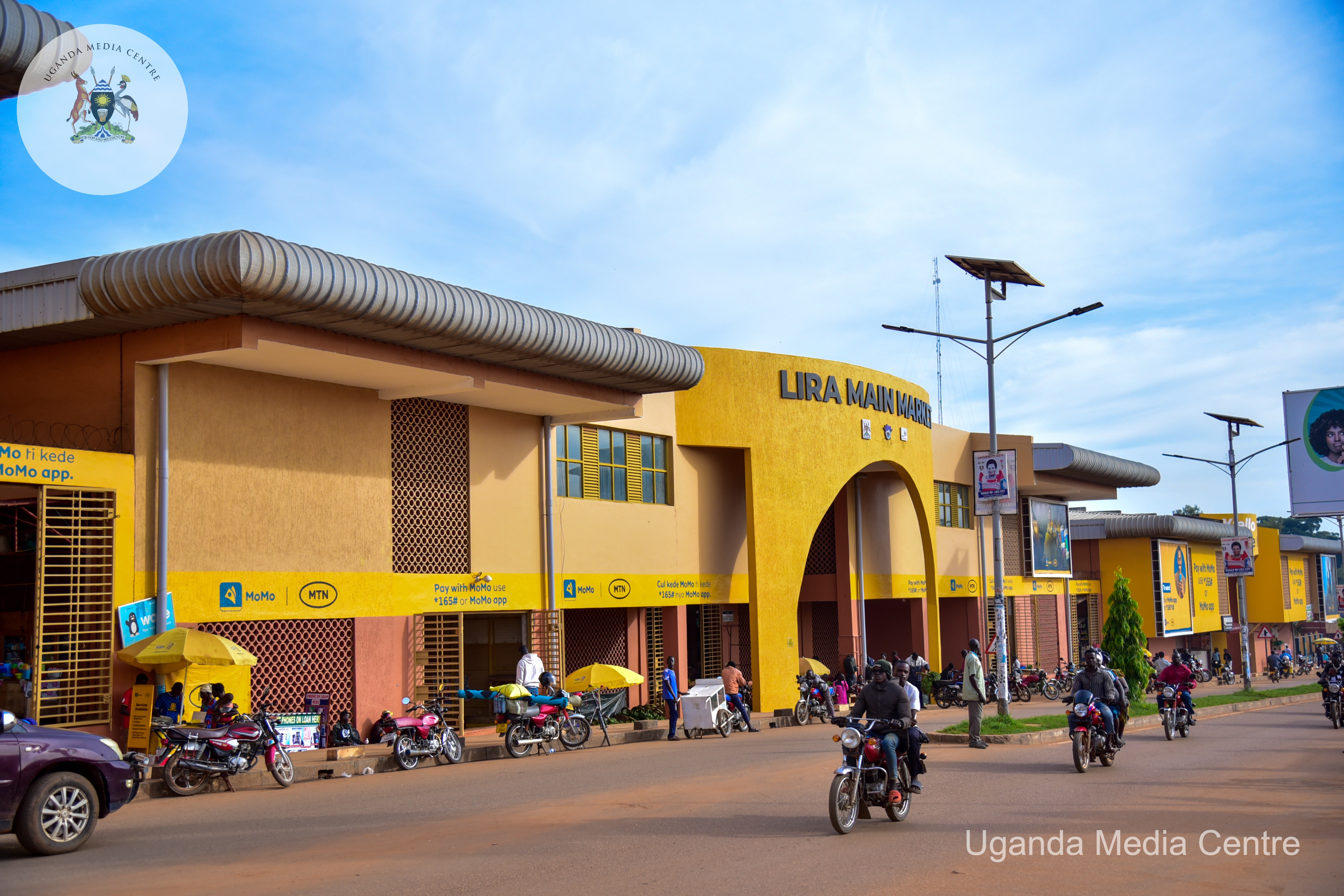
By Carolyne Muyama and Sarah Nanteza Kyobe As part of the Uganda Media Centre team, we visited Lira District to track the flow of money. When the government allocates funds to districts for programs such as the Parish Development Model (PDM), Emyooga, and infrastructure projects, people in Kampala often see only numbers on spreadsheets. “Our job was to assess how different government programs are impacting the lives of ordinary Ugandans and whether the 'Value Addition' discussed in boardrooms is happening in the villages of Lango,” said Carolyne Muyama, the team leader of the group. If you haven’t been to Lira in fifteen years, you might get lost in your own backyard. The last time I was in Lira was in 2010, a period of quiet recovery. Dust settled on low-roofed buildings, and the town, which hadn’t yet become a city, felt more like a busy trading hub catching its breath after years of instability. It was a hub for NGOs, and most vehicles speeding through town were NGO vehicles. One of the most devastating LRA incidents was the Barlonyo massacre in Ogur Sub County, Lira, where rebels ordered internally displaced persons in the camp to enter their thatched huts, then set them on fire, killing nearly 190 people. The LRA insurgency in northern Uganda went on for two decades, and lives and property were lost. In 2010, life was beginning to return to normal, and business activities were gradually resuming. People were slowly leaving the camps and returning to their homes after two decades of instability. Today, Lira has a new look. It features the impressive Lira Main Market, towering skyscrapers, large concrete buildings, and well-paved roads. The nightlife remains lively as trucks come and go, night revelers arrive and leave, and bars stay open all night. In the morning, traders rush to their stalls, children head to school, trucks and buses move through the city, and bodabodas weave in and out, delivering goods and people. It’s a truly refreshing sight. The Purpose of Our Journey: Tracking the Shilling A Unified Front: The Warm Welcome of Lira Our first stop was at the Lira District offices, where we met with the leaders and technical staff. We received a very warm welcome that made our challenging task feel easier. There is rare and strong cooperation between the leaders of Lira City and Lira District. Ms. Lilly Eyal, the Resident District Commissioner, did a good job briefing and gathering her team, which included the Chief Administrative Officer, Mr. Ismail Ocheng. Whether it was the technical staff, political leaders, or security teams, everyone was working together harmoniously. They didn't just show us the "shining parts"; they walked with us into the muddy farms and the noisy markets. This unity among leaders is the secret power behind Lira’s quick transformation. When leaders work together, the money sent from the center isn't lost; it gets used effectively. Mr. Ismail Ocheng, the Chief Administrative Officer of the District, gave us an overview of the progress of different government programs. “The government has invested UGX 22 billion into the local economy of Lira District, and over 90% of this money has been sent to the communities. Extension services in the district are better due to significant government funding. Although these services are not yet sufficient, the situation is better than it was eight years ago; now all sub-counties have at least two extension workers,” he said. The New Lira Skyline: A Hub of Industry As you enter the city, the first thing you notice isn't the dust; it’s the cranes and the skyscrapers. Private hotels that look like they belong in Kampala are popping up everywhere. The Lira Main Market stands like a giant monument in the middle of town, clean and organized. It has transformed Lira from a simple stopover into a true destination. Lira has become a significant industrial center for the agro-processing sector, hosting many plants that process sunflower, soybeans, maize, and rice, as well as well-established oilseed crushers and commercial grain mills. The growing manufacturing industry also includes soap production, food processing, packaging, and cotton ginning. Small-scale industries in the municipality include metal fabrication, woodworking, and brickmaking. Under a presidential initiative, Lira hosts a Zonal Industrial Hub focused on skills development in carpentry, tailoring, and value addition. The district serves as a key hub for marketing, producing, and distributing livestock and staple crops such as cassava, beans, and sesame. Alignment with NDPIV: Value Addition and Economic Transformation The shift from exporting raw materials to processing clearly aligns with the National Development Plan IV (NDPIV). By turning sunflowers into cooking oil and refining shea butter for the global market, Lira supports the NDPIV goal of agro-industrialization. These industries create a sustainable value chain that connects local farmers to high-value markets, generating jobs and keeping the wealth from the land within the community. This move toward manufacturing and processing ensures that Uganda’s growth is driven by adding value to locally grown products before they reach consumers. Mwalimu Smart Farm: Kicking Hunger Out of Ayac In the gardens, we met successful farmers like Mr. Patrick Olobo of Mwalimu Farm in Ayac Village, who grows bananas, coffee, azolla, and rears pigs. Olobo is a former teacher who responded to President Museveni’s call to turn his home into an "economic unit." Patrick didn’t just build a farm; he created a movement by mobilizing his workers and neighbors to grow bananas. At Mwalimu Smart Farm, Olobo’s real harvest is the community he has mobilized to grow bananas with him. He gives his workers banana suckers to plant at their own homes and teaches them the "M27" variety techniques he learned from NARO. Thanks to the Micro-scale Irrigation Program, Patrick can harvest bananas year-round. “As long as the government has not brought superglue to close Ugandans' mouths, I will continue to smile because I can even travel abroad on my own because of farming. I am better off than I was as a teacher because I can comfortably pay my children's school fees,” said Olobo. Olobo received an irrigation set through the micro-scale irrigation program. He benefits from the services of extension workers who make regular visits to advise on best practices. He received and planted 1000 coffee seedlings three years ago, and he has started harvesting and selling. He removes the husks from his coffee and uses them for mulching his banana gardens. The Story of Milly Grace Ajoro: From Struggle to Success. Ms. Milly Grace Ajoro is an entrepreneur in Lira town who sells handicrafts. However, this hasn’t always been her life. Ajoro was a single mother struggling to care for her children because she lacked a steady income. She used to borrow money from moneylenders, which she found hard to repay due to high interest rates. When she heard of Emyooga, Ajoro joined Erute North Women Entrepreneurs SACCO and got an affordable loan to boost her business. Today, she runs a thriving business making sweaters, baby clothes, and shoes. "I am no longer a beggar," she says, her eyes bright with pride. "My daughters are in school, their fees are paid on time, and I have expanded my stock. The government gave me the hook; I did the fishing." Ajoro is also the chairperson of Erute North Women Entrepreneurs SACCO, comprising 102 members, worth UGX 196m, up from the UGX 50m they started with. Members borrowed this money and used it for various activities; some went into winemaking, cosmetics production, pig farming, poultry farming, and honey processing, which we witnessed ourselves. Ms. Immaculate Abeja didn't find a job after school but knew how to make wine. She started with UGX 25,000 and produced a 5-liter jerrican of wine, which she sold. When she realized there was a market for her wine, she joined Erute North Women Entrepreneurs SACCO to access Emyooga funds. “I borrowed UGX 200,000, which I invested in my wine to improve branding and production. I also started a new product line, composite flour, which I sell locally,” said Abeja. The women in Erute North Women Entrepreneurs SACCO represent thousands of women in Lira who no longer just "stay in the garden." They are entrepreneurs who rush from the garden to market stalls to trade. Many of them have lockups and buy and sell produce, which helps them support their families and gives their children a better life than they had. Mr. Otim Patrick of Adur village, Ogur Sub-County, received UGX 1,000,000 in PDM funds in 2023 and used it to grow maize, which he sold for UGX 2,000,000. From the UGX 2,000,000, he bought a cow for UGX 750,000, which gave him a calf after three years. He used the remaining money to educate his children and expand his maize field. In the second season, Otim earned UGX 3,500,000 from his harvest, which he used to buy a second-hand motorcycle for UGX 1,800,000 and another cow. From the PDM Funds, Otim now has two cows and a calf, can pay for the children's schooling, and has expanded into farming soya beans on 4 acres. The Foundations: Health, Education, and Roads The effects of Parish Development Model funds are seen in the health sector. According to the District Health Officer of Lira District, Dr. Patrick Ocan Buchan, more people can access healthcare because they have some spare money; some have bought bicycles and boda bodas to reach health facilities. They no longer must walk long distances. Accessing markets is easier thanks to an improved road network. The government allocates UGX 1 billion to each municipality for road maintenance. UNRA has also worked on strategic roads such as the Rwenkunye-Apac-Lira–Puranga Road (191 km), which connects the greater Lango sub-region to the Gulu Highway and Masindi port. The road from Corner Kamdini to Lira City is well-paved. To support seed farming, the district launched UGX 800 million road construction projects under the National Oil Seeds Project (NOSP) to improve market access.

img
13 April 2026
UGANDA MEDIA CENTRE ED ALAN KASUJJA URGES NRM LEGISLATORS TO ADOPT STRATEGIC, CREDIBLE COMMUNICATION AT KYANKWANZI RETREAT

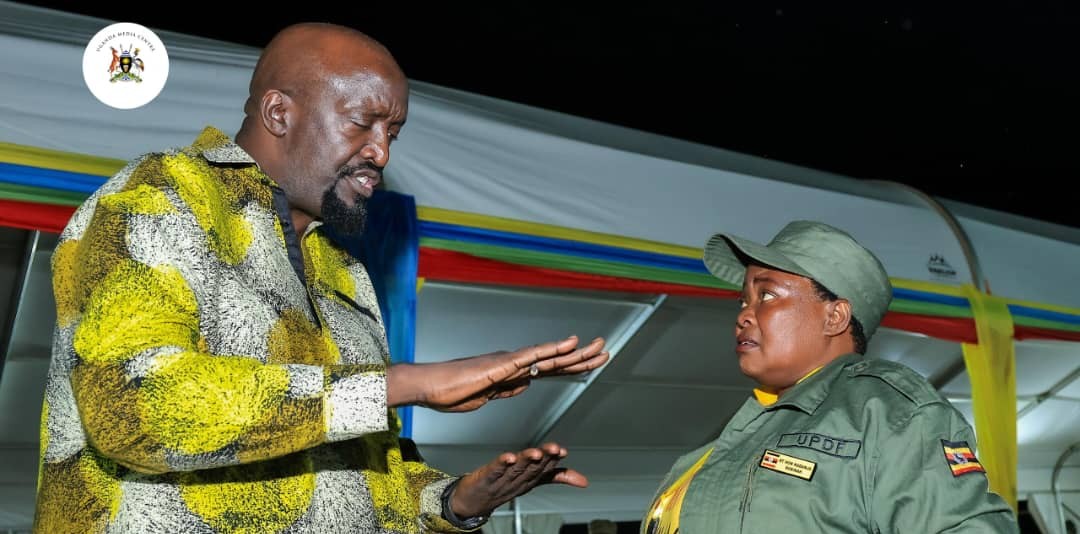
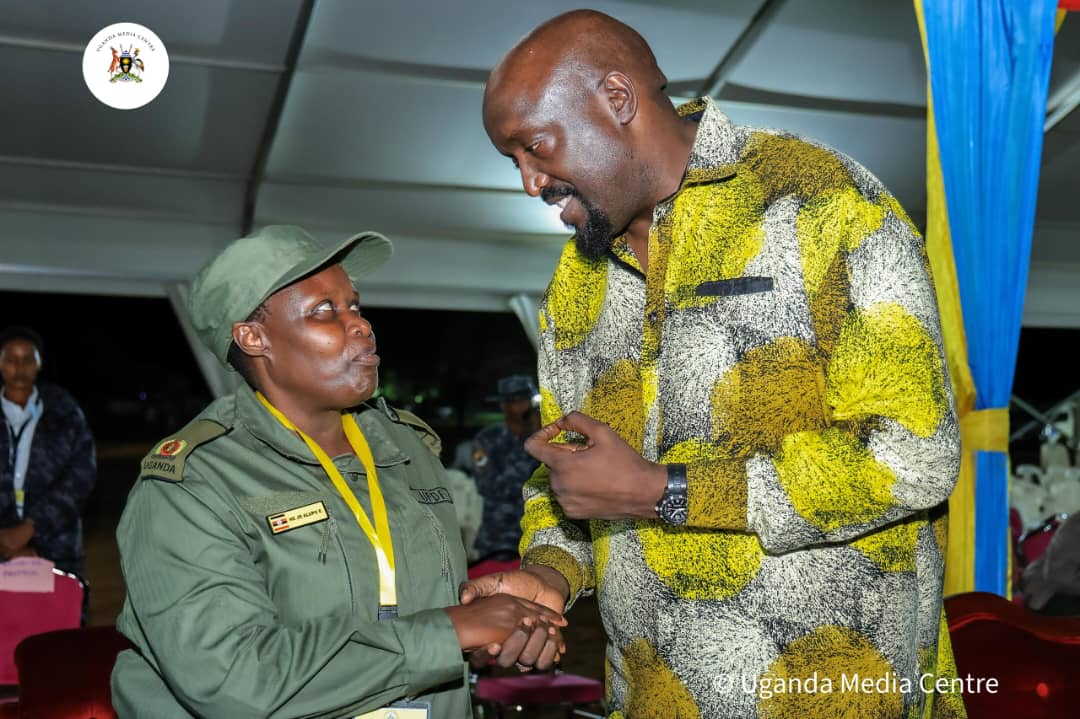
On Monday, 13th April 2026, during a bonfire session at the ongoing NRM Leaders Retreat at the National Leadership Institute - Kyankwanzi, Mr. Alan Kasujja presented a paper before the current and incoming Parliamentary Caucus members and the Party Chairman, H.E. Yoweri Kaguta Museveni. The presentation titled 'Strategic Communication for Political Leadership: Navigating Mainstream Media and Social Media Ecosystems'. Mr. Kasujja, the Uganda Media Centre, Executive Director, called on the legislators to be media savvy, urging them to engage both mainstream and social media with clarity, credibility, and consistency. He emphasized that effective and responsible communication through the media is key for leaders to connect with the public and advance the nation’s vision.

img
13 April 2026
PRESIDENT MUSEVENI HAILS GEN. SALIM SALEH’S SACRIFICE AND PATRIOTISM IN LIBERATION STRUGGLE

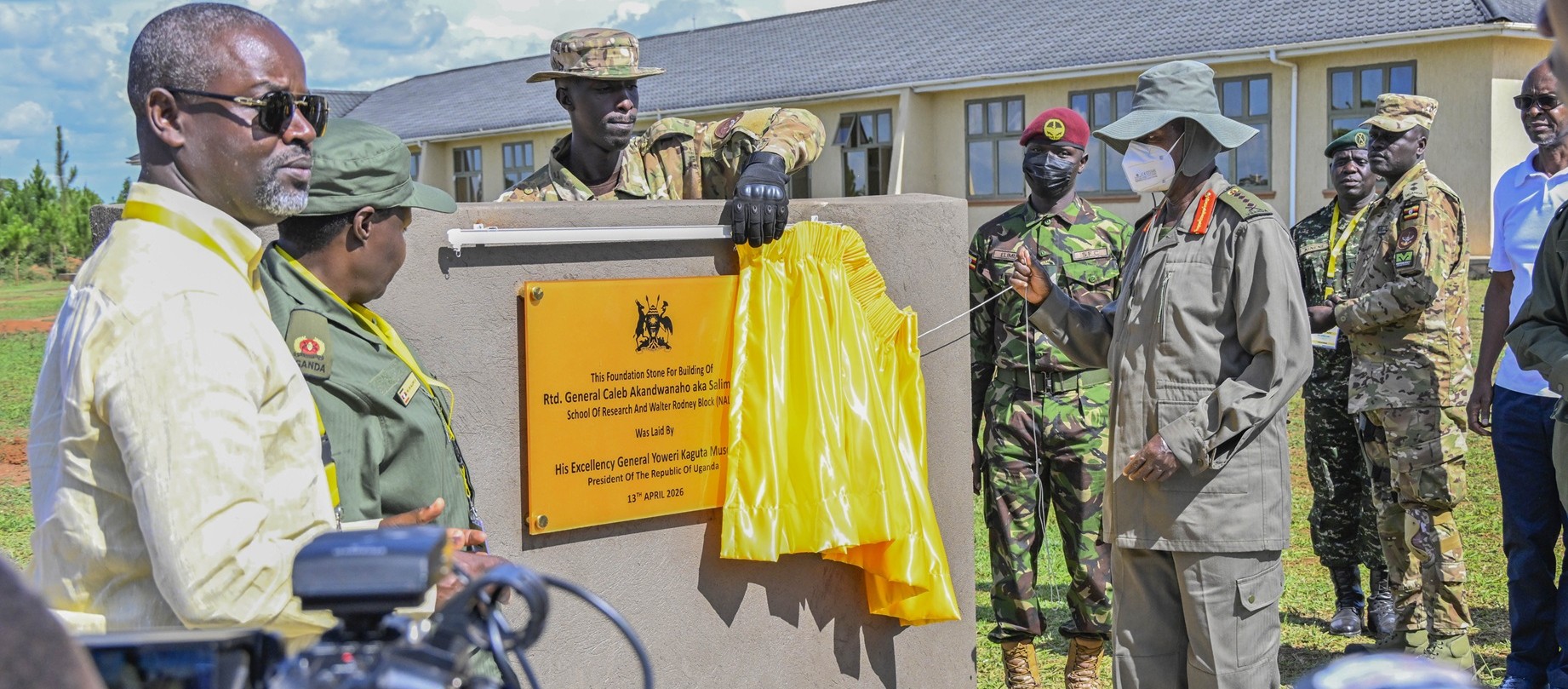
President Yoweri Kaguta Museveni has today hailed Gen. (Rtd). Caleb Akandwanaho famously known as Gen. Salim Saleh for sacrificing his youthful days to join the liberation struggle, describing him as a symbol of patriotism and a role model for young Ugandans. The President made the remarks on the seventh day of the retreat for the newly elected NRM MPs at the National Leadership Institute, Kyankwanzi, where he laid a foundation stone for the Gen. (Rtd). Caleb Akandwanaho (Salim Saleh) School of Research and the Walter Rodney Block. Highlighting Gen. Saleh’s contribution, President Museveni gave a detailed account of his role in Uganda’s liberation struggle. “People like Saleh should act as good examples to you young people to show you what patriotism means and how what you do can help your country,” President Museveni said. “Saleh joined us in the war against Idi Amin in 1976 when he was just 16 years old. He ran away from school at Kako and joined us in Tanzania together with other fighters like Ivan Koreta. Between 1979 and 1986, he did a lot of good work, especially during the 1981–1986 war. Saleh commanded many of the big battles, including the battles of Masindi, Kabamba, Masaka, and Kampala.” President Museveni noted that after the war, Gen. Saleh transitioned into wealth creation and economic development. “After the war, he became very much involved in wealth creation. He is now busy with development, working with others in areas like coffee and playing a very active role in the north,” he said. “That development in Kapeka was started by Saleh. I am very glad that this is a good idea, and I commend you.” The President also issued a stern warning against corruption, saying those involved would face firm action. “The corrupt are now in danger and will be dealt with. You cannot underestimate us. You will see what will happen,” he said. He urged MPs to lead by example in the fight against corruption. “You in Parliament are now on the frontline. You should not accept bribes. If you have problems, come and tell us, but don’t take bribes,” he emphasized. President Museveni warned that culprits risk losing their parliamentary seats, stressing that the government will not tolerate corruption. “We are going to finish this corruption,” he said. President Museveni also commended MPs for attending the retreat, likening it to renewing commitment and discipline. “Christians go to church every Sunday to renew their faith, and Muslims go to the mosque many times a day. It is important that cadres also come to the seminary to renew their commitment,” he said. On regional matters, the President emphasized the need for African unity and economic integration. “We cannot achieve prosperity with fragmented markets, policies, and infrastructure,” he said. He further paid tribute to African leaders such as Julius Nyerere and Benjamin Mkapa for their role in promoting the East African Community, calling for deeper integration within the bloc. “The whole of the East African Community should move towards full integration,” he added. On his part, NALI Director, Col. Okei Rukogota, said the Gen. Salim Saleh School of Research and the Walter Rodney Block will serve as a hub for ideological development, research, and Pan-African studies. “Your Excellency, this complex will promote African culture and provide a forum for ideological struggle, complete with a modern multimedia auditorium and studios for both physical and online engagement,” Col. Rukogota said. He added that the facility will preserve Uganda and Africa’s liberation history while advancing what he described as “Musevenomics.” “It will be an arena for Musevenomics studies and will honour Gen. Saleh’s contribution—from mobilization during the war to the practical implementation of economic transformation programmes such as SACCOs and community development initiatives,” he noted. Col. Rukogota said the project was justified by Gen. Saleh’s heroic contribution to Uganda and Africa, describing him as a pillar of patriotism and development. On the other hand, the Head of Public Service and Secretary to Cabinet, Ms. Lucy Nakyobe urged civil servants and leaders to embrace patriotism as a foundation for national development. “Without patriotism, Uganda cannot achieve its development goals. All public servants must love their country and serve with commitment,” she said. Ms. Nakyobe revealed that the government has introduced mandatory ideological training at NALI for newly recruited public servants and senior officials. “All new entrants into public service must undergo a two-week induction here. We have already trained Permanent Secretaries, CAOs, town clerks, and we are lining up more cadres,” she said. She raised concern over corruption in recruitment, particularly within district service commissions. “There have been complaints about people buying jobs. This is unacceptable, and as legislators, you need to review the legal framework to address these gaps,” she said. Ms. Nakyobe warned that corruption is becoming entrenched and could undermine the country if not urgently addressed. “Corruption is growing under our watch, and if we do not stop it now, it will become a monster that will destroy the country,” she cautioned. She outlined key areas where corruption manifests, including procurement, payroll fraud, absenteeism, and bribery in service delivery. “In procurement, there is collusion between officials and contractors, leading to inflated costs and poor-quality work. This is why you see roads developing potholes shortly after construction,” she said. On absenteeism, she said: “Time is a resource. Wasting it is corruption. Public officers must be disciplined, especially in the health and education sectors.” Nakyobe also called for stronger leadership and accountability. “Leaders must set an example. Ministers, MPs, and accounting officers must demonstrate integrity. Parliament must not only demand accountability but also model it,” she said. She tasked MPs to tighten oversight, legislation, and accountability mechanisms. “You must interrogate government expenditure and ensure value for money. Strengthen laws to close loopholes that enable corruption,” she said. The health Minister, Dr. Jane Ruth Aceng highlighted progress and challenges in Uganda’s health sector, emphasizing prevention as key to reducing disease burden. “Our population is large, and we cannot meet all treatment needs. The solution is prevention—through proper nutrition, exercise, and healthy living,” she said. She noted improvements in infrastructure design to accommodate persons with disabilities and expanded access to mental health services. Dr. Aceng also revealed progress in organ transplant services at Mulago National Referral Hospital. “So far, Mulago has carried out over 12 transplant surgeries, and all recipients and donors are alive and well,” she said. On staffing, she explained that nurses are being trained to handle diagnostic services at lower health facilities due to a shortage of specialists.

Latest Press Releases

Opinion Posts

author's photo
11 April 2026
THE MENACE OF ROAMING HERDSMEN AND THE NEED FOR FIRM POLICIES TO END IT

President Yoweri Museveni recently sent the untiring Director General of Internal Security Organisation (ISO), Arthur Mugyenyi, to sort out the long-standing land dispute between private tree planters and cattle herders in Nsoowe Central Forest Reserve, in Maddu Sub County, Gomba District. It is alleged that there has been an avalanche of marauding herdsmen (balaalo), who have invaded the forest reserve, and clashed with legitimate leaseholders who got leases from the National Forest Authority (NFA) to plant trees and in due course recover the depleting forest cover that Uganda badly needs. Initially, there were only 175 legitimately accepted families that have peacefully lived in that forest reserve, minus causing any harm for ages. President Museveni was spot-on to pick Mr. Mugyenyi for this task. A very seasoned intelligence chief, largely known to be incorruptible, but more importantly is his thoroughness and resoluteness. Without a doubt, Mugyenyi will sort out the Nsoowe issue professionally—but for how long. The new invaders are largely the marauding herdsmen, who were chased from Tanzania in 2013. Some settled in Sango Bay Estate land; which is government land located in Kyotera District. Sango Bay was recently leased BIDCO Uganda Limited, for extensive palm tree growing. Primitive nomadic herdsmen are becoming a problem in Uganda. Not so long ago, they were becoming a political problem in northern Uganda. This was until the president gave executive orders for them to be removed forcefully by the UPDF and Uganda Police. The eviction process is still on going for some who keep running from one corner to the other in an attempt to dodge forceful eviction. The same marauding herdsmen were sometime back evicted in Teso sub region, after politicians loudly complained to government. In 2010 the same herdsmen were evicted from a government in Bulisa District, as oil drilling began to take shape. As they get evicted from one place or the other, they have chosen to invade government lands, especially forests and wetlands. In all these forms of indiscipline, these stubborn herdsmen have continually tarnished the name of the president. He is continually accused of not reigning in these stubborn, roaming herdsmen. Which is not true. On the contrary, President Museveni has all his life discouraged nomadism and preached about settled, modern farming. What is even more annoying is the fact that these are not poor people that lack financial capacity to own land to settle on. One can’t own cows in the hundreds and then fail to have a chunk of land to live on and practice modern farming. Like President Museveni has written in one of the missives on the issue of roaming herdsmen. He talked about how he initiated the restructuring of the Mbarara-Masaka ranches in the late 1990s and gave thousands of landless herdsmen chunks of land. Majority of them sold the acquired pieces of land and went to Tanzania to graze in open free lands, until they were chased back to Uganda and now are a problem. Uganda’s forest cover is rapidly depleting, with an estimated loss of over 122,000 to 200,000 hectares annually, largely driven by encroachment for subsistence agriculture, charcoal production and urban expansion. Encroachers, including illegal settlers and loggers, threaten both private and protected forestland, with shifting agriculture responsible for nearly 94% of this loss. As a country we need a firm policy decision on roaming herdsmen. Foremost, these herdsmen need serious engagement on mindset change. Uganda is not growing in size. To the contrary, it is growing in numbers. The population is surging every passing year. Therefore, these people must be told to live a settled life and engage in productive life on small pieces of land. We need serious deterring laws that will make nomadism and illegal movement of people and animals very punitive. Handling these roaming encroachers to the wetlands and forest reserves with kid gloves will not help. They are stubbornly refusing to embrace settled lifestyle, where they can practice modern farming on small chunks of land, because they can be tolerated on some government land or communities that still have vast chunks of land that is inhabited. As practice has shown, even those communities that still have chunks of land inhabited, they don’t tolerate roaming herdsmen in their communities, because they bring on board behaviors that are culturally alien. Besides, they tend to guard their ancestral lands so jealously, to a point of wanting to shed blood for it. That is why they have become a political issue in northern Uganda. We need to design strong land policies aimed at ending nomadism, particularly in Uganda, focus on transitioning pastoralists from communal, migratory grazing to settled, sedentary farming or commercial ranching. These initiatives should include registering land under freehold or leasehold tenure, to replace customary systems, establishing grazing reserves and enacting, such as presidential executive orders banning free-range livestock. Like President Museveni once referred to drunkards as not only being a danger to themselves, but a danger to society as well. Roaming herdsmen are not only a danger to themselves; they are a hazard to the environment and the organized communities that live in settled lifestyles practicing modern farming methods. The writer works with Uganda Media Centre

author's photo
08 April 2026
UGANDA’S CAUTIOUS OIL JOURNEY FINALLY DELIVERS TRUE DIVIDENDS

Uganda’s oil story is often told as one of delay. But a more accurate interpretation is that it is a story of deliberate caution, moving slowly, negotiating carefully and building capacity before pumping the first barrel. Two decades after the first major discovery in the Albertine Graben, that caution is beginning to pay off. When commercially viable oil deposits were confirmed in 2006 around Lake Albert, expectations were immediate. Many resource-rich countries rush from discovery to production, driven by political pressure and the lure of quick revenues. Uganda did the opposite. It paused, it studied. It negotiated. In doing so, it charted a longer, more controlled path. This cautious approach was shaped by lessons from elsewhere. Across Africa, oil discoveries have often produced what economists call the “resource curse” where countries experience corruption, conflict and economic distortion instead of broad-based prosperity. Nigeria is often cited as the textbook case. Since oil was discovered in the 1950s, it became the dominant source of revenue fueling corruption and patronage politics. President Kaguta Museveni signaled early that oil would not be rushed at the expense of national interest. Instead, the emphasis was placed on institutional building, legal frameworks and long-term value. One of the most important early decisions was to strengthen governance before production. Uganda established key institutions like the Petroleum Authority and Uganda National Oil Company ensuring that the State has regulatory, oversight and commercial participation in the sector. This has allowed Uganda not to just host oil companies but negotiate with them from a position of competence. Equally significant was Uganda’s insistence on maximizing value addition. Rather than exporting crude oil, Uganda is building a refinery and pipeline infrastructure that is nearing completion that would unlock export markets while preserving domestic supply options. The development of the East African Crude Oil Pipeline (EACOP), a 1,400+ km heated pipeline to the Tanzanian Port of Tanga was not just an engineering decision but a strategic one aimed at securing long-term export viability. This long gestation period, however, wasn’t without criticism. For long, Uganda faced questions: why is oil not flowing? Why the repeated shift in timelines? Indeed, Uganda has revised its “first oil” target multiple times, most recently pushing it to 2026 after early projections of 2025. This reflects the complexity of doing oil ‘right’. Uganda has not just been drilling wells, it was building the entire eco-system including production facilities, export pipelines, industrial parks, environmental safeguards and local workforce capacity. Today, major projects such as Tilenga, Kingfisher and East African Crude Oil Pipeline (EACOP) have reached advanced stages with thousands of Ugandans employed and billions of dollars invested in infrastructure. The scale of what Uganda has built before first oil is remarkable. We expect peak production of about 230,000 barrels per day supported by hundreds of wells and multiple processing facilities. More importantly, Uganda has embedded local participation into the sector with Ugandan firms securing billions in contracts with local professionals making up a significant share of the workforce in key projects. Today, the payoff caution is becoming visible with Uganda entering production with strong negotiating power. Unlike countries that signed unfavorable agreements in a rush to extract, Uganda spent years renegotiating contracts, aligning fiscal regimes and ensuring that government revenues are protected. The result is a framework that promises over $1billion annually in revenue once production stabilizes. This gives Uganda an opportunity to reinvest the funds into other sectors like education, industrialization and infrastructure development. Uganda’s share of oil revenues is estimated at up to 75% + over the life of the projects including taxes, royalties and profit oil under Production Sharing Agreements (PSAs) standing in the same league as Norway and Indonesia with the State retaining ownership of the oil. Secondly, Uganda has prioritized national content. By deliberately slowing down, Uganda created space to train engineers, welders, environmental specialists and project managers. Today local participation is not symbolic, but structural. In some project sites, over 70% of technical staff are Ugandans, a remarkable shift from the early days of oil exploration. Uganda’s integrated approach by linking upstream production, midstream transport and downstream refining positions her to capture more value across the entire oil chain. This is a stark contrast to the traditional model where African countries export crude oil and import refined products at higher costs. Uganda has been widely recognized for having a relatively strong and structured environmental impact assessment framework in the oil sector and stands out among the first countries in Africa to conduct a strategic environmental assessment (SEA) for oil and gas in the Albertine Graben. All the processes are aligned with international best practices involving independent reviewers. As of 2026, the overall status of compensation/resettlement of project affected persons (PAPs) across major oil projects is largely complete. 13,000 Ugandans were affected by the East African Crude Oil Pipeline (EACOP) and compensation stands at a remarkable 98% completion. As Uganda approaches first oil projected for mid-2026, the results for this long journey are becoming tangible. Wells have been drilled, pipelines are nearing completion and industrial infrastructure is taking shape. Uganda is no longer preparing for oil, its on the verge of producing it. In many ways, Uganda’s experience offers a counter narrative to the typical extractive model. It suggests that for late entrants into the oil economy, time can be an asset rather than a liability. By delaying production, Uganda has been able to learn from others, negotiate better deals and build domestic capacity. The real test however lies ahead. Oil revenues must be managed prudently to avoid macroeconomic shocks, corruption and overdependence. The institutions built during the cautious phase will now be tested under pressure of actual money flow. But if the passed two decades are any indication, Uganda has laid a strong foundation. Our oil journey has not been fast but rather deliberate and in a sector where haste often leads to regret, patience has been our greatest advantage. In the end, Uganda’s oil story is not about barrels and pipelines. It’s about strategy, restraint and the belief that natural resources, when managed carefully can be a blessing rather than a curse.

author's photo
07 April 2026
UGANDA HAS A GREAT STORY. IT’S TIME WE TOLD IT

During the COVID-19 pandemic, when the world was groping in the dark for answers, I watched President Yoweri Museveni’s national addresses religiously. I was in London, working at the BBC, watching one of the wealthiest nations on earth struggle to make sense of what was unfolding. Despite allocating nearly 15% of its Gross Domestic Product (GDP) to fighting the pandemic, the UK was reporting hundreds of deaths every day. Sometimes thousands. Ambulances became a constant on my street — I stopped counting after a while. And when lockdown finally eased, many of the elderly neighbours I used to pass on their evening walks were simply gone. The ones with the dogs. The ones who always nodded hello. They had died quietly, in one of the most resourced countries in the world, and life had moved on almost as if they hadn’t existed. It did not make sense to me. And frankly, if this was happening there, I feared for Uganda. Then President Museveni spoke. He said he was going back to what he knew — the methods that had served the National Resistance Army during the bush war. To accurately assess an adversary, you stop, you observe and only then do you act. You let the picture become clear before you commit. Something clicked for me in that moment. Here was a leader reaching into unconventional, hard-won experience to navigate a crisis that had already humbled far more sophisticated systems. I became convinced, from that point, that Uganda had a more grounded handle on what this pandemic actually required. The numbers, as it turned out, supported that feeling. Uganda confirmed its first COVID-19 case in March 2020 and its first death — a 34-year-old woman — on July 23, 2020. By late September, 75 deaths. Just over 8,000 cases. Even by the end of that year, total fatalities were still in the low hundreds. In England and Wales alone, official figures from March to early May put deaths at around 47,000. Some estimates placed the UK’s first-wave toll above 50,000. Uganda — many times poorer, with a fraction of the health infrastructure — was holding its own against something that had broken wealthy nations. That wasn’t luck or coincidence. That was a considered response, rooted in a very particular kind of strategic thinking. And it was, I kept thinking, an extraordinary story. One the world needed to hear. Because no African country was featuring meaningfully in the global COVID-19 conversation, the narrative was being written elsewhere, about elsewhere. Yet here was Uganda offering something genuinely useful — proof that resources alone don’t determine outcomes. That leadership and local wisdom count for something. So I pushed for a BBC interview with President Museveni. The newsroom was interested. Editors were on board. For once, the world seemed ready to look at Africa not as a problem to be managed, but as a place with actual answers. The interview didn’t happen. I won’t go into why. But that story was never told — and the outlets that would have carried it, the shift in perception it might have caused, all of that evaporated. This was not a one-off. It is, I am afraid, a pattern. The National Resistance Movement is not a propagandist movement by nature. Guerrillas keep things close to their chests — they move quietly, act decisively and rarely stop to explain themselves. In the bush, that instinct kept people alive. In today’s world, where perception shapes investment and policy and partnerships, that same silence becomes a liability. Uganda cannot keep winning quietly and expect the world to notice. As I said at my inauguration as executive director of the Uganda Media Centre, this is not about public relations. It is nation building — and there is a difference. Uganda has set its sights on a $500b economy by 2040. That is achievable. But only if we own our narrative, push back against those who misrepresent us and make sure that when this country does something remarkable, the world actually hears about it. We have the stories. We have the evidence. We just need to start telling them. The writer is the executive director of Uganda Media Centre

author's photo
04 April 2026
BOBI WINE WILL ENJOY CAMERA FOR A FEW MONTHS; THEN IT WILL BE BUSINESS AS USUAL

Hon. Robert Kyagulanyi a.k.a Bobi Wine is in exile in the USA, where he is meeting some leaders, lobbying them to sanction the top leadership in Uganda. To wit President Yoweri Museveni and the Chief of Defence Forces, Gen. Muhoozi Kainerugaba. In his view, these two denied him victory in the January 2026 General Elections. Kyagulanyi left Uganda, after the January 2026 General Elections, claiming he was running away from possible arrest. However, government still denies that it had any intentions of arresting him. Poor Kyagulanyi; like Gen. David Sejusa before him, Kizza Besigye, Col. Samson Mande, the late Col. Anthony Kyakabale, Maj. Herbert Itongwa and others, who after political disagreements with President Museveni, ran to the West and tried to wow the leadership in those capitals to stop any cooperation with President Museveni but were roundly rejected. What followed was frustration and isolation in those freezing capitals. They finally thought of making peace with President Museveni and they came back to Uganda. All of them are now free men enjoying their country. The West that these people run to, after political defeat, are not fools. These countries have better intelligence networks in Uganda and in the region that give them thorough reports of what is happening in Uganda. Mere rhetorical statements that Museveni is a dictator, who does not want to live with the Opposition cannot be believed. These people have their own intelligence that tells them exactly what Uganda and who President Museveni is. Therefore, any skewing of stories from Uganda, trying to biase leaders in the Western capitals will certainly fall flat. Without a doubt, they will rely most on their own intelligence than reports from disgraced political actors. In fact, from what is has been gathered is that most of the people Kyagulanyi has met so far, is that they are telling him to explore avenues of dialoguing with the leadership of the NRM. And this, of course, does not require the intervention of the Mzungu (White person) in the USA or any other Western capital. Uganda has enough eminent persons to handle that. Kyagulanyi is yet to be more frustrated, because in the near future even the chance they are offering to meet him will be no more. He will be making phone calls that will go unanswered. Or else, he will be answered with rude remarks. The earlier Kyagulanyi realises that the only way to rediscover his political struggles is by engaging Ugandans and not the Western world. He needs to return and do critical evaluation of methods of work. He has to pose critical questions, to his party colleagues, on why the party performed the way it performed. He inevitably must engage those he is opposed to, especially the ruling NRM in general and President Museveni in particular. This fallacy that engaging President Museveni is betraying the Opposition is totally wrong. Unfortunately, that perception has been created and those that have fallen for it are making irredeemable political mistakes. To the contrary, the Opposition that engaging President Museveni are making strong bargains in favour of Ugandans. Life in exile is described as an "exasperating," "poisonous," and a "terrible to experience" existence, characterized by an unhealable rift between an individual and their home country. It is a state of profound alienation, often involving involuntary displacement, where individuals feel cut off from their secure, familiar surroundings and forced into a foreign, often hostile, environment. Whatever disagreements Kyagulanyi could be having with Yoweri Museveni, the two can talk it over and a working relationship can be forged. Political disagreements can only be resolved by the two politicians. The West, where we tend to run looking for powerful godfathers, are not competent enough to appreciate our issues and be able to amicably resolve them. Kyagulanyi will be given audience on a few media platforms, but that can only be for a few months. What will then follow will be a total media blackout, because he will be having nothing new to tell the world. Then boredom will kick in. Feelings of isolation and loneliness will grow in volumes, which is not good for his mental health. Exiles often experience deep feelings of abandonment, loneliness, and fear, feeling disconnected from both their past and present reality. The exiled person may feel that their life has stopped or that time is being measured, only from the moment the exile began, leading to a nostalgic, often stagnant existence. There is a traumatic realization that "there is no return to the familiar," forcing the creation of a new, often uncomfortable life. Exiles frequently face a "powerlessness" and loss of control, struggling with new, unfamiliar rules, or even visa and travel restrictions. The feeling of being "cut off" or a stranger, even without moving, caused by trauma, divorce or estrangement. Often used in religious contexts, this describes feeling like a stranger in one’s own country or culture, a feeling of not belonging because of different values or beliefs. The earlier he returns to Uganda, the better for Kyagulanyi and his family. The writer works with Uganda Media Centre

author's photo
03 April 2026
KARAMOJA MUSEUM; THE STORY OF JOHN WILSON, THE SCOTTISH WHO DARED TO PRESERVE THE KARIMOJONG HERITAGE

In the late 1960s a Scottish agriculturalist based in Karamoja fell in love with the Karamoja rich culture and heritage. The Karimojong are a resilient, pastoralist group in northeastern Uganda, believed to have migrated from Ethiopia in the 1600s. Their, rich heritage is centers on cattle, which define their social structure, wealth, and identity. They maintain strong traditions, including colourful beadwork, scarification, and traditional dancing, with life centered on the manyatta (homestead). Cattle are central to life, representing wealth, status, and essential resources for marriage and conflict resolution.The community is organized by age sets, with elders holding significant authority and overseeing community matter. The Karamojong live in fortified homesteads called manyattas, which are often constructed with thorny branches to protect people and livestock. Women wear colourful beads and traditional cloths, while girls often wear bead belts over "carong" skirts. Traditional dances involve high jumping, and storytelling is a valued tradition. They often mark their skin for beauty and tribal identification. The culture includes skilled pottery, jewellery making, and stool carving. In mid 1970s former President of Uganda, Id Amin, tired of the Karimojong lifestyle of refusing to quickly embrace modernity, declared for the Karimojong to disband their lifestyle and burn all their artefacts and embrace contemporary living. This was resisted and as a result 360 people were killed many of them were buried in Napak District in a mass grave. As the Karimajong heritage was being decimated, a Scottish by the name John Wilson decided to buy off most of their artefacts and preserve it for future generations. John Wilson was an agriculturalist based in Moroto at the time. When the Amin government heard about John Wilson’s endeavours to preserve the Karimajong culture, they came for him and this forced him to flee Uganda via Turkana up to his homeland Scotland. John Wilson fled with 207 objects he had gathered in Karamoja. After some time, he returned to Kenya and bought a home in Kitale Town where he lived. In 1997, he ordered for his artefacts to be brought back to his home in Kitale. His wish was always for the government of Uganda to built a decent museum and pick these artefacts for the generations that will come after. When the government got to know about this wonderful man that had preserved the Karimojong artefacts, they approached him and began a conversation for him to return these special artefacts back to Uganda for preservation. He gave conditions. He wanted government of Uganda to build for him a house in Karamoja where he would live together with his artefacts. He also wanted national recognition. Unfortunately for Wilson, he died in 2021 before his dream of having a home in Uganda was realised .1n 2023, government of Uganda working together with Wilson’s adopted son, Dr Emmanuel Ndiyama who was working with National Museums of Kenya began the conversations of how those artefacts could be returned to Uganda. At that the artefacts were in the custody of Wilson’s wife, a one Anna Wilson who had shifted from Kitale to Kiyambu in Nairobi Kenya. On the 10th May 2023, a team from the Ministry of Tourism, Wildlife and Antiquities led by the former Under Secretary of the Ministry of Tourism, Wildlife and AntiqutiesAntiquities, Mr. Samuel Kakhula and the Ag. Commissioner, Museums and AntiquitiesMonumentsuseums, Ms Dr. Nyirakiza Jackline Besigye went to Nairobi to meet Ms Annea Wilson to get the artefacts back to Uganda. Ms Anne Wilson had wanted the government of Uganda to buy them but she was convinced that that would contravene the international law on illicit trafficking of cultural objects. It was agreed that she gets 10000 USD as a thank you stipend for having kept these artefacts for over 50 years. Ms Annea Wilson handed overut the artefacts and were first kept with the National Museums of Kenya before being brought to Uganda. In July 2025 these objects were returned to Uganda and are currently being kept at the Soroti Museum. Thereafter, a decision was taken to build the Karamoja Culture Centre in MorotoKaramoja Cultural Centre in Moroto to showcase this heritage, including tools, artifacts, and stories about the region. Visitors can experience this culture through community-based tourism, such as visiting traditional homesteads (manyattas) to learn about their daily, often nomadic, lifestyle. Within the very museum, there is a John Wilson chamber where all artefacts that were returned from the Wilsons will be kept. It has also been agreed that Ms Anne Wilson will be present and will be honoured during the launch of Moroto Cultural Centre that is expected to be later this year. The facility, located at the foot of Mount Moroto, is now in its final stages of construction, with works estimated at between 85–87% complete. Once finished, it will become the first museum in the Karamoja sub-region, dedicated to preserving and showcasing the rich cultural heritage of the Karamojong people. The project is being implemented under the Ministry of Tourism, Wildlife and Antiquities, as part of government efforts to promote cultural tourism and heritage conservation. Julius Mboggo, representing Advanta Uganda Limited, the project contractor confirmed that the works are nearing completion. “We are in the advanced stages of construction, currently at about 85% completion. What remains now are the finishing works. This project was initiated because Karamoja had no museum despite its rich cultural heritage. The Ministry identified Moroto as the ideal location to establish this important cultural centre,” he said. Mboggo added that the architectural design of the museum reflects the traditional manyatta style common in the region, blending cultural authenticity with modern construction standards. “We have incorporated elements that replicate the manyatta style of building, ensuring that the structure preserves the identity of the Karamojong while meeting modern construction standards,” he noted. Once completed, the museum will feature a variety of collections, including archaeological, ethnographic, and natural history exhibits such as traditional tools, artefacts, and fossils discovered over the years. The Karamoja Museum is expected to boost tourism in the region and contribute to increased revenue from both domestic and international visitors, while positioning Karamoja as a key cultural destination in Uganda. This place once completed will also serve as a debrief Centre for the mountain climbers that frequent Mt Moroto. It will also have a modern canteen and resting places for those that might want to spend a night. The writer works with Uganda Media Centre

National News

article img

GENERAL MUHOOZI KAINERUGABA’S 52ND BIRTHDAY RUN

By Josepha Jabo The Executive Director of Uganda Media Centre, Alan Kasujja, announced the 52nd Birthday Run of Chief of Defence Forces (CDF) of the Uganda Peoples’ Defence Forces (UPDF), General Muhoozi Kainerugaba, to be held two days after his birthday on Sunday, April 26, 2026 at Kololo Independence Grounds from 6am-12pm. Addressing journalists and well-wishers at a press conference held at Uganda Media Centre on Tuesday, April 14, 2026 Kasujja revealed that the CDF will be the Chief Runner at the event. “We are here this morning to support the 52nd birthday run that honours the birthday of the CDF, Gen. Muhoozi Kainerugaba. This is a civic engagement, which reflects the relationship the general has with the people. Rather than celebrating on his own, he has decided to give back to the community, hence this event. It’s a non-partisan event. We are announcing a celebration worthy of a servant leader. The theme, this year, is ‘Run for Charity, Run for Hope’ and 52 years is 52 reasons to run,” he said. Kasujja revealed that the CDF will be the Chief Runner. “The general himself will be the Chief Runner. We are looking forward to having him running side by side with fellow Ugandans on the road. I am going to try to run, even though you can see running is not my biggest strength, but we shall see what happens on that day,” he promised. For all those who are interested in sponsoring this event, Kasujja said financial contributions towards the birthday run can be made to MTN MoMo 55445766, Airtel 4405201. “In moments like these, there are people who try to take advantage. There are fraudsters, who emerge from all corners and say they are fundraising for this event. That should not happen this time. If you want to make a financial contribution towards this cause, your contribution is welcome and it should go to those two codes,” he explained. Kasujja invited all Ugandans to participate in the event. “This birthday belongs to every Ugandan. We invite all of you, wherever you are, to come and take part. I encourage every Ugandan, to show up in large numbers. Ugandans are strongest when we run together; ‘One Uganda, One Finish Line!’” Spokesperson of the UPDF, Colonel Chris Magezi, appealed to young people to attend the birthday run. “The MK Birthday Run, which has turned into an annual event, is for a good cause. We appeal to young people in Kampala and neighbouring areas to come and participate in this run. This event is gaining traction every year. The general, like others in his position, could have chosen to celebrate his birthday privately, but the general is the rallying point for millions of young Ugandans and it is something he has embraced over time. That is why the MK birthday run is becoming an exciting annual event. We want to continue to use it, to engage the young people for community causes,” he said. Police Spokesperson, ACP Kituuma Rusoke, assured the general public of security during the event. “The birthday run, of our CDF, is a very noble cause. In due course, we shall give you a comprehensive picture of our entire route, but the generic statement that I can make now is that Uganda Police Force shall control traffic along the routes and roads that will be affected. We will certainly have access control measures. Whoever intends to come to Kololo, we shall guarantee you security. We shall deploy along the routes, at venues and at any place security assessment deems necessary to be deployed,” he concluded. Each running kit costs UGX 20,000. The kits are available now at Kololo Independence Grounds. The proceeds that will come from the purchase of these kits will go towards orphans. The general will support orphans with the proceeds and financial contributions. The writer works for Uganda Media Centre

2026-04-14

article img

PRESIDENT MUSEVENI CLOSES NRM MPs’ RETREAT IN KYANKWANZI, URGES LEADERS TO FIGHT CORRUPTION

President Yoweri Kaguta Museveni has officially closed the 2026 NRM Members of Parliament retreat held at the National Leadership Institute (NALI) in Kyankwanzi, calling on leaders to reject corruption and actively participate in wealth creation initiatives. The week-long retreat, which started on April 7, ended today,14th April 2026, under the theme: “Aligning the NRM leadership towards protecting the gains and making a bold, qualitative leap towards a higher middle-income status society.” Before the close of the retreat, President Museveni hosted the MPs at Ngoma State Lodge and Farm, where he led them on a tour of the farm. The group walked through the cattle fields and proceeded to the bridge between River Mayanja and River Kafu, an area the President described as historically significant in Uganda’s liberation struggle. Speaking during the final session, the President emphasized the historical and strategic importance of Kyankwanzi. “This place is very important for two reasons,” he said. He recalled that on February 20, 1984, the National Resistance Army (NRA) mobile brigade, led by Gen. Caleb Akandwanaho (Salim Saleh), attacked and overran Masindi Barracks after trekking for days from Kanyara. “They had walked for many miles and attacked Masindi Barracks. We were monitoring through the radio, and I intercepted communications from Obote’s forces saying they had been attacked and overrun,” he said. President Museveni added that he immediately set off on foot to link up with the fighters. “I left at about 10:00am and walked. We slept near a place nearby and later crossed into Kyankwanzi, where we linked up with Saleh’s force,” he noted. He revealed that after the war, he decided to secure the land for national purposes. “After the war, I said I will buy this land for the movement because it was a good area. Eventually, the government acquired it, and that is why we are here today,” he said. The President noted that the area’s geography, surrounded by rivers such as Mayanja and Kafu, makes it ideal for reflection and ideological orientation. “That is why I always bring you here,” he added. Shift to the money economy: President Museveni reiterated his long-standing message of transitioning Ugandans from subsistence living to the money economy. “By the time of independence, only about 9% of homesteads were in the money economy. The rest were producing just for the stomach,” he explained. Drawing from his upbringing in Ntungamo, the President said most families, including his own, were not engaged in commercial activity. “We had cows and bananas, but they were only for consumption. There was no selling,” he said. He emphasized that since the 1960s, there has been a consistent push to transform livelihoods. “Our message has always been that our people must enter the money economy,” he added. The President highlighted progress in the cattle corridor, which stretches from Isingiro through Kazo, Kiruhura, Sembabule, Gomba, Kyankwanzi, Nakasongola, and Masindi. “When we came into government in 1986, we intensified this message. We encouraged smallholder farmers to adopt dairy farming and other income-generating activities,” he said. He noted that the strategy has yielded visible results. “The cattle corridor has transformed because people changed their mindset and followed the message,” President Museveni said. He cited farmer John Matongo as one of the beneficiaries. “He was outside the money economy, but now he has transformed and became a wealthy man,” he noted. However, he urged farmers to embrace pasture improvement for increased productivity. “If you plant improved pasture on one square mile, you can keep up to 300 cows,” he advised. President Museveni also pointed to ongoing efforts to improve infrastructure in the area. “We shall continue working on the roads connecting Luwero, Ngoma, and Kyankwanzi to improve accessibility,” he said. Strong warning against corruption: The President issued a stern warning against corruption, particularly within Parliament. “I do not want to hear of corruption in Parliament. If there is corruption in Parliament, how will you control others? You are the oversight body,” he said. He warned that corruption poses a serious threat to national development. “It will kill Uganda. It is suicide and must not be tolerated,” he stressed. President Museveni further revealed reports of bribery linked to budget approvals. “I have heard that some people demand money before passing budgets. One official refused and reported the matter. This must stop,” he said. He cautioned that anyone found engaging in bribery for positions would be disqualified. “If we hear that you are giving bribes to get office, you will be disqualified,” he warned. On the Parish Development Model (PDM), the President urged proper utilization of funds. “This money we are sending to the people can change their lives if used properly,” he said. He also advised citizens to avoid unnecessary borrowing. “Do not rush to money lenders or banks because of pressure. Use the resources you have wisely,” he cautioned. On her part, the Vice President, H.E Jessica Alupo commended the Members of Parliament-elect for completing the retreat, describing it as a key platform for strengthening ideological grounding and leadership discipline. She said the Kyankwanzi training was essential in aligning leaders with the Movement’s long-term vision of socio-economic transformation. “We appreciate the commitment shown by the MPs throughout this retreat. It is important that leaders remain grounded in the ideology of the Movement as they serve the people,” she said. She urged the legislators to translate the knowledge gained into practical service delivery and improved accountability at all levels. The Secretary General of the NRM, Rt. Hon. Richard Todwong, presented the official resolutions of the retreat on behalf of the NRM Members of Parliament and party-leaning Independents. “We gathered here as NRM Members of Parliament-elect and NRM-leaning Independents to reflect on our role in protecting the gains of the revolution and advancing Uganda towards a higher middle-income status,” he said. He noted that the retreat followed the NRM’s electoral victory in the 2026 general elections. “We acknowledge the resounding victory of the NRM Party and its Presidential candidate, Gen. Yoweri Kaguta Museveni, and appreciate the role played by the party structures under the stewardship of the Secretary General and the entire leadership,” he added. Todwong said the MPs benefited from ideological guidance by President Museveni, who delivered a keynote address on understanding the NRM Revolution and party ideology, as well as a series of leadership materials authored by the President. “We were guided by the wisdom and leadership of the National Chairperson and inspired to recommit ourselves to the mission of the Movement,” he said. Presenting the resolutions, Todwong said MPs had resolved to uphold discipline, accountability, and ethical leadership. “We commit to institutionalizing a culture of discipline, accountability, and results-oriented leadership aligned to the NRM manifesto,” he said. He emphasized that leaders would prioritize national interest over personal gain and reject mediocrity. “We also resolved to support firm and decisive measures in the fight against corruption at all levels of government,” he added. The MPs further committed to strengthening anti-corruption institutions and enforcing strict accountability mechanisms. “We reaffirm a zero-tolerance on corruption, inefficiency, and abuse of office,” Todwong said. On the economy, Todwong said MPs pledged to support policies aimed at accelerating socio-economic transformation. “We have committed to aligning all our decisions with the National Development Plan IV and supporting policies that expand access to affordable credit, markets, and infrastructure,” he noted. He added that MPs would support the government's tenfold growth strategy and efforts to double the economy every five years. “We shall promote value addition, export orientation, and import substitution as key drivers of Uganda’s transition to a higher middle-income economy,” he said. Meanwhile, the Member of Parliament for Nakaseke North, Prof. Wilber Manyisa Ahebwa, commended President Museveni for his leadership and contribution to national development. “I thank you, Your Excellency, for the sacrifices you have made for this country,” he said. He noted that Nakaseke strongly supported the President in the recent elections. “This constituency gave you overwhelming support, and we remain committed to the Movement,” he added. Prof. Manyisa highlighted key economic activities in the area, including cattle keeping and tea growing, and pledged to continue mobilising communities for government programmes.

2026-04-14

article img

NITA-U, MINISTRY OF ICT & NATIONAL GUIDANCE ANNOUNCE LAUNCH OF NATIONAL IP PEERING EXCHANGE (NIPX), ACHIEVING TRUE DIGITAL SOVEREIGNITY

By Catherine Namuddu National Information Technology Authority-Uganda (NITA-U) in collaboration with the Ministry of ICT and National Guidance, has officially announced the upcoming launch of the National IP Peering Exchange (NIPX). The announcement was made at a press conference at Uganda Media Centre on Tuesday, April 14, 2026. The NIPX launch will take place during an awareness and engagement workshop on Friday, April 17, 2026 at Speke Resort Munyonyo, Kampala. In his address, Hon. Godfrey Kabbyanga, Minister of State for ICT and National Guidance highlighted NIPX’s strategic importance. “Today marks a bold and historic milestone in Uganda’s digital journey. With the launch of the National IP Peering Exchange (NIPX), Uganda is taking a decisive step toward achieving true digital sovereignty. The ministry has fulfilled its role as an enabler, by working closely with NITA-U to deliver this critical national infrastructure, which will firmly position Uganda as a competitive ICT hub within the East African region,” he said. Furthermore, Kabbyanga urged all Internet Service Providers, content providers and digital businesses to actively collaborate with the NIPX so the government and private sector can work together to build a faster, cheaper, more secure and resilient Internet for every Ugandan. The minister’s remarks highlighted how the NIPX will attract investment, stimulate innovation, and create new economic opportunities, particularly for the youth and digital entrepreneurs. The NIPX is Uganda’s first neutral and open Internet Exchange Point (IXP). It enables Internet Service Providers (ISPs), content providers, cloud platforms, data centres and government networks to exchange Internet traffic locally and efficiently within the country. By keeping local traffic local, the platform is expected to significantly reduce latency, lower the cost of Internet services, enhance network resilience, and strengthen Uganda’s digital sovereignty. The launch represents a key deliverable, under the Digital Uganda Strategy and Vision 2040. It addresses long-standing inefficiencies, where even domestic internet traffic is routed through expensive international pathways before returning to Uganda, a situation that increases costs and reduces performance. Representing the Executive Director NITA-U, Dr. Hatwib Mugasa the Director Technical Services, Mr. Richard Obita, provided technical insight into the platform. “The NIPX has been deliberately designed under neutral ownership, where it is neither owned nor controlled by the government. Hence ensuring that no single entity holds controlling interest. This creates a genuine level playing field for all participants,” Obita said. “Instead of routing local traffic, through expensive international carriers, networks can now interconnect directly within Uganda. This delivers three immediate benefits; significantly lower latency for faster user experience, reduced operational costs by minimising reliance on international bandwidth and greater reliability even during international link disruptions. For the ordinary Ugandan, this means smoother video calls, faster access to e-government services, improved online learning and eventually more affordable data packages,” he continued. Speaking on behalf of the private sector, Chairman of the Internet Service Providers Association of Uganda (ISPAU), Mr. Godfrey Sserwamukoko, applauded the development saying, “On behalf of the Internet service industry, we commend the Ministry of ICT and NITA-U for this initiative. NIPX provides a neutral and open platform that has the potential to optimise local traffic exchange and bring meaningful cost efficiencies. We look forward to active collaboration, with all stakeholders, to ensure maximum participation, to realise the full benefits of faster and more affordable Internet services for businesses and citizens across Uganda.” Lastly, NIPX operates on globally recognised best practices, open peering, non-discriminatory access and shared governance. NIPX infrastructure is of world-class standard; robust, secure, scalable and ready to meet the demands of Uganda’s growing digital economy. All eligible networks, both large and small, are warmly invited for the launch to connect and begin interacting on this national platform. It has been declared open for business. The writer works for Uganda Media Centre

2026-04-14

article img

THE LIRA WE KNEW, AND THE CITY WE FOUND

By Carolyne Muyama and Sarah Nanteza Kyobe As part of the Uganda Media Centre team, we visited Lira District to track the flow of money. When the government allocates funds to districts for programs such as the Parish Development Model (PDM), Emyooga, and infrastructure projects, people in Kampala often see only numbers on spreadsheets. “Our job was to assess how different government programs are impacting the lives of ordinary Ugandans and whether the 'Value Addition' discussed in boardrooms is happening in the villages of Lango,” said Carolyne Muyama, the team leader of the group. If you haven’t been to Lira in fifteen years, you might get lost in your own backyard. The last time I was in Lira was in 2010, a period of quiet recovery. Dust settled on low-roofed buildings, and the town, which hadn’t yet become a city, felt more like a busy trading hub catching its breath after years of instability. It was a hub for NGOs, and most vehicles speeding through town were NGO vehicles. One of the most devastating LRA incidents was the Barlonyo massacre in Ogur Sub County, Lira, where rebels ordered internally displaced persons in the camp to enter their thatched huts, then set them on fire, killing nearly 190 people. The LRA insurgency in northern Uganda went on for two decades, and lives and property were lost. In 2010, life was beginning to return to normal, and business activities were gradually resuming. People were slowly leaving the camps and returning to their homes after two decades of instability. Today, Lira has a new look. It features the impressive Lira Main Market, towering skyscrapers, large concrete buildings, and well-paved roads. The nightlife remains lively as trucks come and go, night revelers arrive and leave, and bars stay open all night. In the morning, traders rush to their stalls, children head to school, trucks and buses move through the city, and bodabodas weave in and out, delivering goods and people. It’s a truly refreshing sight. The Purpose of Our Journey: Tracking the Shilling A Unified Front: The Warm Welcome of Lira Our first stop was at the Lira District offices, where we met with the leaders and technical staff. We received a very warm welcome that made our challenging task feel easier. There is rare and strong cooperation between the leaders of Lira City and Lira District. Ms. Lilly Eyal, the Resident District Commissioner, did a good job briefing and gathering her team, which included the Chief Administrative Officer, Mr. Ismail Ocheng. Whether it was the technical staff, political leaders, or security teams, everyone was working together harmoniously. They didn't just show us the "shining parts"; they walked with us into the muddy farms and the noisy markets. This unity among leaders is the secret power behind Lira’s quick transformation. When leaders work together, the money sent from the center isn't lost; it gets used effectively. Mr. Ismail Ocheng, the Chief Administrative Officer of the District, gave us an overview of the progress of different government programs. “The government has invested UGX 22 billion into the local economy of Lira District, and over 90% of this money has been sent to the communities. Extension services in the district are better due to significant government funding. Although these services are not yet sufficient, the situation is better than it was eight years ago; now all sub-counties have at least two extension workers,” he said. The New Lira Skyline: A Hub of Industry As you enter the city, the first thing you notice isn't the dust; it’s the cranes and the skyscrapers. Private hotels that look like they belong in Kampala are popping up everywhere. The Lira Main Market stands like a giant monument in the middle of town, clean and organized. It has transformed Lira from a simple stopover into a true destination. Lira has become a significant industrial center for the agro-processing sector, hosting many plants that process sunflower, soybeans, maize, and rice, as well as well-established oilseed crushers and commercial grain mills. The growing manufacturing industry also includes soap production, food processing, packaging, and cotton ginning. Small-scale industries in the municipality include metal fabrication, woodworking, and brickmaking. Under a presidential initiative, Lira hosts a Zonal Industrial Hub focused on skills development in carpentry, tailoring, and value addition. The district serves as a key hub for marketing, producing, and distributing livestock and staple crops such as cassava, beans, and sesame. Alignment with NDPIV: Value Addition and Economic Transformation The shift from exporting raw materials to processing clearly aligns with the National Development Plan IV (NDPIV). By turning sunflowers into cooking oil and refining shea butter for the global market, Lira supports the NDPIV goal of agro-industrialization. These industries create a sustainable value chain that connects local farmers to high-value markets, generating jobs and keeping the wealth from the land within the community. This move toward manufacturing and processing ensures that Uganda’s growth is driven by adding value to locally grown products before they reach consumers. Mwalimu Smart Farm: Kicking Hunger Out of Ayac In the gardens, we met successful farmers like Mr. Patrick Olobo of Mwalimu Farm in Ayac Village, who grows bananas, coffee, azolla, and rears pigs. Olobo is a former teacher who responded to President Museveni’s call to turn his home into an "economic unit." Patrick didn’t just build a farm; he created a movement by mobilizing his workers and neighbors to grow bananas. At Mwalimu Smart Farm, Olobo’s real harvest is the community he has mobilized to grow bananas with him. He gives his workers banana suckers to plant at their own homes and teaches them the "M27" variety techniques he learned from NARO. Thanks to the Micro-scale Irrigation Program, Patrick can harvest bananas year-round. “As long as the government has not brought superglue to close Ugandans' mouths, I will continue to smile because I can even travel abroad on my own because of farming. I am better off than I was as a teacher because I can comfortably pay my children's school fees,” said Olobo. Olobo received an irrigation set through the micro-scale irrigation program. He benefits from the services of extension workers who make regular visits to advise on best practices. He received and planted 1000 coffee seedlings three years ago, and he has started harvesting and selling. He removes the husks from his coffee and uses them for mulching his banana gardens. The Story of Milly Grace Ajoro: From Struggle to Success. Ms. Milly Grace Ajoro is an entrepreneur in Lira town who sells handicrafts. However, this hasn’t always been her life. Ajoro was a single mother struggling to care for her children because she lacked a steady income. She used to borrow money from moneylenders, which she found hard to repay due to high interest rates. When she heard of Emyooga, Ajoro joined Erute North Women Entrepreneurs SACCO and got an affordable loan to boost her business. Today, she runs a thriving business making sweaters, baby clothes, and shoes. "I am no longer a beggar," she says, her eyes bright with pride. "My daughters are in school, their fees are paid on time, and I have expanded my stock. The government gave me the hook; I did the fishing." Ajoro is also the chairperson of Erute North Women Entrepreneurs SACCO, comprising 102 members, worth UGX 196m, up from the UGX 50m they started with. Members borrowed this money and used it for various activities; some went into winemaking, cosmetics production, pig farming, poultry farming, and honey processing, which we witnessed ourselves. Ms. Immaculate Abeja didn't find a job after school but knew how to make wine. She started with UGX 25,000 and produced a 5-liter jerrican of wine, which she sold. When she realized there was a market for her wine, she joined Erute North Women Entrepreneurs SACCO to access Emyooga funds. “I borrowed UGX 200,000, which I invested in my wine to improve branding and production. I also started a new product line, composite flour, which I sell locally,” said Abeja. The women in Erute North Women Entrepreneurs SACCO represent thousands of women in Lira who no longer just "stay in the garden." They are entrepreneurs who rush from the garden to market stalls to trade. Many of them have lockups and buy and sell produce, which helps them support their families and gives their children a better life than they had. Mr. Otim Patrick of Adur village, Ogur Sub-County, received UGX 1,000,000 in PDM funds in 2023 and used it to grow maize, which he sold for UGX 2,000,000. From the UGX 2,000,000, he bought a cow for UGX 750,000, which gave him a calf after three years. He used the remaining money to educate his children and expand his maize field. In the second season, Otim earned UGX 3,500,000 from his harvest, which he used to buy a second-hand motorcycle for UGX 1,800,000 and another cow. From the PDM Funds, Otim now has two cows and a calf, can pay for the children's schooling, and has expanded into farming soya beans on 4 acres. The Foundations: Health, Education, and Roads The effects of Parish Development Model funds are seen in the health sector. According to the District Health Officer of Lira District, Dr. Patrick Ocan Buchan, more people can access healthcare because they have some spare money; some have bought bicycles and boda bodas to reach health facilities. They no longer must walk long distances. Accessing markets is easier thanks to an improved road network. The government allocates UGX 1 billion to each municipality for road maintenance. UNRA has also worked on strategic roads such as the Rwenkunye-Apac-Lira–Puranga Road (191 km), which connects the greater Lango sub-region to the Gulu Highway and Masindi port. The road from Corner Kamdini to Lira City is well-paved. To support seed farming, the district launched UGX 800 million road construction projects under the National Oil Seeds Project (NOSP) to improve market access.

2026-04-13
article img

UGANDA MEDIA CENTRE ED ALAN KASUJJA URGES NRM LEGISLATORS TO ADOPT STRATEGIC, CREDIBLE COMMUNICATION AT KYANKWANZI RETREAT

On Monday, 13th April 2026, during a bonfire session at the ongoing NRM Leaders Retreat at the National Leadership Institute - Kyankwanzi, Mr. Alan Kasujja presented a paper before the current and incoming Parliamentary Caucus members and the Party Chairman, H.E. Yoweri Kaguta Museveni. The presentation titled 'Strategic Communication for Political Leadership: Navigating Mainstream Media and Social Media Ecosystems'. Mr. Kasujja, the Uganda Media Centre, Executive Director, called on the legislators to be media savvy, urging them to engage both mainstream and social media with clarity, credibility, and consistency. He emphasized that effective and responsible communication through the media is key for leaders to connect with the public and advance the nation’s vision.

2026-04-13

article img

PRESIDENT MUSEVENI HAILS GEN. SALIM SALEH’S SACRIFICE AND PATRIOTISM IN LIBERATION STRUGGLE

President Yoweri Kaguta Museveni has today hailed Gen. (Rtd). Caleb Akandwanaho famously known as Gen. Salim Saleh for sacrificing his youthful days to join the liberation struggle, describing him as a symbol of patriotism and a role model for young Ugandans. The President made the remarks on the seventh day of the retreat for the newly elected NRM MPs at the National Leadership Institute, Kyankwanzi, where he laid a foundation stone for the Gen. (Rtd). Caleb Akandwanaho (Salim Saleh) School of Research and the Walter Rodney Block. Highlighting Gen. Saleh’s contribution, President Museveni gave a detailed account of his role in Uganda’s liberation struggle. “People like Saleh should act as good examples to you young people to show you what patriotism means and how what you do can help your country,” President Museveni said. “Saleh joined us in the war against Idi Amin in 1976 when he was just 16 years old. He ran away from school at Kako and joined us in Tanzania together with other fighters like Ivan Koreta. Between 1979 and 1986, he did a lot of good work, especially during the 1981–1986 war. Saleh commanded many of the big battles, including the battles of Masindi, Kabamba, Masaka, and Kampala.” President Museveni noted that after the war, Gen. Saleh transitioned into wealth creation and economic development. “After the war, he became very much involved in wealth creation. He is now busy with development, working with others in areas like coffee and playing a very active role in the north,” he said. “That development in Kapeka was started by Saleh. I am very glad that this is a good idea, and I commend you.” The President also issued a stern warning against corruption, saying those involved would face firm action. “The corrupt are now in danger and will be dealt with. You cannot underestimate us. You will see what will happen,” he said. He urged MPs to lead by example in the fight against corruption. “You in Parliament are now on the frontline. You should not accept bribes. If you have problems, come and tell us, but don’t take bribes,” he emphasized. President Museveni warned that culprits risk losing their parliamentary seats, stressing that the government will not tolerate corruption. “We are going to finish this corruption,” he said. President Museveni also commended MPs for attending the retreat, likening it to renewing commitment and discipline. “Christians go to church every Sunday to renew their faith, and Muslims go to the mosque many times a day. It is important that cadres also come to the seminary to renew their commitment,” he said. On regional matters, the President emphasized the need for African unity and economic integration. “We cannot achieve prosperity with fragmented markets, policies, and infrastructure,” he said. He further paid tribute to African leaders such as Julius Nyerere and Benjamin Mkapa for their role in promoting the East African Community, calling for deeper integration within the bloc. “The whole of the East African Community should move towards full integration,” he added. On his part, NALI Director, Col. Okei Rukogota, said the Gen. Salim Saleh School of Research and the Walter Rodney Block will serve as a hub for ideological development, research, and Pan-African studies. “Your Excellency, this complex will promote African culture and provide a forum for ideological struggle, complete with a modern multimedia auditorium and studios for both physical and online engagement,” Col. Rukogota said. He added that the facility will preserve Uganda and Africa’s liberation history while advancing what he described as “Musevenomics.” “It will be an arena for Musevenomics studies and will honour Gen. Saleh’s contribution—from mobilization during the war to the practical implementation of economic transformation programmes such as SACCOs and community development initiatives,” he noted. Col. Rukogota said the project was justified by Gen. Saleh’s heroic contribution to Uganda and Africa, describing him as a pillar of patriotism and development. On the other hand, the Head of Public Service and Secretary to Cabinet, Ms. Lucy Nakyobe urged civil servants and leaders to embrace patriotism as a foundation for national development. “Without patriotism, Uganda cannot achieve its development goals. All public servants must love their country and serve with commitment,” she said. Ms. Nakyobe revealed that the government has introduced mandatory ideological training at NALI for newly recruited public servants and senior officials. “All new entrants into public service must undergo a two-week induction here. We have already trained Permanent Secretaries, CAOs, town clerks, and we are lining up more cadres,” she said. She raised concern over corruption in recruitment, particularly within district service commissions. “There have been complaints about people buying jobs. This is unacceptable, and as legislators, you need to review the legal framework to address these gaps,” she said. Ms. Nakyobe warned that corruption is becoming entrenched and could undermine the country if not urgently addressed. “Corruption is growing under our watch, and if we do not stop it now, it will become a monster that will destroy the country,” she cautioned. She outlined key areas where corruption manifests, including procurement, payroll fraud, absenteeism, and bribery in service delivery. “In procurement, there is collusion between officials and contractors, leading to inflated costs and poor-quality work. This is why you see roads developing potholes shortly after construction,” she said. On absenteeism, she said: “Time is a resource. Wasting it is corruption. Public officers must be disciplined, especially in the health and education sectors.” Nakyobe also called for stronger leadership and accountability. “Leaders must set an example. Ministers, MPs, and accounting officers must demonstrate integrity. Parliament must not only demand accountability but also model it,” she said. She tasked MPs to tighten oversight, legislation, and accountability mechanisms. “You must interrogate government expenditure and ensure value for money. Strengthen laws to close loopholes that enable corruption,” she said. The health Minister, Dr. Jane Ruth Aceng highlighted progress and challenges in Uganda’s health sector, emphasizing prevention as key to reducing disease burden. “Our population is large, and we cannot meet all treatment needs. The solution is prevention—through proper nutrition, exercise, and healthy living,” she said. She noted improvements in infrastructure design to accommodate persons with disabilities and expanded access to mental health services. Dr. Aceng also revealed progress in organ transplant services at Mulago National Referral Hospital. “So far, Mulago has carried out over 12 transplant surgeries, and all recipients and donors are alive and well,” she said. On staffing, she explained that nurses are being trained to handle diagnostic services at lower health facilities due to a shortage of specialists.

2026-04-13