THE LIRA WE KNEW, AND THE CITY WE FOUND
By Carolyne Muyama and Sarah Nanteza Kyobe
As part of the Uganda Media Centre team, we visited Lira District to track the flow of money. When the government allocates funds to districts for programs such as the Parish Development Model (PDM), Emyooga, and infrastructure projects, people in Kampala often see only numbers on spreadsheets.
“Our job was to assess how different government programs are impacting the lives of ordinary Ugandans and whether the 'Value Addition' discussed in boardrooms is happening in the villages of Lango,” said Carolyne Muyama, the team leader of the group.
If you haven’t been to Lira in fifteen years, you might get lost in your own backyard. The last time I was in Lira was in 2010, a period of quiet recovery. Dust settled on low-roofed buildings, and the town, which hadn’t yet become a city, felt more like a busy trading hub catching its breath after years of instability. It was a hub for NGOs, and most vehicles speeding through town were NGO vehicles.
One of the most devastating LRA incidents was the Barlonyo massacre in Ogur Sub County, Lira, where rebels ordered internally displaced persons in the camp to enter their thatched huts, then set them on fire, killing nearly 190 people. The LRA insurgency in northern Uganda went on for two decades, and lives and property were lost.
In 2010, life was beginning to return to normal, and business activities were gradually resuming. People were slowly leaving the camps and returning to their homes after two decades of instability.
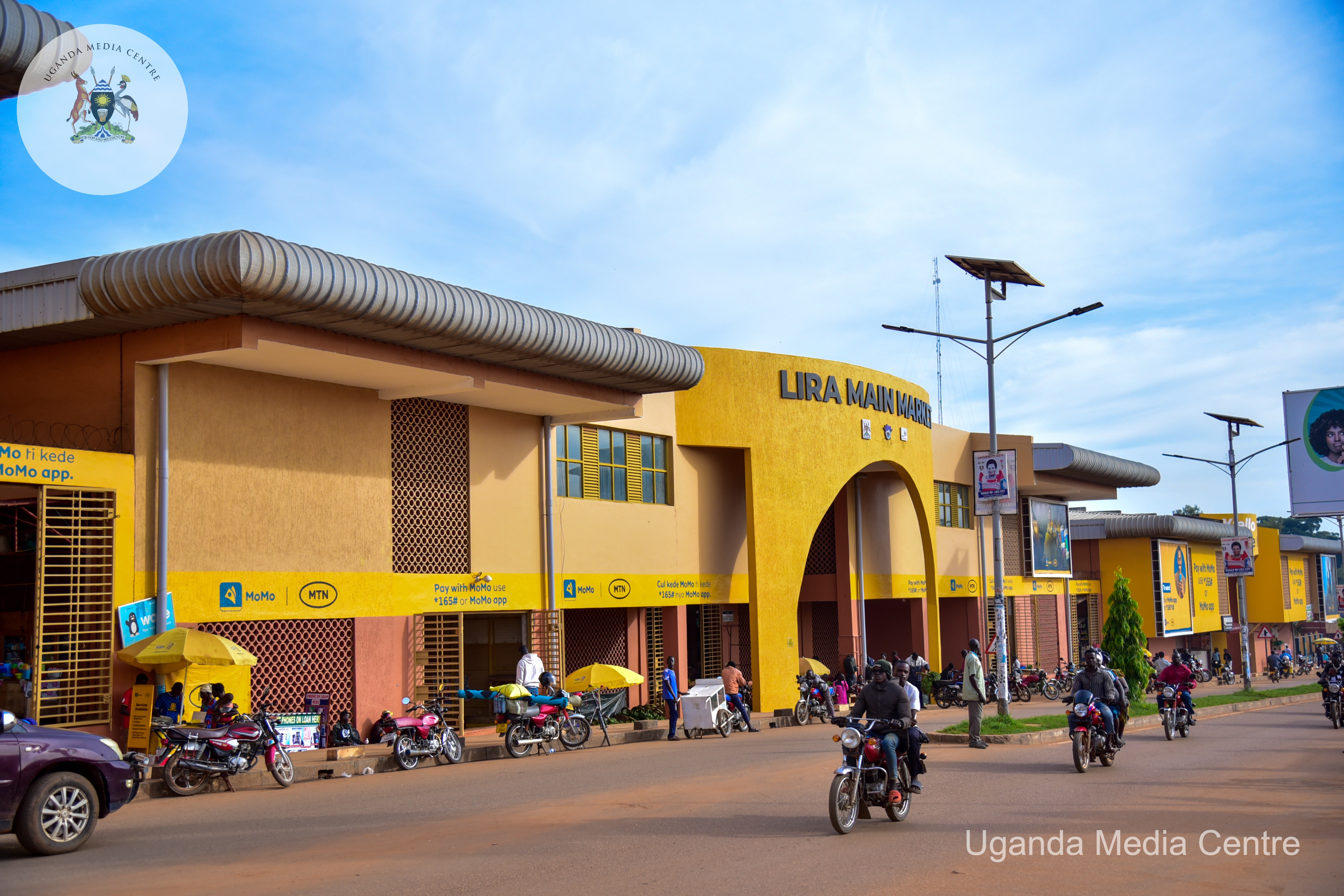
Today, Lira has a new look. It features the impressive Lira Main Market, towering skyscrapers, large concrete buildings, and well-paved roads. The nightlife remains lively as trucks come and go, night revelers arrive and leave, and bars stay open all night. In the morning, traders rush to their stalls, children head to school, trucks and buses move through the city, and bodabodas weave in and out, delivering goods and people. It’s a truly refreshing sight.
The Purpose of Our Journey: Tracking the Shilling
A Unified Front: The Warm Welcome of Lira
Our first stop was at the Lira District offices, where we met with the leaders and technical staff. We received a very warm welcome that made our challenging task feel easier. There is rare and strong cooperation between the leaders of Lira City and Lira District. Ms. Lilly Eyal, the Resident District Commissioner, did a good job briefing and gathering her team, which included the Chief Administrative Officer, Mr. Ismail Ocheng. Whether it was the technical staff, political leaders, or security teams, everyone was working together harmoniously. They didn't just show us the "shining parts"; they walked with us into the muddy farms and the noisy markets. This unity among leaders is the secret power behind Lira’s quick transformation. When leaders work together, the money sent from the center isn't lost; it gets used effectively.
Mr. Ismail Ocheng, the Chief Administrative Officer of the District, gave us an overview of the progress of different government programs. “The government has invested UGX 22 billion into the local economy of Lira District, and over 90% of this money has been sent to the communities. Extension services in the district are better due to significant government funding. Although these services are not yet sufficient, the situation is better than it was eight years ago; now all sub-counties have at least two extension workers,” he said.
The New Lira Skyline: A Hub of Industry
As you enter the city, the first thing you notice isn't the dust; it’s the cranes and the skyscrapers. Private hotels that look like they belong in Kampala are popping up everywhere. The Lira Main Market stands like a giant monument in the middle of town, clean and organized. It has transformed Lira from a simple stopover into a true destination.
Lira has become a significant industrial center for the agro-processing sector, hosting many plants that process sunflower, soybeans, maize, and rice, as well as well-established oilseed crushers and commercial grain mills. The growing manufacturing industry also includes soap production, food processing, packaging, and cotton ginning. Small-scale industries in the municipality include metal fabrication, woodworking, and brickmaking. Under a presidential initiative, Lira hosts a Zonal Industrial Hub focused on skills development in carpentry, tailoring, and value addition. The district serves as a key hub for marketing, producing, and distributing livestock and staple crops such as cassava, beans, and sesame.
Alignment with NDPIV: Value Addition and Economic Transformation
The shift from exporting raw materials to processing clearly aligns with the National Development Plan IV (NDPIV). By turning sunflowers into cooking oil and refining shea butter for the global market, Lira supports the NDPIV goal of agro-industrialization. These industries create a sustainable value chain that connects local farmers to high-value markets, generating jobs and keeping the wealth from the land within the community. This move toward manufacturing and processing ensures that Uganda’s growth is driven by adding value to locally grown products before they reach consumers.
Mwalimu Smart Farm: Kicking Hunger Out of Ayac
In the gardens, we met successful farmers like Mr. Patrick Olobo of Mwalimu Farm in Ayac Village, who grows bananas, coffee, azolla, and rears pigs. Olobo is a former teacher who responded to President Museveni’s call to turn his home into an "economic unit." Patrick didn’t just build a farm; he created a movement by mobilizing his workers and neighbors to grow bananas.
At Mwalimu Smart Farm, Olobo’s real harvest is the community he has mobilized to grow bananas with him. He gives his workers banana suckers to plant at their own homes and teaches them the "M27" variety techniques he learned from NARO. Thanks to the Micro-scale Irrigation Program, Patrick can harvest bananas year-round.
“As long as the government has not brought superglue to close Ugandans' mouths, I will continue to smile because I can even travel abroad on my own because of farming. I am better off than I was as a teacher because I can comfortably pay my children's school fees,” said Olobo.
Olobo received an irrigation set through the micro-scale irrigation program. He benefits from the services of extension workers who make regular visits to advise on best practices. He received and planted 1000 coffee seedlings three years ago, and he has started harvesting and selling. He removes the husks from his coffee and uses them for mulching his banana gardens.
The Story of Milly Grace Ajoro: From Struggle to Success.
Ms. Milly Grace Ajoro is an entrepreneur in Lira town who sells handicrafts. However, this hasn’t always been her life. Ajoro was a single mother struggling to care for her children because she lacked a steady income. She used to borrow money from moneylenders, which she found hard to repay due to high interest rates.
When she heard of Emyooga, Ajoro joined Erute North Women Entrepreneurs SACCO and got an affordable loan to boost her business. Today, she runs a thriving business making sweaters, baby clothes, and shoes.
"I am no longer a beggar," she says, her eyes bright with pride. "My daughters are in school, their fees are paid on time, and I have expanded my stock. The government gave me the hook; I did the fishing."
Ajoro is also the chairperson of Erute North Women Entrepreneurs SACCO, comprising 102 members, worth UGX 196m, up from the UGX 50m they started with.
Members borrowed this money and used it for various activities; some went into winemaking, cosmetics production, pig farming, poultry farming, and honey processing, which we witnessed ourselves.
Ms. Immaculate Abeja didn't find a job after school but knew how to make wine. She started with UGX 25,000 and produced a 5-liter jerrican of wine, which she sold. When she realized there was a market for her wine, she joined Erute North Women Entrepreneurs SACCO to access Emyooga funds. “I borrowed UGX 200,000, which I invested in my wine to improve branding and production. I also started a new product line, composite flour, which I sell locally,” said Abeja.
The women in Erute North Women Entrepreneurs SACCO represent thousands of women in Lira who no longer just "stay in the garden." They are entrepreneurs who rush from the garden to market stalls to trade. Many of them have lockups and buy and sell produce, which helps them support their families and gives their children a better life than they had.
Mr. Otim Patrick of Adur village, Ogur Sub-County, received UGX 1,000,000 in PDM funds in 2023 and used it to grow maize, which he sold for UGX 2,000,000. From the UGX 2,000,000, he bought a cow for UGX 750,000, which gave him a calf after three years. He used the remaining money to educate his children and expand his maize field. In the second season, Otim earned UGX 3,500,000 from his harvest, which he used to buy a second-hand motorcycle for UGX 1,800,000 and another cow.
From the PDM Funds, Otim now has two cows and a calf, can pay for the children's schooling, and has expanded into farming soya beans on 4 acres.
The Foundations: Health, Education, and Roads
The effects of Parish Development Model funds are seen in the health sector. According to the District Health Officer of Lira District, Dr. Patrick Ocan Buchan, more people can access healthcare because they have some spare money; some have bought bicycles and boda bodas to reach health facilities. They no longer must walk long distances.
Accessing markets is easier thanks to an improved road network. The government allocates UGX 1 billion to each municipality for road maintenance. UNRA has also worked on strategic roads such as the Rwenkunye-Apac-Lira–Puranga Road (191 km), which connects the greater Lango sub-region to the Gulu Highway and Masindi port. The road from Corner Kamdini to Lira City is well-paved. To support seed farming, the district launched UGX 800 million road construction projects under the National Oil Seeds Project (NOSP) to improve market access.
2026-04-13





.jfif)