Latest News Updates

img
21 April 2026
INTER-SCHOOLS CODING COMPETITION EMPOWERS THE NEXT GENERATION

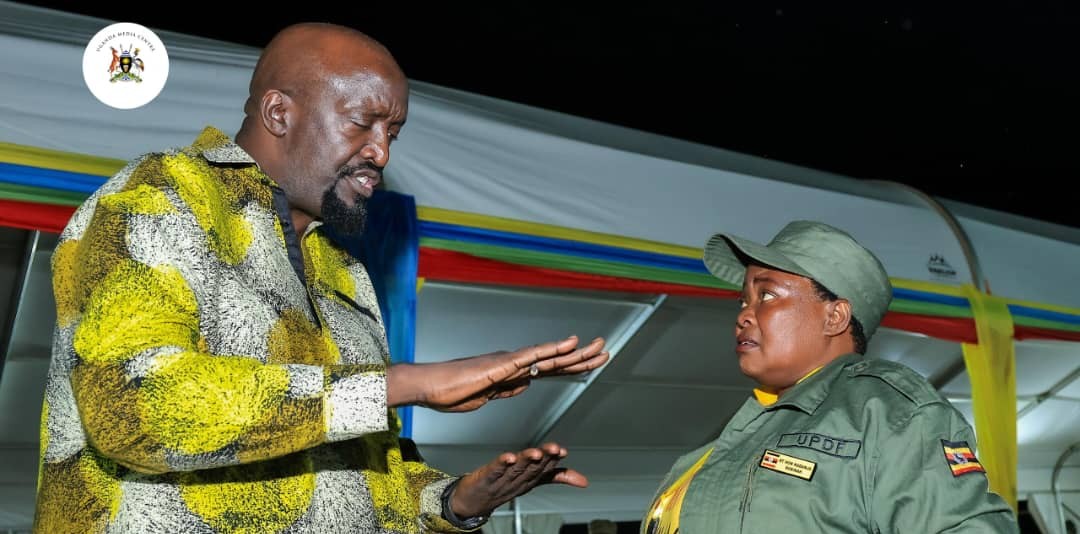
By David Muwonge The Inter-Schools Coding Competition (ISCC) stands as Uganda's largest and most impactful National Advanced Technology Initiative for secondary school students. Launched to provide young Ugandans with early exposure to advanced technological skills, the ISCC aligns closely with the nation's digital transformation agenda, inspiring a new generation of innovators and problem solvers. On Tuesday, April 21st, 2026, the journey took another significant step forward. The Permanent Secretary of the Ministry of ICT & National Guidance, Dr. Aminah Zawedde, and Mr. Alan Kasujja, Executive Director of the Uganda Media Centre, met with the ISCC team at the National Innovation Hub in Nakawa. This meeting marked a key milestone, reaffirming the government of Uganda’s commitment to empowering Uganda’s youth through digital skills. The ISCC bridges the gap between formal classroom ICT education and real-world digital skills by using a structured, Competition-Based Learning approach. This hands-on model ensures that students are not only learning theory but also applying their knowledge to practical challenges. So far, ISCC and its partners have trained over 4,000 students from 120 schools across Uganda in Python programming, a foundational skill for careers in data science, artificial intelligence, machine learning, and web development. These numbers reflect the growing excitement and ambition among Uganda’s youth. Building on this, the ISCC leadership aims to reach 500 secondary schools this year, significantly expanding the program’s impact and bringing advanced technological skills to even more students across the country. Isaac Prince Sekatawa of ISCC shared, “Last year, we were able to reach 4,000 students. This year, we are reaching 500,000 students across the country.” This ambitious target stresses the initiative's scale and vision. At the same event, Dr. Zawedde stated that digital transformation begins with equipping young people with skills in coding, analysis, and problem-solving, noting that these competencies are now as essential as learning English and Mathematics. She stressed that infrastructure, tools, and online services are key to national progress, adding that data protection and cybersecurity are necessary to ensure digital solutions have a real impact. The Permanent Secretary noted that digital skilling goes beyond rhetoric, describing it as a key driver of innovation, entrepreneurship, and meaningful opportunities for Uganda’s youth. Alan Kasujja noted that, “so we as the Media Centre are excited to support anything that has an impact on communities. Anything that seeks to show young people where the opportunities are. We are going to support those groups.” He added, “That's why we are associating ourselves with a competition that showcases coding skills from across the country. We are giving them visibility.” Mr. Alan Kasujja said that the Uganda Media Centre aims to offer strategic support to anyone seeking assistance, ensuring individuals receive the visibility their projects require. He explained that the Centre will guide people to ensure their projects receive the attention they seek. Kasujja noted that the secondary schools project is reaching people in villages and remote schools across Uganda. He emphasized that some of the best-performing schools are in very remote areas, such as Kigezi, and expressed confidence in the initiative, emphasizing its widespread and positive impact throughout the country. Last year’s competition, held at the Kololo Ceremonial Grounds on December 12th, 2025, marked the program’s successful launch. Standard High School Zzana emerged as the champions, setting the stage for an even more exciting edition this year. “So, we are excited that this year we are happening again. It's happening again, and we look forward to seeing the permanent secretary as our chief guest at the Kololo Independence Grounds,” Prince Sekatawa remarked. In her concluding remarks, the Permanent Secretary, Dr. Aminah Zawedde, emphasized that building a generation of coders requires more than training, stressing the importance of creating pathways to jobs, competitions, and tangible rewards for young people. Testimony Daniel Mich Ogwal, a former Pine International School student, recounted his encounter with the Inter Schools Coding Competition, a unique and exciting opportunity he had only ever seen online. Forming a team with his peers, Daniel experienced the intensity of competition-based learning, regularly checking the leaderboard and finding his biggest rivals were teams from the Kigezi region. Despite these challenges, his team advanced through both regional and national rounds, ultimately securing third place at the grand event in Kololo. He observed that the ISCC inspired participants to pursue innovative technological projects, such as digital election and sign-in systems, even among teams that did not win. Daniel shared the story of his friend Joshua, who, though not a winner, was motivated to start building a Ugandan version of Amazon. For Daniel and many others, the competition was truly life-changing, instilling new confidence and ambition.
img
18 April 2026
PRESIDENT MUSEVENI CELEBRATES ELECTORAL VICTORY WITH LANGO SUB-REGION, WARNS AGAINST CORRUPTION

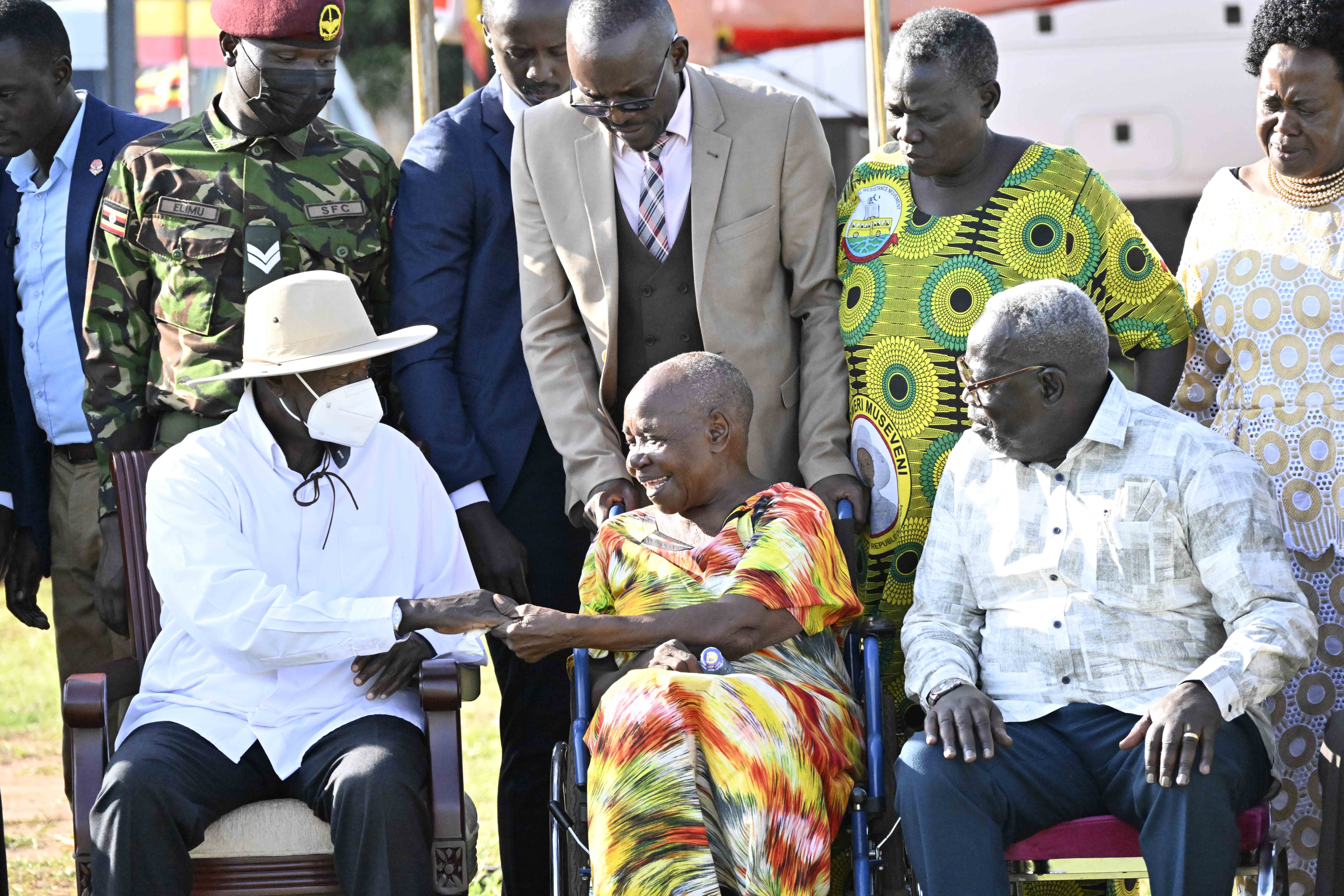
President Yoweri Kaguta Museveni today joined thousands of jubilant NRM supporters in Lango Sub-region to celebrate his recent electoral victory. The event which was held at Lango College Grounds, marked a moment of appreciation and renewed commitment between the President and the people of Lango, who turned up in large numbers to show their support. In his address, President Museveni expressed gratitude to the people of Lango and the entire nation for their continued trust in his leadership. “I thank God for the unity the people of Uganda have continued to show us. It’s God who has continued making us united and that’s why I start by thanking Him.” In addition, he appreciated the people of Lango for voting wisely but also massively in the recent general elections. “Now that elections are over, make sure all households which haven’t benefited from PDM benefit in the next five years. That's why the leaders should not just talk generally but should be specific; parish by parish on how many homesteads have received because those who get support get out of poverty,” President Museveni noted. Furthermore, President Museveni called on the MPs to check how many youths have got the Emyooga money at constituency level. He also noted that the government is planning to start a fresh program of giving coffee seedlings and fruits to farmers. “I’m going to use my land in Baralegi and other government land to plant seedlings which can be given to people for free,” Museveni noted. He also emphasized the importance of maintaining peace, stability, and economic transformation as Uganda moves forward. “I thank the people of Lango for standing with the National Resistance Movement and for supporting our vision of prosperity for all Ugandans,” the President said. “We must now focus on wealth creation, job opportunities, and improving household incomes.” More importantly, President Museveni cautioned Ugandans against corruption. “Don’t be kind to corrupt people, nobody should deduct any money from your PDM, there is enough space in Luzira,” he warned. President Museveni further encouraged Lango people to be very hard working, noting that if people have money it’s easier to progress. He concluded by expressing gratitude again to the people of Lango for their support for the NRM. “Thank you very much for the massive votes you gave me,may God bless you,” President Museveni said. Dr. Jane Ruth Aceng, Lira City Woman Member of Parliament, who also serves as the Minister for Health, warmly welcomed President Museveni to Lango and thanked him for advancing national transformation. She appreciated the President for the development in the last forty years, citing Projects like Parish Development Model and Emyooga. She also thanked the people of Lango for voting President Museveni massively with 80.4%. In addition, Dr. Aceng commended President Museveni for the great improvement in service delivery in the subregion. “I’m very happy to note that heart surgeries ,brain surgeries, dialysis are all made in Lira hospital,” she added. The government Chief Whip, Hon. Hamson Obua also praised the people of Lango for voting NRM massively. “We are here to thank God and the people of Lango for the triumphant victory in the elections,” Hon. Obua said. Ambassador Joseph Ocwet, the Director General of the External Security Organisation (ESO) praised the President’s commitment to infrastructure development, education, and security in the region, noting significant improvements over the years. “You brought prosperity to Lango. There is a lot of development, the roads, education system, healthcare has gone beyond our expectations. This is the reason Lango voted for you massively this time,” Ambassador Ocwet noted. Prior to the event, President Museveni laid a wreath in memory of the late Anthony Ocwet, the father of Ambassador Ocwet and the late Mrs. Carolyn Akullu Ocwet, his wife. The event was also attended by Ministers, religious and cultural leaders, NRM leaders, among others.

img
15 April 2026
PRESIDENT MUSEVENI LEADS MPS IN SHOOTING EXERCISE, CALLS FOR INTEGRITY IN LEADERSHIP

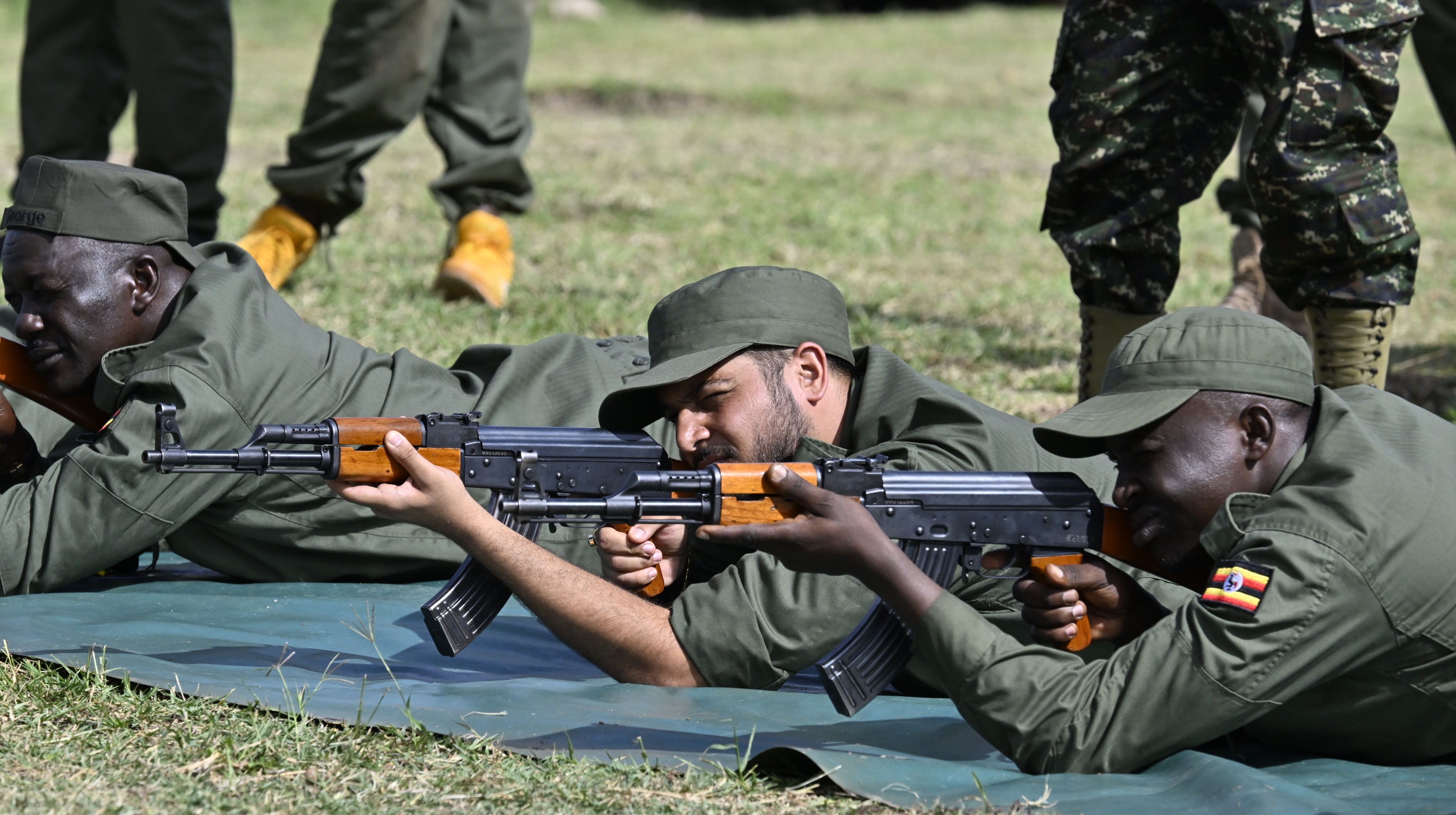
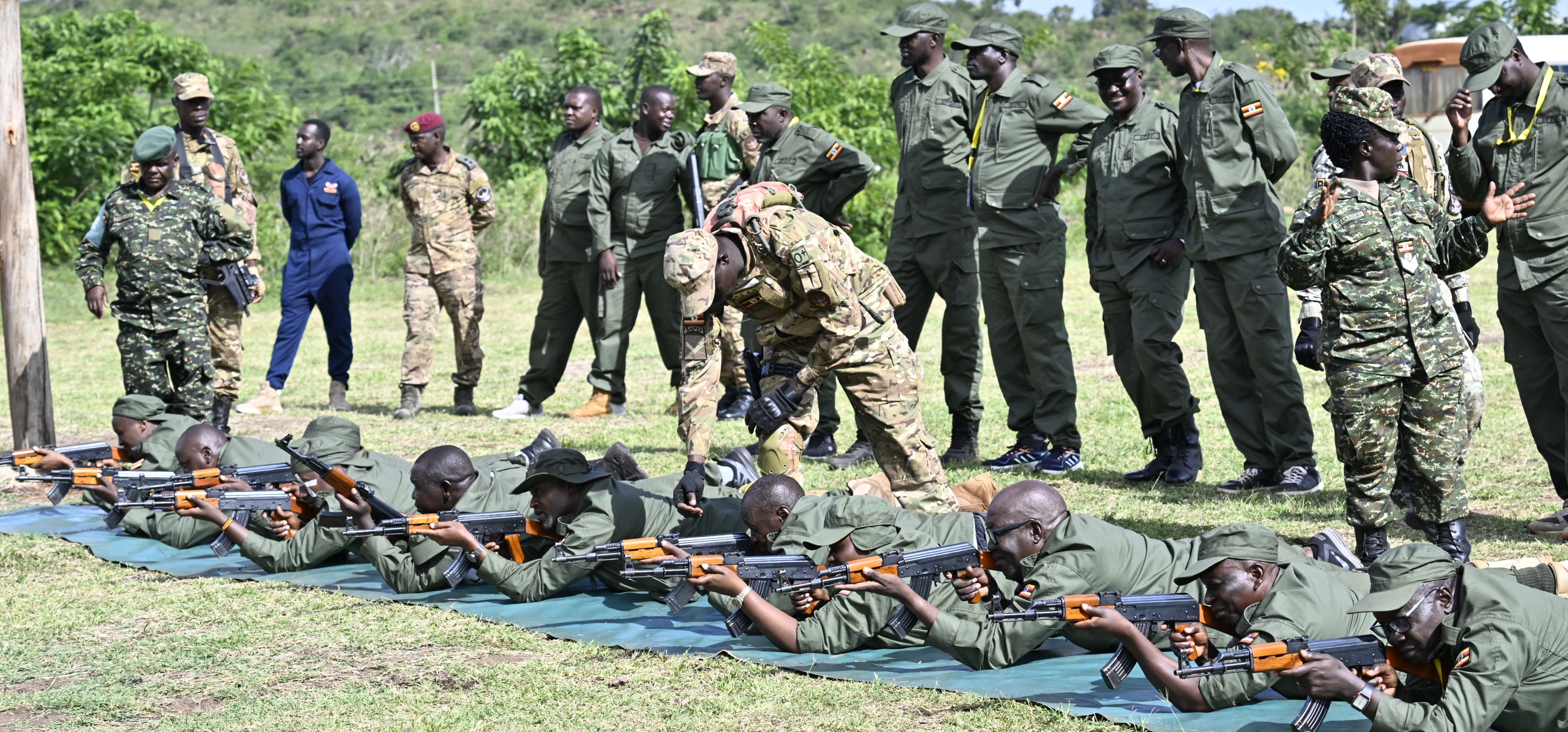
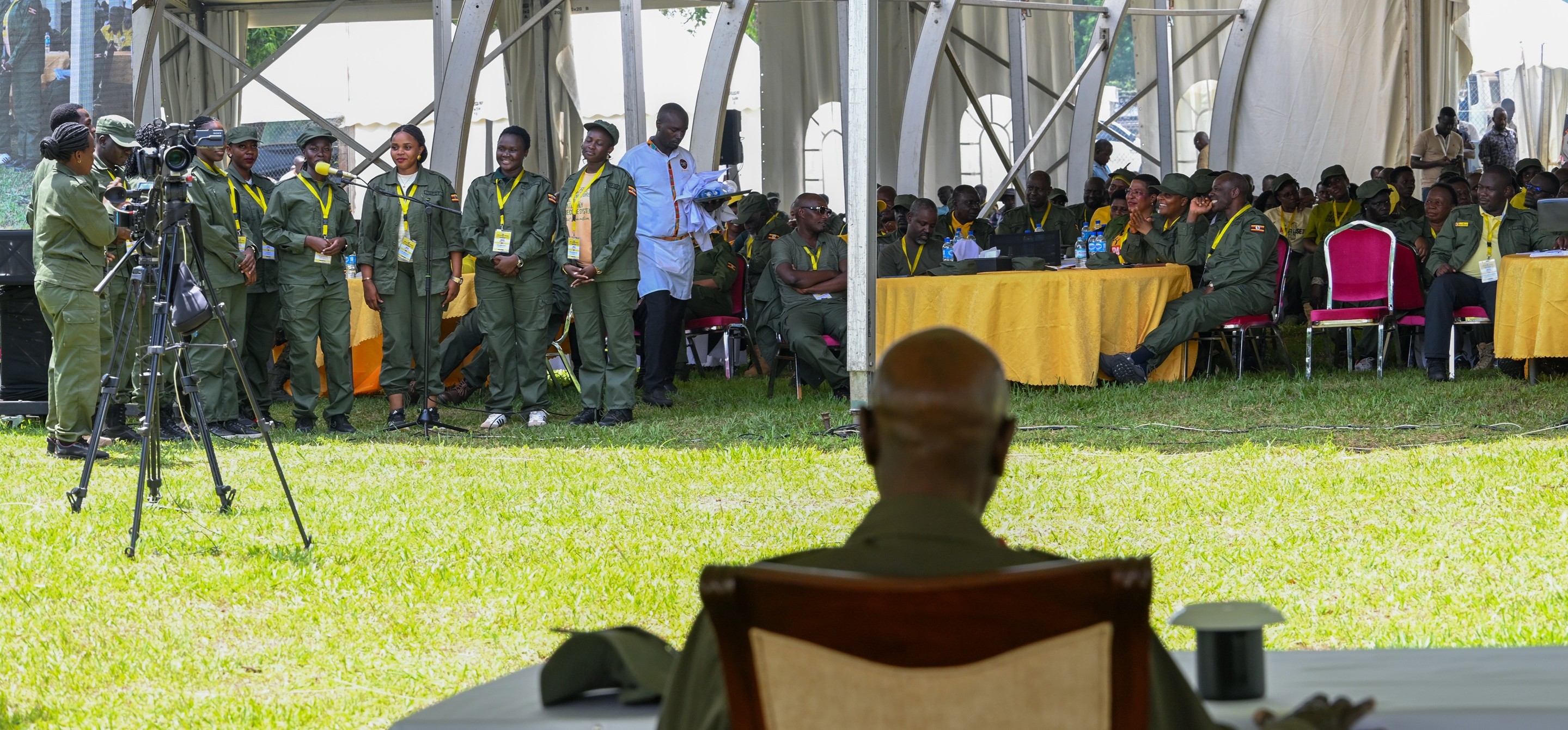
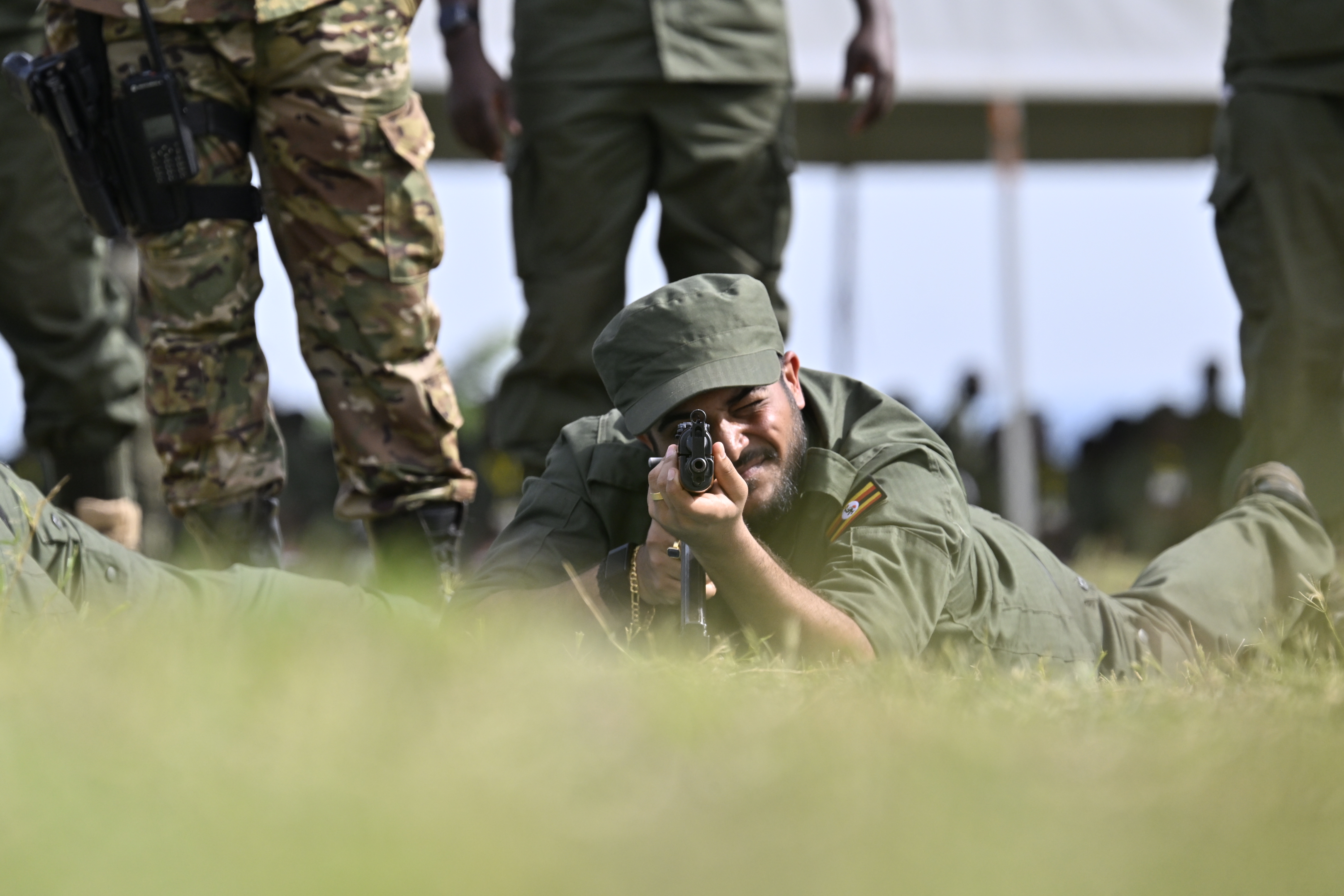
President Yoweri Kaguta Museveni today took Members of Parliament through shooting practice at the National Leadership Institute (NALI) in Kyankwanzi and used the session to emphasise national defence, discipline, and the fight against corruption. This event was the last activity of the MP’s retreat which officially concluded yesterday. The one-week retreat started on April 7 to 14th April, 2026 under the theme: “Aligning the NRM leadership towards protecting the gains and making a bold, qualitative leap towards a higher middle-income status society.” The President, who personally guided the legislators on basic firearms handling, also observed their participation and congratulated them, noting that some were veterans. “I congratulate the participants. I can see some of them are veterans,” President Museveni said. He explained that Uganda’s security is anchored on the concept of a people’s army, where citizens are trained and can return to civilian life but remain available as a reserve force when needed. “Ours is a people’s army. We encourage citizens to learn the science of arms so that in case of any threat, we can mobilise numbers for national defence,” he said. President Museveni noted that such a system enables even countries with smaller populations to build strong defence capacity through continuous training and mobilisation of reservists. “This is how you maximise defence. People train, go back to their normal lives, but remain ready. That is what they do in countries like Israel, where citizens are called back for refresher training,” he added. Reflecting on Uganda’s experience, the President cited past instances where trained local defence units were mobilised to respond to security challenges, underscoring the importance of preparedness. Turning to governance, President Museveni warned that corruption remains the biggest threat to national progress and urged leaders to take a firm stand against it. “The first thing you must do is to fight corruption. If you don’t, all these efforts will be for nothing,” he said. He cautioned Members of Parliament against engaging in bribery and vote-buying, describing the practice as detrimental to both leadership and national development. “Do not bribe voters. You cannot give someone a small amount of money to decide leadership for five years. That is wrong,” he emphasised. The President also encouraged legislators to embrace financial discipline and utilise existing support systems such as savings and credit cooperatives instead of unsustainable borrowing. “A bankrupt leader should not be a leader. Stand on your own and work with the systems we have put in place,” he advised. President Museveni said that the government had historically prioritised collective welfare programmes for the army, including schools for soldiers’ children, scholarships, and SACCO initiatives such as Wazalendo, to improve livelihoods. “We did not have much money for high salaries, but we focused on supporting soldiers through education, housing, and healthcare,” he said. He also noted that the government had to encourage families of soldiers to engage in productive activities to boost household incomes without engaging in corruption practices. Call to serve: As the retreat came to a close, President Museveni urged the legislators to return to their constituencies with a renewed commitment to service, integrity, and wealth creation among wananchi. Uganda’s transformation, he noted, depends on disciplined leadership, elimination of corruption, and empowering citizens to participate in the money economy. “I wish you good luck as you go back to serve your constituencies,” he said. On his part, Col. Okei Rukogota, the Director of NALI, thanked the President for recently inaugurating the shooting range , noting that it will support the continued training of civilians in basic defence skills. He said the initiative is in line with the President’s long-standing guidance that, wherever possible, citizens should be equipped with practical skills to enhance security and reduce violence. “This is testimony that you have never been a dictator, because dictators cannot empower citizens with the means of defence,” Col. Rukogota said. He also commended the President for continuing to equip wananchi with the capacity to safeguard the country’s democratic and transformation processes.

img
14 April 2026
GENERAL MUHOOZI KAINERUGABA’S 52ND BIRTHDAY RUN

By Josepha Jabo The Executive Director of Uganda Media Centre, Alan Kasujja, announced the 52nd Birthday Run of Chief of Defence Forces (CDF) of the Uganda Peoples’ Defence Forces (UPDF), General Muhoozi Kainerugaba, to be held two days after his birthday on Sunday, April 26, 2026 at Kololo Independence Grounds from 6am-12pm. Addressing journalists and well-wishers at a press conference held at Uganda Media Centre on Tuesday, April 14, 2026 Kasujja revealed that the CDF will be the Chief Runner at the event. “We are here this morning to support the 52nd birthday run that honours the birthday of the CDF, Gen. Muhoozi Kainerugaba. This is a civic engagement, which reflects the relationship the general has with the people. Rather than celebrating on his own, he has decided to give back to the community, hence this event. It’s a non-partisan event. We are announcing a celebration worthy of a servant leader. The theme, this year, is ‘Run for Charity, Run for Hope’ and 52 years is 52 reasons to run,” he said. Kasujja revealed that the CDF will be the Chief Runner. “The general himself will be the Chief Runner. We are looking forward to having him running side by side with fellow Ugandans on the road. I am going to try to run, even though you can see running is not my biggest strength, but we shall see what happens on that day,” he promised. For all those who are interested in sponsoring this event, Kasujja said financial contributions towards the birthday run can be made to MTN MoMo 55445766, Airtel 4405201. “In moments like these, there are people who try to take advantage. There are fraudsters, who emerge from all corners and say they are fundraising for this event. That should not happen this time. If you want to make a financial contribution towards this cause, your contribution is welcome and it should go to those two codes,” he explained. Kasujja invited all Ugandans to participate in the event. “This birthday belongs to every Ugandan. We invite all of you, wherever you are, to come and take part. I encourage every Ugandan, to show up in large numbers. Ugandans are strongest when we run together; ‘One Uganda, One Finish Line!’” Spokesperson of the UPDF, Colonel Chris Magezi, appealed to young people to attend the birthday run. “The MK Birthday Run, which has turned into an annual event, is for a good cause. We appeal to young people in Kampala and neighbouring areas to come and participate in this run. This event is gaining traction every year. The general, like others in his position, could have chosen to celebrate his birthday privately, but the general is the rallying point for millions of young Ugandans and it is something he has embraced over time. That is why the MK birthday run is becoming an exciting annual event. We want to continue to use it, to engage the young people for community causes,” he said. Police Spokesperson, ACP Kituuma Rusoke, assured the general public of security during the event. “The birthday run, of our CDF, is a very noble cause. In due course, we shall give you a comprehensive picture of our entire route, but the generic statement that I can make now is that Uganda Police Force shall control traffic along the routes and roads that will be affected. We will certainly have access control measures. Whoever intends to come to Kololo, we shall guarantee you security. We shall deploy along the routes, at venues and at any place security assessment deems necessary to be deployed,” he concluded. Each running kit costs UGX 20,000. The kits are available now at Kololo Independence Grounds. The proceeds that will come from the purchase of these kits will go towards orphans. The general will support orphans with the proceeds and financial contributions. The writer works for Uganda Media Centre

img
14 April 2026
PRESIDENT MUSEVENI CLOSES NRM MPs’ RETREAT IN KYANKWANZI, URGES LEADERS TO FIGHT CORRUPTION

President Yoweri Kaguta Museveni has officially closed the 2026 NRM Members of Parliament retreat held at the National Leadership Institute (NALI) in Kyankwanzi, calling on leaders to reject corruption and actively participate in wealth creation initiatives. The week-long retreat, which started on April 7, ended today,14th April 2026, under the theme: “Aligning the NRM leadership towards protecting the gains and making a bold, qualitative leap towards a higher middle-income status society.” Before the close of the retreat, President Museveni hosted the MPs at Ngoma State Lodge and Farm, where he led them on a tour of the farm. The group walked through the cattle fields and proceeded to the bridge between River Mayanja and River Kafu, an area the President described as historically significant in Uganda’s liberation struggle. Speaking during the final session, the President emphasized the historical and strategic importance of Kyankwanzi. “This place is very important for two reasons,” he said. He recalled that on February 20, 1984, the National Resistance Army (NRA) mobile brigade, led by Gen. Caleb Akandwanaho (Salim Saleh), attacked and overran Masindi Barracks after trekking for days from Kanyara. “They had walked for many miles and attacked Masindi Barracks. We were monitoring through the radio, and I intercepted communications from Obote’s forces saying they had been attacked and overrun,” he said. President Museveni added that he immediately set off on foot to link up with the fighters. “I left at about 10:00am and walked. We slept near a place nearby and later crossed into Kyankwanzi, where we linked up with Saleh’s force,” he noted. He revealed that after the war, he decided to secure the land for national purposes. “After the war, I said I will buy this land for the movement because it was a good area. Eventually, the government acquired it, and that is why we are here today,” he said. The President noted that the area’s geography, surrounded by rivers such as Mayanja and Kafu, makes it ideal for reflection and ideological orientation. “That is why I always bring you here,” he added. Shift to the money economy: President Museveni reiterated his long-standing message of transitioning Ugandans from subsistence living to the money economy. “By the time of independence, only about 9% of homesteads were in the money economy. The rest were producing just for the stomach,” he explained. Drawing from his upbringing in Ntungamo, the President said most families, including his own, were not engaged in commercial activity. “We had cows and bananas, but they were only for consumption. There was no selling,” he said. He emphasized that since the 1960s, there has been a consistent push to transform livelihoods. “Our message has always been that our people must enter the money economy,” he added. The President highlighted progress in the cattle corridor, which stretches from Isingiro through Kazo, Kiruhura, Sembabule, Gomba, Kyankwanzi, Nakasongola, and Masindi. “When we came into government in 1986, we intensified this message. We encouraged smallholder farmers to adopt dairy farming and other income-generating activities,” he said. He noted that the strategy has yielded visible results. “The cattle corridor has transformed because people changed their mindset and followed the message,” President Museveni said. He cited farmer John Matongo as one of the beneficiaries. “He was outside the money economy, but now he has transformed and became a wealthy man,” he noted. However, he urged farmers to embrace pasture improvement for increased productivity. “If you plant improved pasture on one square mile, you can keep up to 300 cows,” he advised. President Museveni also pointed to ongoing efforts to improve infrastructure in the area. “We shall continue working on the roads connecting Luwero, Ngoma, and Kyankwanzi to improve accessibility,” he said. Strong warning against corruption: The President issued a stern warning against corruption, particularly within Parliament. “I do not want to hear of corruption in Parliament. If there is corruption in Parliament, how will you control others? You are the oversight body,” he said. He warned that corruption poses a serious threat to national development. “It will kill Uganda. It is suicide and must not be tolerated,” he stressed. President Museveni further revealed reports of bribery linked to budget approvals. “I have heard that some people demand money before passing budgets. One official refused and reported the matter. This must stop,” he said. He cautioned that anyone found engaging in bribery for positions would be disqualified. “If we hear that you are giving bribes to get office, you will be disqualified,” he warned. On the Parish Development Model (PDM), the President urged proper utilization of funds. “This money we are sending to the people can change their lives if used properly,” he said. He also advised citizens to avoid unnecessary borrowing. “Do not rush to money lenders or banks because of pressure. Use the resources you have wisely,” he cautioned. On her part, the Vice President, H.E Jessica Alupo commended the Members of Parliament-elect for completing the retreat, describing it as a key platform for strengthening ideological grounding and leadership discipline. She said the Kyankwanzi training was essential in aligning leaders with the Movement’s long-term vision of socio-economic transformation. “We appreciate the commitment shown by the MPs throughout this retreat. It is important that leaders remain grounded in the ideology of the Movement as they serve the people,” she said. She urged the legislators to translate the knowledge gained into practical service delivery and improved accountability at all levels. The Secretary General of the NRM, Rt. Hon. Richard Todwong, presented the official resolutions of the retreat on behalf of the NRM Members of Parliament and party-leaning Independents. “We gathered here as NRM Members of Parliament-elect and NRM-leaning Independents to reflect on our role in protecting the gains of the revolution and advancing Uganda towards a higher middle-income status,” he said. He noted that the retreat followed the NRM’s electoral victory in the 2026 general elections. “We acknowledge the resounding victory of the NRM Party and its Presidential candidate, Gen. Yoweri Kaguta Museveni, and appreciate the role played by the party structures under the stewardship of the Secretary General and the entire leadership,” he added. Todwong said the MPs benefited from ideological guidance by President Museveni, who delivered a keynote address on understanding the NRM Revolution and party ideology, as well as a series of leadership materials authored by the President. “We were guided by the wisdom and leadership of the National Chairperson and inspired to recommit ourselves to the mission of the Movement,” he said. Presenting the resolutions, Todwong said MPs had resolved to uphold discipline, accountability, and ethical leadership. “We commit to institutionalizing a culture of discipline, accountability, and results-oriented leadership aligned to the NRM manifesto,” he said. He emphasized that leaders would prioritize national interest over personal gain and reject mediocrity. “We also resolved to support firm and decisive measures in the fight against corruption at all levels of government,” he added. The MPs further committed to strengthening anti-corruption institutions and enforcing strict accountability mechanisms. “We reaffirm a zero-tolerance on corruption, inefficiency, and abuse of office,” Todwong said. On the economy, Todwong said MPs pledged to support policies aimed at accelerating socio-economic transformation. “We have committed to aligning all our decisions with the National Development Plan IV and supporting policies that expand access to affordable credit, markets, and infrastructure,” he noted. He added that MPs would support the government's tenfold growth strategy and efforts to double the economy every five years. “We shall promote value addition, export orientation, and import substitution as key drivers of Uganda’s transition to a higher middle-income economy,” he said. Meanwhile, the Member of Parliament for Nakaseke North, Prof. Wilber Manyisa Ahebwa, commended President Museveni for his leadership and contribution to national development. “I thank you, Your Excellency, for the sacrifices you have made for this country,” he said. He noted that Nakaseke strongly supported the President in the recent elections. “This constituency gave you overwhelming support, and we remain committed to the Movement,” he added. Prof. Manyisa highlighted key economic activities in the area, including cattle keeping and tea growing, and pledged to continue mobilising communities for government programmes.

img
14 April 2026
NITA-U, MINISTRY OF ICT & NATIONAL GUIDANCE ANNOUNCE LAUNCH OF NATIONAL IP PEERING EXCHANGE (NIPX), ACHIEVING TRUE DIGITAL SOVEREIGNITY

By Catherine Namuddu National Information Technology Authority-Uganda (NITA-U) in collaboration with the Ministry of ICT and National Guidance, has officially announced the upcoming launch of the National IP Peering Exchange (NIPX). The announcement was made at a press conference at Uganda Media Centre on Tuesday, April 14, 2026. The NIPX launch will take place during an awareness and engagement workshop on Friday, April 17, 2026 at Speke Resort Munyonyo, Kampala. In his address, Hon. Godfrey Kabbyanga, Minister of State for ICT and National Guidance highlighted NIPX’s strategic importance. “Today marks a bold and historic milestone in Uganda’s digital journey. With the launch of the National IP Peering Exchange (NIPX), Uganda is taking a decisive step toward achieving true digital sovereignty. The ministry has fulfilled its role as an enabler, by working closely with NITA-U to deliver this critical national infrastructure, which will firmly position Uganda as a competitive ICT hub within the East African region,” he said. Furthermore, Kabbyanga urged all Internet Service Providers, content providers and digital businesses to actively collaborate with the NIPX so the government and private sector can work together to build a faster, cheaper, more secure and resilient Internet for every Ugandan. The minister’s remarks highlighted how the NIPX will attract investment, stimulate innovation, and create new economic opportunities, particularly for the youth and digital entrepreneurs. The NIPX is Uganda’s first neutral and open Internet Exchange Point (IXP). It enables Internet Service Providers (ISPs), content providers, cloud platforms, data centres and government networks to exchange Internet traffic locally and efficiently within the country. By keeping local traffic local, the platform is expected to significantly reduce latency, lower the cost of Internet services, enhance network resilience, and strengthen Uganda’s digital sovereignty. The launch represents a key deliverable, under the Digital Uganda Strategy and Vision 2040. It addresses long-standing inefficiencies, where even domestic internet traffic is routed through expensive international pathways before returning to Uganda, a situation that increases costs and reduces performance. Representing the Executive Director NITA-U, Dr. Hatwib Mugasa the Director Technical Services, Mr. Richard Obita, provided technical insight into the platform. “The NIPX has been deliberately designed under neutral ownership, where it is neither owned nor controlled by the government. Hence ensuring that no single entity holds controlling interest. This creates a genuine level playing field for all participants,” Obita said. “Instead of routing local traffic, through expensive international carriers, networks can now interconnect directly within Uganda. This delivers three immediate benefits; significantly lower latency for faster user experience, reduced operational costs by minimising reliance on international bandwidth and greater reliability even during international link disruptions. For the ordinary Ugandan, this means smoother video calls, faster access to e-government services, improved online learning and eventually more affordable data packages,” he continued. Speaking on behalf of the private sector, Chairman of the Internet Service Providers Association of Uganda (ISPAU), Mr. Godfrey Sserwamukoko, applauded the development saying, “On behalf of the Internet service industry, we commend the Ministry of ICT and NITA-U for this initiative. NIPX provides a neutral and open platform that has the potential to optimise local traffic exchange and bring meaningful cost efficiencies. We look forward to active collaboration, with all stakeholders, to ensure maximum participation, to realise the full benefits of faster and more affordable Internet services for businesses and citizens across Uganda.” Lastly, NIPX operates on globally recognised best practices, open peering, non-discriminatory access and shared governance. NIPX infrastructure is of world-class standard; robust, secure, scalable and ready to meet the demands of Uganda’s growing digital economy. All eligible networks, both large and small, are warmly invited for the launch to connect and begin interacting on this national platform. It has been declared open for business. The writer works for Uganda Media Centre

Latest Press Releases

Opinion Posts

author's photo
21 April 2026
BALANCING SOVEREIGNTY AND OPENNESS: REGULATING FOREIGN INFLUENCE WITHOUT STIFLING GROWTH

"No man is an island, Entire of itself; Every man is a piece of the continent, A part of the main." The European poet who wrote those words 400 years ago has become relevant in today's discussions. No nation is an isolated island, entire of itself. Every country faces foreign influence, only differing in how they manage it. Some countries tend to ban foreign influence operations outright, with severe penalties for those involved. Others take a narrower approach - prohibiting foreign funding in sensitive sectors like arms, security and elections. There are those, still, who will allow it elsewhere if properly disclosed. Foreign-funded lobbying, for example, is usually legal provided the money trail is transparent. That is the common-sense line. Uganda is not starting from scratch in this. We already have the NGO Act (2016) and the Political Parties and Organizations Act (2005), both of which could be sharpened with the passage of time and rapid development of technology. But do we need entirely new legislation to regulate or prohibit online foreign operations? We think we do. To stress the central point, foreign influence is not new. Every country has it and exerts it on others. The test is whether we can tell help from harm. Our history shows foreign influence cuts both ways. Some interventions helped; others harmed. Any new law must weigh both outcomes. The task for us all, and particularly Parliament, is to separate legitimate foreign influence — open and transparent — from covert foreign interference — coercive, deceptive, or clandestine. What other democracies do: The principle is the same worldwide: nearly every country now has laws to combat foreign interference in political parties, civil society and online spaces. The UK leans on three key statutes: the National Security Act 2023, the Political Parties, Elections and Referendums Act 2000, and the Online Safety Act 2023. Singapore’s Foreign Interference (Countermeasures) Act, passed in 2021, lets the state direct platforms and individuals to counter hostile information campaigns. It tags “Politically Significant Persons” for stricter reporting on foreign donations and links. Canada’s Bill C-70, tabled in 2024, would create a foreign influence transparency registry and toughen penalties for acting on behalf of foreign entities against Canadian interests. Australia criminalized foreign interference under its Criminal Code, with jail terms of up to 20 years, backed by a Foreign Influence Transparency Scheme. The United States uses the Foreign Agent Registration Act to compel disclosure by anyone acting for foreign principals. Federal law already bars foreign nationals from funding U.S. campaigns. New proposals aim to close loopholes on “indirect” contributions. The European Union is pushing transparency rules, tighter ‘revolving door’ limits, and curbs on foreign-funded third-party electioneering. The common tools across these laws (now also proposed for the Ugandan law) include: a) Registration: requiring agents of foreign governments to declare the relationship, as Australia does. b) Funding bans: Prohibiting foreign donations to political candidates and parties, as Singapore and the United States do. c) Information controls: Empowering authorities to order takedowns of accounts run by foreign actors sowing discord, and targeting proxies. These also criminalize the use of local agents to sway politics or policies in favour of a foreign entity. So the distinction matters. A law targeting domestic interference by hostile foreign actors should focus on the financial ecosystem — blocking local proxies from accessing funds for that purpose. As is usual in legal matters and orderly conduct of society, definitions are the foundation of any discussion. We must define terms precisely. Foreign funding — grants, aid, loans with no ownership or control — is not the same as foreign direct investment — capital placed in an Ugandan enterprise with ownership, control and long-term commercial interest. Both serve development, but they need different rules. Conflating them is to risk creating regulatory gaps, lost tax revenue, distorted investment data and shaken investor confidence. The law should distinguish grants, loans and equity, and spell out how each is regulated in the context of sovereignty. We face one core task today, as Ugandans: define the enemy (in a manner of speaking). The task is definitional: Foreign influence — which is open, transparent engagement — is not foreign interference. Foreign interference is often covert, coercive, deceptive action. For instance, a foreign state or player paying local proxies to spread disinformation or misinformation to influence policy is interference. The intent of the Sovereignty Bill intent is sound. Its success depends on clarity, restraint and honesty about our own history. The contributions to the debate are therefore important and welcome. That is why we are processing the Bill through Parliament where the people’s representatives would interface with the law. The scope of the Bill as we understand it is to regulate agents of foreigners and foreign fund intended to influence Government Policy. All Ugandans should be behind this for Uganda. The issue is whether a Ugandan or a person who receives money from the diaspora that is intended for private, commercial or family purposes, will be required to comply with the provisions of the Protection of Sovereignty Act, once passed. The scope of the Act is clearly defined under the Bill and it does not include funds received for private, commercial or family purposes. The law will only apply to funds that are meant to fund the activities listed in in the Bill - that is activities that are intended to promote the interests of a foreigner against the interests of Ugandans; activities influencing the development of the policy of Uganda's Government; activities influencing the public to oppose the policy of Government; and funding of political parties or organisations or any person contesting for an election in Uganda. The justification for the Protection of Sovereignty Bill is grounded in the urgent need to safeguard Uganda’s autonomy and stability in the face of many identified challenges. The Bill is not an isolationist turn, but a measured assertion of Uganda’s right to self-govern and definition of the terms of its engagement with global systems. The following points outline the rationale for the Bill and why it is timely and necessary: (a) Filling legal and policy gaps: A technical justification for the Bill is that it will fill gaps in the existing legislative framework. While Uganda has laws touching on these domains (e.g. the NGO Act 2016, Anti-Money Laundering Act, Anti- Terrorism Act, the Public Finance Management Act), these laws operate in silos and do not explicitly articulate the overarching principle of sovereignty protection. (b) Preserving national security and social stability: Unregulated and unchecked external funding directly impact national security and social cohesion. (c) Upholding self-determination in policy making: The Bill is further justified by the principle that Uganda’s development path and laws, should be determined by Ugandans, in line with our values and needs. This principle is increasingly important given the instances of external pressure. (d) Strengthening governance and accountability: A sovereign state must also be accountable to its citizens. By strengthening regulations on NGOs and foreign funding, the Bill actually enhances good governance. It is a move to ensure that all actors on Ugandan soil whether governmental or non-governmental, domestic or foreign-funded abide by the law and operate transparently. (e) Protecting cultural integrity and social values: Another justification lies in safeguarding Uganda’s cultural sovereignty. Ugandans have the right to uphold their own values, traditions, and social norms without undue foreign dictation. The Bill reinforces the notion that such matters are for Ugandans to decide. This stance is bolstered by international principles of sovereignty. Uganda is a signatory to the 2020 Geneva Consensus Declaration, which affirms national sovereignty in policy decisions on life, family and gender. The Bill does not prohibit foreign funding or cross-border transfer of money. Instead, the Bill intends to regulate foreign funding in order to safeguard Uganda’s sovereignty. Once again, Uganda is not the first in enacting this kind of legislation. It is following in the footsteps of other countries - better late than never. The sovereignty conversation is difficult. But it must be held! Our children’s future depends on us getting it right - all Ugandans who wish Uganda well. Any input towards the Protection of Sovereignty Bill is therefore welcome. Success hinges on clear definitions, targeted tools, and the wisdom to tell the difference between helpful foreign engagement and covert interference. Security matters. So does growth. The Bill must protect both. Now let us all get involved and make a law that works for Uganda. The Author is the Attorney General of the Republic of Uganda

author's photo
16 April 2026
MAKERERE UNIVERSITY’S PUBLIC LECTURE AND HIGH LEVEL ROUND TABLE DIALOGUE- ON HEALTH - INVESTING IN HEALTH FOR UGANDA’S FUTURE.

Delivering Vision 2040 through smart and sustainable Health Financing. Uganda is prioritizing human capital development as a foundation for economic transrmation under vision 2040 and the ten-fold growth strategy. At the same time, the health financing landscape is evolving, with increasing pressure on domestic resources and growing uncertainty around external financing. This public lecture was intended to provide a platform for national reflection on these challenges and identify practical pathways for strengthening sustainable health financing in Uganda. Makerere University’s School of Public Health [MakSPH] took the lead in organising this Public Lecture on Thursday 9th April 2026 at their auditorium. The engagement brought together the stake holders in Health, Academia, policy and government technocrats Health research constitutes more than 50% of all research at Makerere University. The School of Public Health and the Infectious Diseases Institute alone account for more than 40% of the University’s research income. Their combined research income exceeds the budgets of all other universities in Uganda as Prof. Barnabas Nawangwe put it at the round table. The impact of this investment is visible. The Infectious Diseases Institute supports the Ministry of Health in providing antiretroviral therapy to more than 20% of all patients in Uganda who require it. It operates in over 90 districts across the country. The combined research income from Makerere University is also one of the largest contributors to Uganda’s foreign exchange earnings. The University brings in more than one trillion shillings annually. Because of the specialized health programs developed at Makerere over the years, there has been a noticeable reduction in Ugandans seeking treatment abroad. Having set this background, the Vice Chancellor opened the floor for the public debate. But that was not before he quipped that Makerere’s medical school is ranked among the top in Africa and within the top 100 globally. “Investing in Health for Uganda’s Future—is not merely an academic proposition. It is a call to action. We must recognize Makerere as a research-led university with a special role—and not fund it like any other institution or department” The VC threw the gauntlet to the Permanent Secretary and Secretary to the Treasury who was the key note Speaker. The Context of this dialogue was set by the Deputy Secretary for Public Service and Secretary to the Cabinet Mrs Jane Mwesiga who gave the opening remarks. She noted that Uganda has made important progress in strengthening its health system over the past decade. Referring to a recent corroboration between the Ministry of Public Service and the Ministry of Health, she highlighted the Government investments in Health infrastructure, strengthened management of resources, Diagnostic capacity and improved primary health care as well as specialised services. These investments she said, had also supported improvements in the health workforce and service delivery across the country. She pointed out reforms in public financial management having strengthened the management of health sector resources. She alluded to the introduction of programme-based budgeting and results-based financing approaches which had brought about efficiency, transparency and accountability in the use of public funds. Other notable improvements she pointed to were in availability and distribution of essential medicines and supplies. Stronger procurement planning, better coordination with National Medical Stores and more consistent delivery cycles which have reduced stock-outs in many facilities. She highlighted programs that were previously vertical e.g. HIV, TB, Malaria, Maternal and Child health as continuously being integrated into broader primary health care systems. This, she noted, allowed patients to access multiple services in one visit – improving efficiency, reducing missed opportunities and lowering house-hold costs. The downside, the research highlighted, was high demand with low functionality. Some new build facilities are under utilized due to unreliable water and electricity supply. Others are operating below capacity due to understaffing – placing a strain on the limited staff and systems. There were further issues of weak supervision, limited Specialist services and medical personnel’s dual practice during official hours. As a result, there are persistent negative perceptions of public health facilities because of a diminished public value. The public value, the Deputy Head of Public Service noted, was not so much about the construction of new facilities but rather realised only when a mother delivers safely, a child is immunised on time, a patient receives effective care and communities trust and use the health care service. The PSST, Mr Ramathan Ggoobi said that Uganda’s future and its ambitious ten-fold growth would be decided by the investments made in the health and human capital of Ugandans. He stated that health was an imperative, not a social afterthought. He referred to health as an economic transformation and productivity issue as well as a national competitiveness matter. No country, he noted had achieved sustained structural transformation without sustained investment in human capital. Globally, human capital accounts for nearly 70% of national wealth. The PSST said that he treats health spending as investment, not consumption. Every shilling he said, must buy measurable economic and social returns. He expressed concern that Uganda remains largely dependent on external financing for health at the ratio of 40:45% of total health expenditure. The most recent figures show Government at 22%, Development partners at 42%, Households at 31% and Insurance at 05%. This dependency creates structural vulnerability as global aid has become more uncertain. Uganda’s total resource envelope for FY25/26 is Shs 72.38 trillion with Health getting a slice of Shs 5.87 trillion within a broader Human Capital development allocation of Shs 11.44 trillion. Per capita government health spending has more than doubled over the past decade and government spending rose from Shs 2.8 trillion in FY2020/21 to 4.4 trillion in FY2025/26. Yet per capita health spending remains just USD 50 annually – below the USD 112 often cited as a lower-middle income baseline for basic services. In conclusion, the PSST suggested three interconnected priorities that must shape policy for Uganda. First, increase and protect domestic financing for health. Government will progressively increase domestic health allocations and protect them from in-year cuts and cash flow disruptions. Second, mobilise innovative long-term domestic finance -leveraging institutional investors, the retirement benefits sector which manages Shs 30 trillion already. The third one the PSST suggested was efficiency drive and value for money. With continuous reforms he said, additional resources must buy better outcomes. Noteworthy positive highlights - Uganda has attained the criteria for moving out of Least Developed Countries [LDCs]. Ugandans are wealthier and more inclusive. Income poverty is down to 16%, substance down to 33% and the Gini index has reduced to 38% from 45% in 2002. Remittances from Ugandans living and working abroad has reached USD 1.6 billion in FY 2024/25. There is increased trust in Uganda’s economy. Last year, foreigners brought in over USD 5.4 billion despite the fact it was an election year. These are results of policy choices. Future out look remains sunny as opposed to cloudy, if I may borough a typical Englishman’s metaphor. The writer is Head of Communications & Media Relations at Uganda Media Centre. @Dennis_Katungi

author's photo
11 April 2026
THE MENACE OF ROAMING HERDSMEN AND THE NEED FOR FIRM POLICIES TO END IT

President Yoweri Museveni recently sent the untiring Director General of Internal Security Organisation (ISO), Arthur Mugyenyi, to sort out the long-standing land dispute between private tree planters and cattle herders in Nsoowe Central Forest Reserve, in Maddu Sub County, Gomba District. It is alleged that there has been an avalanche of marauding herdsmen (balaalo), who have invaded the forest reserve, and clashed with legitimate leaseholders who got leases from the National Forest Authority (NFA) to plant trees and in due course recover the depleting forest cover that Uganda badly needs. Initially, there were only 175 legitimately accepted families that have peacefully lived in that forest reserve, minus causing any harm for ages. President Museveni was spot-on to pick Mr. Mugyenyi for this task. A very seasoned intelligence chief, largely known to be incorruptible, but more importantly is his thoroughness and resoluteness. Without a doubt, Mugyenyi will sort out the Nsoowe issue professionally—but for how long. The new invaders are largely the marauding herdsmen, who were chased from Tanzania in 2013. Some settled in Sango Bay Estate land; which is government land located in Kyotera District. Sango Bay was recently leased BIDCO Uganda Limited, for extensive palm tree growing. Primitive nomadic herdsmen are becoming a problem in Uganda. Not so long ago, they were becoming a political problem in northern Uganda. This was until the president gave executive orders for them to be removed forcefully by the UPDF and Uganda Police. The eviction process is still on going for some who keep running from one corner to the other in an attempt to dodge forceful eviction. The same marauding herdsmen were sometime back evicted in Teso sub region, after politicians loudly complained to government. In 2010 the same herdsmen were evicted from a government in Bulisa District, as oil drilling began to take shape. As they get evicted from one place or the other, they have chosen to invade government lands, especially forests and wetlands. In all these forms of indiscipline, these stubborn herdsmen have continually tarnished the name of the president. He is continually accused of not reigning in these stubborn, roaming herdsmen. Which is not true. On the contrary, President Museveni has all his life discouraged nomadism and preached about settled, modern farming. What is even more annoying is the fact that these are not poor people that lack financial capacity to own land to settle on. One can’t own cows in the hundreds and then fail to have a chunk of land to live on and practice modern farming. Like President Museveni has written in one of the missives on the issue of roaming herdsmen. He talked about how he initiated the restructuring of the Mbarara-Masaka ranches in the late 1990s and gave thousands of landless herdsmen chunks of land. Majority of them sold the acquired pieces of land and went to Tanzania to graze in open free lands, until they were chased back to Uganda and now are a problem. Uganda’s forest cover is rapidly depleting, with an estimated loss of over 122,000 to 200,000 hectares annually, largely driven by encroachment for subsistence agriculture, charcoal production and urban expansion. Encroachers, including illegal settlers and loggers, threaten both private and protected forestland, with shifting agriculture responsible for nearly 94% of this loss. As a country we need a firm policy decision on roaming herdsmen. Foremost, these herdsmen need serious engagement on mindset change. Uganda is not growing in size. To the contrary, it is growing in numbers. The population is surging every passing year. Therefore, these people must be told to live a settled life and engage in productive life on small pieces of land. We need serious deterring laws that will make nomadism and illegal movement of people and animals very punitive. Handling these roaming encroachers to the wetlands and forest reserves with kid gloves will not help. They are stubbornly refusing to embrace settled lifestyle, where they can practice modern farming on small chunks of land, because they can be tolerated on some government land or communities that still have vast chunks of land that is inhabited. As practice has shown, even those communities that still have chunks of land inhabited, they don’t tolerate roaming herdsmen in their communities, because they bring on board behaviors that are culturally alien. Besides, they tend to guard their ancestral lands so jealously, to a point of wanting to shed blood for it. That is why they have become a political issue in northern Uganda. We need to design strong land policies aimed at ending nomadism, particularly in Uganda, focus on transitioning pastoralists from communal, migratory grazing to settled, sedentary farming or commercial ranching. These initiatives should include registering land under freehold or leasehold tenure, to replace customary systems, establishing grazing reserves and enacting, such as presidential executive orders banning free-range livestock. Like President Museveni once referred to drunkards as not only being a danger to themselves, but a danger to society as well. Roaming herdsmen are not only a danger to themselves; they are a hazard to the environment and the organized communities that live in settled lifestyles practicing modern farming methods. The writer works with Uganda Media Centre

author's photo
08 April 2026
UGANDA’S CAUTIOUS OIL JOURNEY FINALLY DELIVERS TRUE DIVIDENDS

Uganda’s oil story is often told as one of delay. But a more accurate interpretation is that it is a story of deliberate caution, moving slowly, negotiating carefully and building capacity before pumping the first barrel. Two decades after the first major discovery in the Albertine Graben, that caution is beginning to pay off. When commercially viable oil deposits were confirmed in 2006 around Lake Albert, expectations were immediate. Many resource-rich countries rush from discovery to production, driven by political pressure and the lure of quick revenues. Uganda did the opposite. It paused, it studied. It negotiated. In doing so, it charted a longer, more controlled path. This cautious approach was shaped by lessons from elsewhere. Across Africa, oil discoveries have often produced what economists call the “resource curse” where countries experience corruption, conflict and economic distortion instead of broad-based prosperity. Nigeria is often cited as the textbook case. Since oil was discovered in the 1950s, it became the dominant source of revenue fueling corruption and patronage politics. President Kaguta Museveni signaled early that oil would not be rushed at the expense of national interest. Instead, the emphasis was placed on institutional building, legal frameworks and long-term value. One of the most important early decisions was to strengthen governance before production. Uganda established key institutions like the Petroleum Authority and Uganda National Oil Company ensuring that the State has regulatory, oversight and commercial participation in the sector. This has allowed Uganda not to just host oil companies but negotiate with them from a position of competence. Equally significant was Uganda’s insistence on maximizing value addition. Rather than exporting crude oil, Uganda is building a refinery and pipeline infrastructure that is nearing completion that would unlock export markets while preserving domestic supply options. The development of the East African Crude Oil Pipeline (EACOP), a 1,400+ km heated pipeline to the Tanzanian Port of Tanga was not just an engineering decision but a strategic one aimed at securing long-term export viability. This long gestation period, however, wasn’t without criticism. For long, Uganda faced questions: why is oil not flowing? Why the repeated shift in timelines? Indeed, Uganda has revised its “first oil” target multiple times, most recently pushing it to 2026 after early projections of 2025. This reflects the complexity of doing oil ‘right’. Uganda has not just been drilling wells, it was building the entire eco-system including production facilities, export pipelines, industrial parks, environmental safeguards and local workforce capacity. Today, major projects such as Tilenga, Kingfisher and East African Crude Oil Pipeline (EACOP) have reached advanced stages with thousands of Ugandans employed and billions of dollars invested in infrastructure. The scale of what Uganda has built before first oil is remarkable. We expect peak production of about 230,000 barrels per day supported by hundreds of wells and multiple processing facilities. More importantly, Uganda has embedded local participation into the sector with Ugandan firms securing billions in contracts with local professionals making up a significant share of the workforce in key projects. Today, the payoff caution is becoming visible with Uganda entering production with strong negotiating power. Unlike countries that signed unfavorable agreements in a rush to extract, Uganda spent years renegotiating contracts, aligning fiscal regimes and ensuring that government revenues are protected. The result is a framework that promises over $1billion annually in revenue once production stabilizes. This gives Uganda an opportunity to reinvest the funds into other sectors like education, industrialization and infrastructure development. Uganda’s share of oil revenues is estimated at up to 75% + over the life of the projects including taxes, royalties and profit oil under Production Sharing Agreements (PSAs) standing in the same league as Norway and Indonesia with the State retaining ownership of the oil. Secondly, Uganda has prioritized national content. By deliberately slowing down, Uganda created space to train engineers, welders, environmental specialists and project managers. Today local participation is not symbolic, but structural. In some project sites, over 70% of technical staff are Ugandans, a remarkable shift from the early days of oil exploration. Uganda’s integrated approach by linking upstream production, midstream transport and downstream refining positions her to capture more value across the entire oil chain. This is a stark contrast to the traditional model where African countries export crude oil and import refined products at higher costs. Uganda has been widely recognized for having a relatively strong and structured environmental impact assessment framework in the oil sector and stands out among the first countries in Africa to conduct a strategic environmental assessment (SEA) for oil and gas in the Albertine Graben. All the processes are aligned with international best practices involving independent reviewers. As of 2026, the overall status of compensation/resettlement of project affected persons (PAPs) across major oil projects is largely complete. 13,000 Ugandans were affected by the East African Crude Oil Pipeline (EACOP) and compensation stands at a remarkable 98% completion. As Uganda approaches first oil projected for mid-2026, the results for this long journey are becoming tangible. Wells have been drilled, pipelines are nearing completion and industrial infrastructure is taking shape. Uganda is no longer preparing for oil, its on the verge of producing it. In many ways, Uganda’s experience offers a counter narrative to the typical extractive model. It suggests that for late entrants into the oil economy, time can be an asset rather than a liability. By delaying production, Uganda has been able to learn from others, negotiate better deals and build domestic capacity. The real test however lies ahead. Oil revenues must be managed prudently to avoid macroeconomic shocks, corruption and overdependence. The institutions built during the cautious phase will now be tested under pressure of actual money flow. But if the passed two decades are any indication, Uganda has laid a strong foundation. Our oil journey has not been fast but rather deliberate and in a sector where haste often leads to regret, patience has been our greatest advantage. In the end, Uganda’s oil story is not about barrels and pipelines. It’s about strategy, restraint and the belief that natural resources, when managed carefully can be a blessing rather than a curse.

author's photo
07 April 2026
UGANDA HAS A GREAT STORY. IT’S TIME WE TOLD IT

During the COVID-19 pandemic, when the world was groping in the dark for answers, I watched President Yoweri Museveni’s national addresses religiously. I was in London, working at the BBC, watching one of the wealthiest nations on earth struggle to make sense of what was unfolding. Despite allocating nearly 15% of its Gross Domestic Product (GDP) to fighting the pandemic, the UK was reporting hundreds of deaths every day. Sometimes thousands. Ambulances became a constant on my street — I stopped counting after a while. And when lockdown finally eased, many of the elderly neighbours I used to pass on their evening walks were simply gone. The ones with the dogs. The ones who always nodded hello. They had died quietly, in one of the most resourced countries in the world, and life had moved on almost as if they hadn’t existed. It did not make sense to me. And frankly, if this was happening there, I feared for Uganda. Then President Museveni spoke. He said he was going back to what he knew — the methods that had served the National Resistance Army during the bush war. To accurately assess an adversary, you stop, you observe and only then do you act. You let the picture become clear before you commit. Something clicked for me in that moment. Here was a leader reaching into unconventional, hard-won experience to navigate a crisis that had already humbled far more sophisticated systems. I became convinced, from that point, that Uganda had a more grounded handle on what this pandemic actually required. The numbers, as it turned out, supported that feeling. Uganda confirmed its first COVID-19 case in March 2020 and its first death — a 34-year-old woman — on July 23, 2020. By late September, 75 deaths. Just over 8,000 cases. Even by the end of that year, total fatalities were still in the low hundreds. In England and Wales alone, official figures from March to early May put deaths at around 47,000. Some estimates placed the UK’s first-wave toll above 50,000. Uganda — many times poorer, with a fraction of the health infrastructure — was holding its own against something that had broken wealthy nations. That wasn’t luck or coincidence. That was a considered response, rooted in a very particular kind of strategic thinking. And it was, I kept thinking, an extraordinary story. One the world needed to hear. Because no African country was featuring meaningfully in the global COVID-19 conversation, the narrative was being written elsewhere, about elsewhere. Yet here was Uganda offering something genuinely useful — proof that resources alone don’t determine outcomes. That leadership and local wisdom count for something. So I pushed for a BBC interview with President Museveni. The newsroom was interested. Editors were on board. For once, the world seemed ready to look at Africa not as a problem to be managed, but as a place with actual answers. The interview didn’t happen. I won’t go into why. But that story was never told — and the outlets that would have carried it, the shift in perception it might have caused, all of that evaporated. This was not a one-off. It is, I am afraid, a pattern. The National Resistance Movement is not a propagandist movement by nature. Guerrillas keep things close to their chests — they move quietly, act decisively and rarely stop to explain themselves. In the bush, that instinct kept people alive. In today’s world, where perception shapes investment and policy and partnerships, that same silence becomes a liability. Uganda cannot keep winning quietly and expect the world to notice. As I said at my inauguration as executive director of the Uganda Media Centre, this is not about public relations. It is nation building — and there is a difference. Uganda has set its sights on a $500b economy by 2040. That is achievable. But only if we own our narrative, push back against those who misrepresent us and make sure that when this country does something remarkable, the world actually hears about it. We have the stories. We have the evidence. We just need to start telling them. The writer is the executive director of Uganda Media Centre

National News

article img

INTER-SCHOOLS CODING COMPETITION EMPOWERS THE NEXT GENERATION

By David Muwonge The Inter-Schools Coding Competition (ISCC) stands as Uganda's largest and most impactful National Advanced Technology Initiative for secondary school students. Launched to provide young Ugandans with early exposure to advanced technological skills, the ISCC aligns closely with the nation's digital transformation agenda, inspiring a new generation of innovators and problem solvers. On Tuesday, April 21st, 2026, the journey took another significant step forward. The Permanent Secretary of the Ministry of ICT & National Guidance, Dr. Aminah Zawedde, and Mr. Alan Kasujja, Executive Director of the Uganda Media Centre, met with the ISCC team at the National Innovation Hub in Nakawa. This meeting marked a key milestone, reaffirming the government of Uganda’s commitment to empowering Uganda’s youth through digital skills. The ISCC bridges the gap between formal classroom ICT education and real-world digital skills by using a structured, Competition-Based Learning approach. This hands-on model ensures that students are not only learning theory but also applying their knowledge to practical challenges. So far, ISCC and its partners have trained over 4,000 students from 120 schools across Uganda in Python programming, a foundational skill for careers in data science, artificial intelligence, machine learning, and web development. These numbers reflect the growing excitement and ambition among Uganda’s youth. Building on this, the ISCC leadership aims to reach 500 secondary schools this year, significantly expanding the program’s impact and bringing advanced technological skills to even more students across the country. Isaac Prince Sekatawa of ISCC shared, “Last year, we were able to reach 4,000 students. This year, we are reaching 500,000 students across the country.” This ambitious target stresses the initiative's scale and vision. At the same event, Dr. Zawedde stated that digital transformation begins with equipping young people with skills in coding, analysis, and problem-solving, noting that these competencies are now as essential as learning English and Mathematics. She stressed that infrastructure, tools, and online services are key to national progress, adding that data protection and cybersecurity are necessary to ensure digital solutions have a real impact. The Permanent Secretary noted that digital skilling goes beyond rhetoric, describing it as a key driver of innovation, entrepreneurship, and meaningful opportunities for Uganda’s youth. Alan Kasujja noted that, “so we as the Media Centre are excited to support anything that has an impact on communities. Anything that seeks to show young people where the opportunities are. We are going to support those groups.” He added, “That's why we are associating ourselves with a competition that showcases coding skills from across the country. We are giving them visibility.” Mr. Alan Kasujja said that the Uganda Media Centre aims to offer strategic support to anyone seeking assistance, ensuring individuals receive the visibility their projects require. He explained that the Centre will guide people to ensure their projects receive the attention they seek. Kasujja noted that the secondary schools project is reaching people in villages and remote schools across Uganda. He emphasized that some of the best-performing schools are in very remote areas, such as Kigezi, and expressed confidence in the initiative, emphasizing its widespread and positive impact throughout the country. Last year’s competition, held at the Kololo Ceremonial Grounds on December 12th, 2025, marked the program’s successful launch. Standard High School Zzana emerged as the champions, setting the stage for an even more exciting edition this year. “So, we are excited that this year we are happening again. It's happening again, and we look forward to seeing the permanent secretary as our chief guest at the Kololo Independence Grounds,” Prince Sekatawa remarked. In her concluding remarks, the Permanent Secretary, Dr. Aminah Zawedde, emphasized that building a generation of coders requires more than training, stressing the importance of creating pathways to jobs, competitions, and tangible rewards for young people. Testimony Daniel Mich Ogwal, a former Pine International School student, recounted his encounter with the Inter Schools Coding Competition, a unique and exciting opportunity he had only ever seen online. Forming a team with his peers, Daniel experienced the intensity of competition-based learning, regularly checking the leaderboard and finding his biggest rivals were teams from the Kigezi region. Despite these challenges, his team advanced through both regional and national rounds, ultimately securing third place at the grand event in Kololo. He observed that the ISCC inspired participants to pursue innovative technological projects, such as digital election and sign-in systems, even among teams that did not win. Daniel shared the story of his friend Joshua, who, though not a winner, was motivated to start building a Ugandan version of Amazon. For Daniel and many others, the competition was truly life-changing, instilling new confidence and ambition.
2026-04-21

article img

PRESIDENT MUSEVENI CELEBRATES ELECTORAL VICTORY WITH LANGO SUB-REGION, WARNS AGAINST CORRUPTION

President Yoweri Kaguta Museveni today joined thousands of jubilant NRM supporters in Lango Sub-region to celebrate his recent electoral victory. The event which was held at Lango College Grounds, marked a moment of appreciation and renewed commitment between the President and the people of Lango, who turned up in large numbers to show their support. In his address, President Museveni expressed gratitude to the people of Lango and the entire nation for their continued trust in his leadership. “I thank God for the unity the people of Uganda have continued to show us. It’s God who has continued making us united and that’s why I start by thanking Him.” In addition, he appreciated the people of Lango for voting wisely but also massively in the recent general elections. “Now that elections are over, make sure all households which haven’t benefited from PDM benefit in the next five years. That's why the leaders should not just talk generally but should be specific; parish by parish on how many homesteads have received because those who get support get out of poverty,” President Museveni noted. Furthermore, President Museveni called on the MPs to check how many youths have got the Emyooga money at constituency level. He also noted that the government is planning to start a fresh program of giving coffee seedlings and fruits to farmers. “I’m going to use my land in Baralegi and other government land to plant seedlings which can be given to people for free,” Museveni noted. He also emphasized the importance of maintaining peace, stability, and economic transformation as Uganda moves forward. “I thank the people of Lango for standing with the National Resistance Movement and for supporting our vision of prosperity for all Ugandans,” the President said. “We must now focus on wealth creation, job opportunities, and improving household incomes.” More importantly, President Museveni cautioned Ugandans against corruption. “Don’t be kind to corrupt people, nobody should deduct any money from your PDM, there is enough space in Luzira,” he warned. President Museveni further encouraged Lango people to be very hard working, noting that if people have money it’s easier to progress. He concluded by expressing gratitude again to the people of Lango for their support for the NRM. “Thank you very much for the massive votes you gave me,may God bless you,” President Museveni said. Dr. Jane Ruth Aceng, Lira City Woman Member of Parliament, who also serves as the Minister for Health, warmly welcomed President Museveni to Lango and thanked him for advancing national transformation. She appreciated the President for the development in the last forty years, citing Projects like Parish Development Model and Emyooga. She also thanked the people of Lango for voting President Museveni massively with 80.4%. In addition, Dr. Aceng commended President Museveni for the great improvement in service delivery in the subregion. “I’m very happy to note that heart surgeries ,brain surgeries, dialysis are all made in Lira hospital,” she added. The government Chief Whip, Hon. Hamson Obua also praised the people of Lango for voting NRM massively. “We are here to thank God and the people of Lango for the triumphant victory in the elections,” Hon. Obua said. Ambassador Joseph Ocwet, the Director General of the External Security Organisation (ESO) praised the President’s commitment to infrastructure development, education, and security in the region, noting significant improvements over the years. “You brought prosperity to Lango. There is a lot of development, the roads, education system, healthcare has gone beyond our expectations. This is the reason Lango voted for you massively this time,” Ambassador Ocwet noted. Prior to the event, President Museveni laid a wreath in memory of the late Anthony Ocwet, the father of Ambassador Ocwet and the late Mrs. Carolyn Akullu Ocwet, his wife. The event was also attended by Ministers, religious and cultural leaders, NRM leaders, among others.

2026-04-18

article img

PRESIDENT MUSEVENI LEADS MPS IN SHOOTING EXERCISE, CALLS FOR INTEGRITY IN LEADERSHIP

President Yoweri Kaguta Museveni today took Members of Parliament through shooting practice at the National Leadership Institute (NALI) in Kyankwanzi and used the session to emphasise national defence, discipline, and the fight against corruption. This event was the last activity of the MP’s retreat which officially concluded yesterday. The one-week retreat started on April 7 to 14th April, 2026 under the theme: “Aligning the NRM leadership towards protecting the gains and making a bold, qualitative leap towards a higher middle-income status society.” The President, who personally guided the legislators on basic firearms handling, also observed their participation and congratulated them, noting that some were veterans. “I congratulate the participants. I can see some of them are veterans,” President Museveni said. He explained that Uganda’s security is anchored on the concept of a people’s army, where citizens are trained and can return to civilian life but remain available as a reserve force when needed. “Ours is a people’s army. We encourage citizens to learn the science of arms so that in case of any threat, we can mobilise numbers for national defence,” he said. President Museveni noted that such a system enables even countries with smaller populations to build strong defence capacity through continuous training and mobilisation of reservists. “This is how you maximise defence. People train, go back to their normal lives, but remain ready. That is what they do in countries like Israel, where citizens are called back for refresher training,” he added. Reflecting on Uganda’s experience, the President cited past instances where trained local defence units were mobilised to respond to security challenges, underscoring the importance of preparedness. Turning to governance, President Museveni warned that corruption remains the biggest threat to national progress and urged leaders to take a firm stand against it. “The first thing you must do is to fight corruption. If you don’t, all these efforts will be for nothing,” he said. He cautioned Members of Parliament against engaging in bribery and vote-buying, describing the practice as detrimental to both leadership and national development. “Do not bribe voters. You cannot give someone a small amount of money to decide leadership for five years. That is wrong,” he emphasised. The President also encouraged legislators to embrace financial discipline and utilise existing support systems such as savings and credit cooperatives instead of unsustainable borrowing. “A bankrupt leader should not be a leader. Stand on your own and work with the systems we have put in place,” he advised. President Museveni said that the government had historically prioritised collective welfare programmes for the army, including schools for soldiers’ children, scholarships, and SACCO initiatives such as Wazalendo, to improve livelihoods. “We did not have much money for high salaries, but we focused on supporting soldiers through education, housing, and healthcare,” he said. He also noted that the government had to encourage families of soldiers to engage in productive activities to boost household incomes without engaging in corruption practices. Call to serve: As the retreat came to a close, President Museveni urged the legislators to return to their constituencies with a renewed commitment to service, integrity, and wealth creation among wananchi. Uganda’s transformation, he noted, depends on disciplined leadership, elimination of corruption, and empowering citizens to participate in the money economy. “I wish you good luck as you go back to serve your constituencies,” he said. On his part, Col. Okei Rukogota, the Director of NALI, thanked the President for recently inaugurating the shooting range , noting that it will support the continued training of civilians in basic defence skills. He said the initiative is in line with the President’s long-standing guidance that, wherever possible, citizens should be equipped with practical skills to enhance security and reduce violence. “This is testimony that you have never been a dictator, because dictators cannot empower citizens with the means of defence,” Col. Rukogota said. He also commended the President for continuing to equip wananchi with the capacity to safeguard the country’s democratic and transformation processes.

2026-04-15

article img

GENERAL MUHOOZI KAINERUGABA’S 52ND BIRTHDAY RUN

By Josepha Jabo The Executive Director of Uganda Media Centre, Alan Kasujja, announced the 52nd Birthday Run of Chief of Defence Forces (CDF) of the Uganda Peoples’ Defence Forces (UPDF), General Muhoozi Kainerugaba, to be held two days after his birthday on Sunday, April 26, 2026 at Kololo Independence Grounds from 6am-12pm. Addressing journalists and well-wishers at a press conference held at Uganda Media Centre on Tuesday, April 14, 2026 Kasujja revealed that the CDF will be the Chief Runner at the event. “We are here this morning to support the 52nd birthday run that honours the birthday of the CDF, Gen. Muhoozi Kainerugaba. This is a civic engagement, which reflects the relationship the general has with the people. Rather than celebrating on his own, he has decided to give back to the community, hence this event. It’s a non-partisan event. We are announcing a celebration worthy of a servant leader. The theme, this year, is ‘Run for Charity, Run for Hope’ and 52 years is 52 reasons to run,” he said. Kasujja revealed that the CDF will be the Chief Runner. “The general himself will be the Chief Runner. We are looking forward to having him running side by side with fellow Ugandans on the road. I am going to try to run, even though you can see running is not my biggest strength, but we shall see what happens on that day,” he promised. For all those who are interested in sponsoring this event, Kasujja said financial contributions towards the birthday run can be made to MTN MoMo 55445766, Airtel 4405201. “In moments like these, there are people who try to take advantage. There are fraudsters, who emerge from all corners and say they are fundraising for this event. That should not happen this time. If you want to make a financial contribution towards this cause, your contribution is welcome and it should go to those two codes,” he explained. Kasujja invited all Ugandans to participate in the event. “This birthday belongs to every Ugandan. We invite all of you, wherever you are, to come and take part. I encourage every Ugandan, to show up in large numbers. Ugandans are strongest when we run together; ‘One Uganda, One Finish Line!’” Spokesperson of the UPDF, Colonel Chris Magezi, appealed to young people to attend the birthday run. “The MK Birthday Run, which has turned into an annual event, is for a good cause. We appeal to young people in Kampala and neighbouring areas to come and participate in this run. This event is gaining traction every year. The general, like others in his position, could have chosen to celebrate his birthday privately, but the general is the rallying point for millions of young Ugandans and it is something he has embraced over time. That is why the MK birthday run is becoming an exciting annual event. We want to continue to use it, to engage the young people for community causes,” he said. Police Spokesperson, ACP Kituuma Rusoke, assured the general public of security during the event. “The birthday run, of our CDF, is a very noble cause. In due course, we shall give you a comprehensive picture of our entire route, but the generic statement that I can make now is that Uganda Police Force shall control traffic along the routes and roads that will be affected. We will certainly have access control measures. Whoever intends to come to Kololo, we shall guarantee you security. We shall deploy along the routes, at venues and at any place security assessment deems necessary to be deployed,” he concluded. Each running kit costs UGX 20,000. The kits are available now at Kololo Independence Grounds. The proceeds that will come from the purchase of these kits will go towards orphans. The general will support orphans with the proceeds and financial contributions. The writer works for Uganda Media Centre

2026-04-14

article img

PRESIDENT MUSEVENI CLOSES NRM MPs’ RETREAT IN KYANKWANZI, URGES LEADERS TO FIGHT CORRUPTION

President Yoweri Kaguta Museveni has officially closed the 2026 NRM Members of Parliament retreat held at the National Leadership Institute (NALI) in Kyankwanzi, calling on leaders to reject corruption and actively participate in wealth creation initiatives. The week-long retreat, which started on April 7, ended today,14th April 2026, under the theme: “Aligning the NRM leadership towards protecting the gains and making a bold, qualitative leap towards a higher middle-income status society.” Before the close of the retreat, President Museveni hosted the MPs at Ngoma State Lodge and Farm, where he led them on a tour of the farm. The group walked through the cattle fields and proceeded to the bridge between River Mayanja and River Kafu, an area the President described as historically significant in Uganda’s liberation struggle. Speaking during the final session, the President emphasized the historical and strategic importance of Kyankwanzi. “This place is very important for two reasons,” he said. He recalled that on February 20, 1984, the National Resistance Army (NRA) mobile brigade, led by Gen. Caleb Akandwanaho (Salim Saleh), attacked and overran Masindi Barracks after trekking for days from Kanyara. “They had walked for many miles and attacked Masindi Barracks. We were monitoring through the radio, and I intercepted communications from Obote’s forces saying they had been attacked and overrun,” he said. President Museveni added that he immediately set off on foot to link up with the fighters. “I left at about 10:00am and walked. We slept near a place nearby and later crossed into Kyankwanzi, where we linked up with Saleh’s force,” he noted. He revealed that after the war, he decided to secure the land for national purposes. “After the war, I said I will buy this land for the movement because it was a good area. Eventually, the government acquired it, and that is why we are here today,” he said. The President noted that the area’s geography, surrounded by rivers such as Mayanja and Kafu, makes it ideal for reflection and ideological orientation. “That is why I always bring you here,” he added. Shift to the money economy: President Museveni reiterated his long-standing message of transitioning Ugandans from subsistence living to the money economy. “By the time of independence, only about 9% of homesteads were in the money economy. The rest were producing just for the stomach,” he explained. Drawing from his upbringing in Ntungamo, the President said most families, including his own, were not engaged in commercial activity. “We had cows and bananas, but they were only for consumption. There was no selling,” he said. He emphasized that since the 1960s, there has been a consistent push to transform livelihoods. “Our message has always been that our people must enter the money economy,” he added. The President highlighted progress in the cattle corridor, which stretches from Isingiro through Kazo, Kiruhura, Sembabule, Gomba, Kyankwanzi, Nakasongola, and Masindi. “When we came into government in 1986, we intensified this message. We encouraged smallholder farmers to adopt dairy farming and other income-generating activities,” he said. He noted that the strategy has yielded visible results. “The cattle corridor has transformed because people changed their mindset and followed the message,” President Museveni said. He cited farmer John Matongo as one of the beneficiaries. “He was outside the money economy, but now he has transformed and became a wealthy man,” he noted. However, he urged farmers to embrace pasture improvement for increased productivity. “If you plant improved pasture on one square mile, you can keep up to 300 cows,” he advised. President Museveni also pointed to ongoing efforts to improve infrastructure in the area. “We shall continue working on the roads connecting Luwero, Ngoma, and Kyankwanzi to improve accessibility,” he said. Strong warning against corruption: The President issued a stern warning against corruption, particularly within Parliament. “I do not want to hear of corruption in Parliament. If there is corruption in Parliament, how will you control others? You are the oversight body,” he said. He warned that corruption poses a serious threat to national development. “It will kill Uganda. It is suicide and must not be tolerated,” he stressed. President Museveni further revealed reports of bribery linked to budget approvals. “I have heard that some people demand money before passing budgets. One official refused and reported the matter. This must stop,” he said. He cautioned that anyone found engaging in bribery for positions would be disqualified. “If we hear that you are giving bribes to get office, you will be disqualified,” he warned. On the Parish Development Model (PDM), the President urged proper utilization of funds. “This money we are sending to the people can change their lives if used properly,” he said. He also advised citizens to avoid unnecessary borrowing. “Do not rush to money lenders or banks because of pressure. Use the resources you have wisely,” he cautioned. On her part, the Vice President, H.E Jessica Alupo commended the Members of Parliament-elect for completing the retreat, describing it as a key platform for strengthening ideological grounding and leadership discipline. She said the Kyankwanzi training was essential in aligning leaders with the Movement’s long-term vision of socio-economic transformation. “We appreciate the commitment shown by the MPs throughout this retreat. It is important that leaders remain grounded in the ideology of the Movement as they serve the people,” she said. She urged the legislators to translate the knowledge gained into practical service delivery and improved accountability at all levels. The Secretary General of the NRM, Rt. Hon. Richard Todwong, presented the official resolutions of the retreat on behalf of the NRM Members of Parliament and party-leaning Independents. “We gathered here as NRM Members of Parliament-elect and NRM-leaning Independents to reflect on our role in protecting the gains of the revolution and advancing Uganda towards a higher middle-income status,” he said. He noted that the retreat followed the NRM’s electoral victory in the 2026 general elections. “We acknowledge the resounding victory of the NRM Party and its Presidential candidate, Gen. Yoweri Kaguta Museveni, and appreciate the role played by the party structures under the stewardship of the Secretary General and the entire leadership,” he added. Todwong said the MPs benefited from ideological guidance by President Museveni, who delivered a keynote address on understanding the NRM Revolution and party ideology, as well as a series of leadership materials authored by the President. “We were guided by the wisdom and leadership of the National Chairperson and inspired to recommit ourselves to the mission of the Movement,” he said. Presenting the resolutions, Todwong said MPs had resolved to uphold discipline, accountability, and ethical leadership. “We commit to institutionalizing a culture of discipline, accountability, and results-oriented leadership aligned to the NRM manifesto,” he said. He emphasized that leaders would prioritize national interest over personal gain and reject mediocrity. “We also resolved to support firm and decisive measures in the fight against corruption at all levels of government,” he added. The MPs further committed to strengthening anti-corruption institutions and enforcing strict accountability mechanisms. “We reaffirm a zero-tolerance on corruption, inefficiency, and abuse of office,” Todwong said. On the economy, Todwong said MPs pledged to support policies aimed at accelerating socio-economic transformation. “We have committed to aligning all our decisions with the National Development Plan IV and supporting policies that expand access to affordable credit, markets, and infrastructure,” he noted. He added that MPs would support the government's tenfold growth strategy and efforts to double the economy every five years. “We shall promote value addition, export orientation, and import substitution as key drivers of Uganda’s transition to a higher middle-income economy,” he said. Meanwhile, the Member of Parliament for Nakaseke North, Prof. Wilber Manyisa Ahebwa, commended President Museveni for his leadership and contribution to national development. “I thank you, Your Excellency, for the sacrifices you have made for this country,” he said. He noted that Nakaseke strongly supported the President in the recent elections. “This constituency gave you overwhelming support, and we remain committed to the Movement,” he added. Prof. Manyisa highlighted key economic activities in the area, including cattle keeping and tea growing, and pledged to continue mobilising communities for government programmes.

2026-04-14

article img

NITA-U, MINISTRY OF ICT & NATIONAL GUIDANCE ANNOUNCE LAUNCH OF NATIONAL IP PEERING EXCHANGE (NIPX), ACHIEVING TRUE DIGITAL SOVEREIGNITY

By Catherine Namuddu National Information Technology Authority-Uganda (NITA-U) in collaboration with the Ministry of ICT and National Guidance, has officially announced the upcoming launch of the National IP Peering Exchange (NIPX). The announcement was made at a press conference at Uganda Media Centre on Tuesday, April 14, 2026. The NIPX launch will take place during an awareness and engagement workshop on Friday, April 17, 2026 at Speke Resort Munyonyo, Kampala. In his address, Hon. Godfrey Kabbyanga, Minister of State for ICT and National Guidance highlighted NIPX’s strategic importance. “Today marks a bold and historic milestone in Uganda’s digital journey. With the launch of the National IP Peering Exchange (NIPX), Uganda is taking a decisive step toward achieving true digital sovereignty. The ministry has fulfilled its role as an enabler, by working closely with NITA-U to deliver this critical national infrastructure, which will firmly position Uganda as a competitive ICT hub within the East African region,” he said. Furthermore, Kabbyanga urged all Internet Service Providers, content providers and digital businesses to actively collaborate with the NIPX so the government and private sector can work together to build a faster, cheaper, more secure and resilient Internet for every Ugandan. The minister’s remarks highlighted how the NIPX will attract investment, stimulate innovation, and create new economic opportunities, particularly for the youth and digital entrepreneurs. The NIPX is Uganda’s first neutral and open Internet Exchange Point (IXP). It enables Internet Service Providers (ISPs), content providers, cloud platforms, data centres and government networks to exchange Internet traffic locally and efficiently within the country. By keeping local traffic local, the platform is expected to significantly reduce latency, lower the cost of Internet services, enhance network resilience, and strengthen Uganda’s digital sovereignty. The launch represents a key deliverable, under the Digital Uganda Strategy and Vision 2040. It addresses long-standing inefficiencies, where even domestic internet traffic is routed through expensive international pathways before returning to Uganda, a situation that increases costs and reduces performance. Representing the Executive Director NITA-U, Dr. Hatwib Mugasa the Director Technical Services, Mr. Richard Obita, provided technical insight into the platform. “The NIPX has been deliberately designed under neutral ownership, where it is neither owned nor controlled by the government. Hence ensuring that no single entity holds controlling interest. This creates a genuine level playing field for all participants,” Obita said. “Instead of routing local traffic, through expensive international carriers, networks can now interconnect directly within Uganda. This delivers three immediate benefits; significantly lower latency for faster user experience, reduced operational costs by minimising reliance on international bandwidth and greater reliability even during international link disruptions. For the ordinary Ugandan, this means smoother video calls, faster access to e-government services, improved online learning and eventually more affordable data packages,” he continued. Speaking on behalf of the private sector, Chairman of the Internet Service Providers Association of Uganda (ISPAU), Mr. Godfrey Sserwamukoko, applauded the development saying, “On behalf of the Internet service industry, we commend the Ministry of ICT and NITA-U for this initiative. NIPX provides a neutral and open platform that has the potential to optimise local traffic exchange and bring meaningful cost efficiencies. We look forward to active collaboration, with all stakeholders, to ensure maximum participation, to realise the full benefits of faster and more affordable Internet services for businesses and citizens across Uganda.” Lastly, NIPX operates on globally recognised best practices, open peering, non-discriminatory access and shared governance. NIPX infrastructure is of world-class standard; robust, secure, scalable and ready to meet the demands of Uganda’s growing digital economy. All eligible networks, both large and small, are warmly invited for the launch to connect and begin interacting on this national platform. It has been declared open for business. The writer works for Uganda Media Centre

2026-04-14