4.8 MILLION MOSQUITO NETS FOR 8.1 MILLION UGANDANS IN WAVE TWO
Sarah Nanteza Kyobe
On Thursday, April 9, 2026 the Ministry of Health confirmed the second wave distribution of mosquito nets in 32 districts, which will start this April.
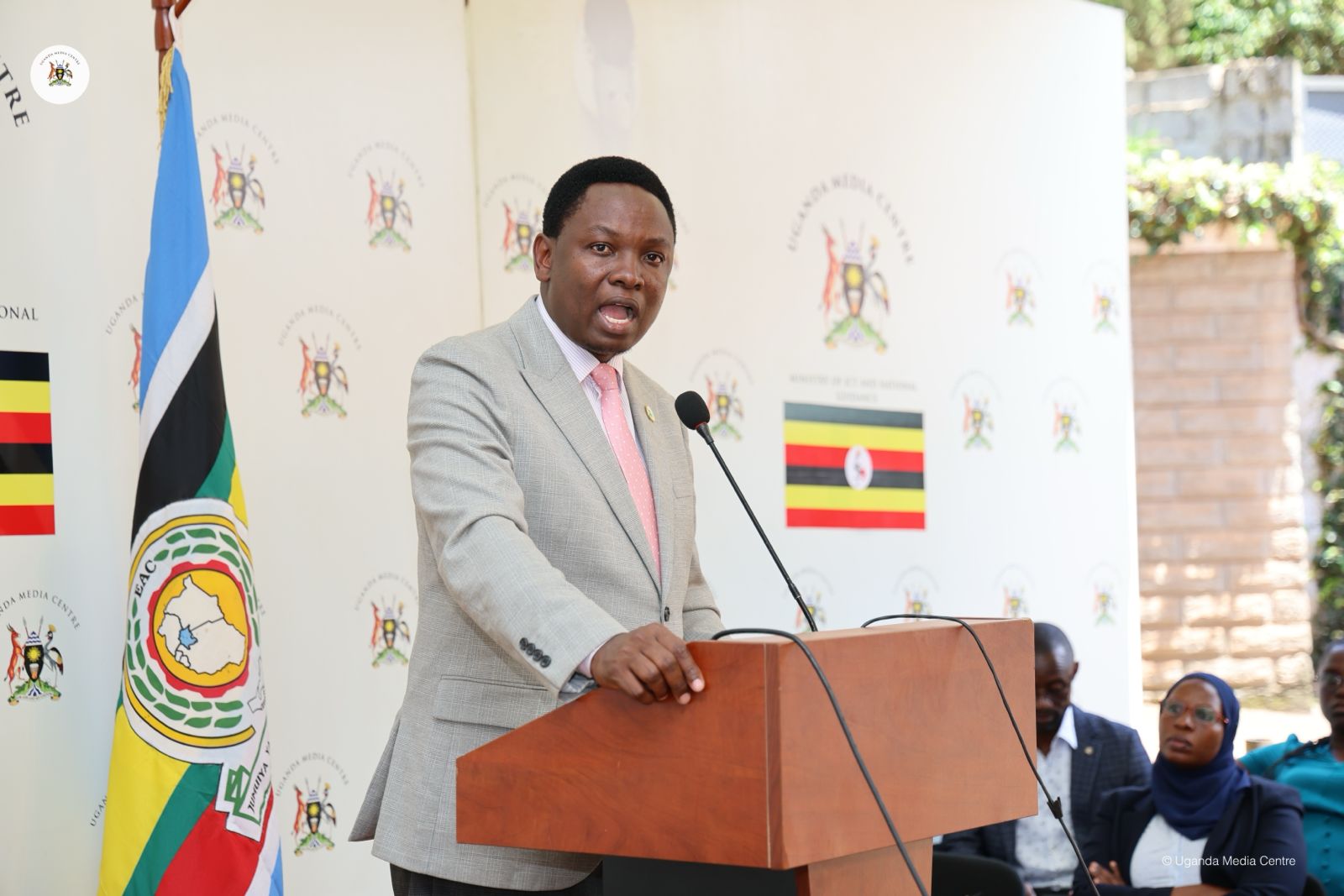
This confirmation was made by Dr. Richard Kabanda, the Head of Promotion and Preventive Disease Agenda, at the Ministry of Health while addressing the media at Uganda Media Centre.
The Ministry of Health is accelerating her efforts to eliminate malaria by the year 2030 and through its Malaria Strategy 2025-2026 is focused on reducing malaria deaths to zero.
Kabanda said that although malaria remains one of the leading public health challenges in our country, malaria is preventable and treatable.
“Despite the progress we have made as a country, malaria continues to place a heavy burden on our population. Uganda accounts for 4.7% of global malaria cases, ranking third worldwide; and 2.7% of global malaria deaths, ranking ninth according to the 2024 World Malaria Report. In the year 2025 we registered over 11 million malaria cases in Uganda, over 342 malaria deaths and 55 % of deaths were mainly from children, who are below five years.”
This campaign is being funded by the Government of Uganda, the Global Fund and the United States of America. The funds for the National Mosquito Net Distribution Campaign 2025/26 stands at approximately $100 million (UGX365 billion) with $90 million allocated for procurement, shipment, warehousing and transportation; while $10 million has been allocated for professional costs. The delivery of these mosquito nets will be through National Medical Stores.
To enhance efficiency, the campaign is being implemented in five waves.
In Wave Two of mosquito distribution in April 2026, targeting over 8.1 million Ugandans, 4.8 million mosquito nets will be distributed across 32 districts: Agago, Amuru, Gulu District, Gulu City, Kitgum, Lamwo, Nwoya, Omoro, Pader, Mayuge, Amuria, Bukedea, Kaberamaido, Kalaki, Kapelebyong, Katakwi, Kumi, Ngora, Serere, Soroti District, Soroti City, Bududa, Bukwo, Bulambuli, Busia, Kapchorwa, Kween, Luuka, Manafa, Namayingo, Namisindwa and Sironko. People in the targeted districts should be registered by the local leaders, mainly the LC1s and the Village Health Teams (VHTs) to ensure that they do not miss out on the mosquito net distribution exercise.
Wave Two follows the First Wave in January 2026, when 3.4 million nets were distributed to 20 districts, reaching about 6.5 million Ugandans in the districts: Amolator, Alebtong, Apac, Budaka, Bugweri, Buyende, Dokolo, Iganga, Jinja District, Jinja City, Kaliro, Kamuli, Kole, Kwania, Lira District, Lira City, Mbale District, Mbale City, Otuke and Oyam. The prevalence in these districts has been consistently high, so the location of waves is based on the highest burden of malaria.
More waves are to follow. The Third Wave in May, the Fourth Wave in July and lastly the Fifth Wave in September 2026.
Wave Four will cover districts in the Buganda region, excluding Kampala and Wakiso. Kampala and Wakiso will be covered under Wave Five, which the ministry shall implement in September 2026.
The ministry started distributing mosquito nets in the year 2010; then in 2013, 2017, 2020 and 2023. In 2026 the ministry will distribute 25.8 million mosquito nets to Ugandans. This distribution will cut across 130 districts, in the entire country, following the guidelines provided by the World Health Organization (WHO). “We provide one net for two people, in each household. All citizens should take ownership of their own health, by ensuring that every household member sleeps under a mosquito net every night,” Kabanda stated.
However, there are 17 districts where mosquito nets will not be distributed. “We are implementing other interventions in these districts, to be very specific indoor residue spraying. Therefore, those 17 districts will continue to receive the mosquito nets for the vulnerable populations; especially pregnant women when they go for antenatal visits and, of course, children who are taken for immunization, who are below five years of age. We would also like to pay more attention to people with sickle cell anemia, because they are also vulnerable,” Kabanda explained.
Emphasizing that the distribution of mosquito nets is part of the Uganda Malaria Elimination Strategic Plan, which supports the overall goal of creating a malaria-free Uganda, in line with Uganda Vision 2040, Kabanda added that the Ministry of Health is speeding up efforts to eliminate malaria by 2030 through its Malaria Elimination Strategy 2025-2026, which aims to close gaps in malaria prevention and control.
In 2025 there were 11,782,577 cases of malaria and 2,342 deaths (55% of which were among children under five). The findings from the 2024 Malaria Indicator Survey show that malaria prevalence has increased to 12.5% up from 9.2% in 2018/2019.
The proper use of long-lasting treated insecticide nets is among the most effective malaria prevention measures, as mosquito nets provide a protective barrier, particularly for vulnerable populations because when used properly, these mosquito nets can reduce malaria transmission by 50%. They can also reduce childhood mortality by up to 25%.
Kabanda concluded his remarks by urging Ugandans to take ownership of their health by clearing all breeding sites that harbour mosquitoes including stagnant water, bushes, empty tires and broken pots around their households. The mosquito nets must not be used for fishing. They must not be used immediately. The recipients should hang the nets in the shade for 24 hours before use, to ensure they are free from chemical preservatives. The public should seek proper medical care, within 24 hours, on the onset of fever and take treatment provided by the professional medical care providers. “We have many Ugandans who don’t complete treatment. There are many people who go to different pharmacies, drug shops or drug stores, and ask for tablets or antimalarials, and they swallow without testing for malaria.”
10 April 2026
