img
03 February 2026

PRESIDENT MUSEVENI HOSTS AU–EAC–SADC PANEL OF FACILITATORS FOR DRC PEACE TALKS

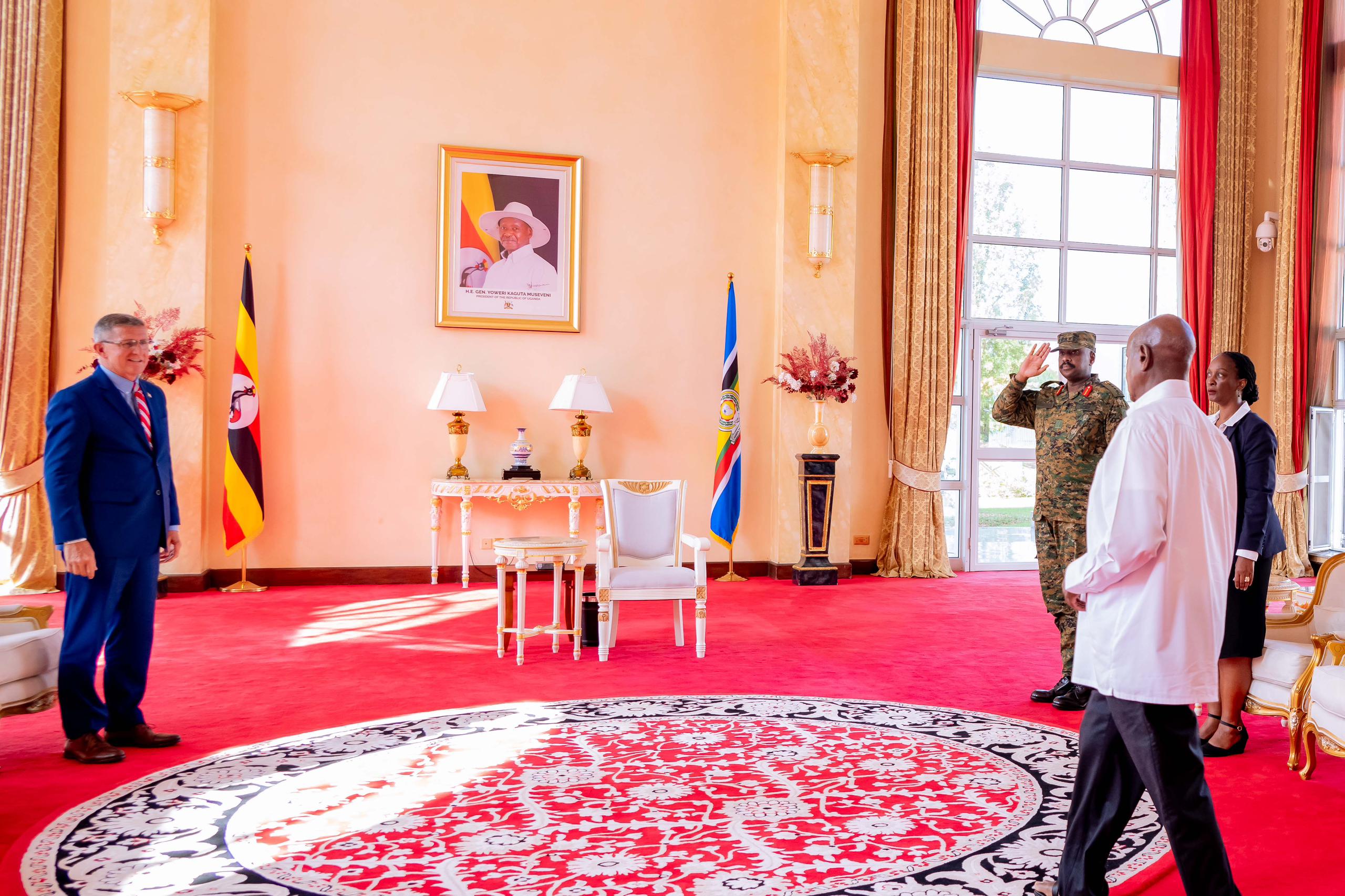
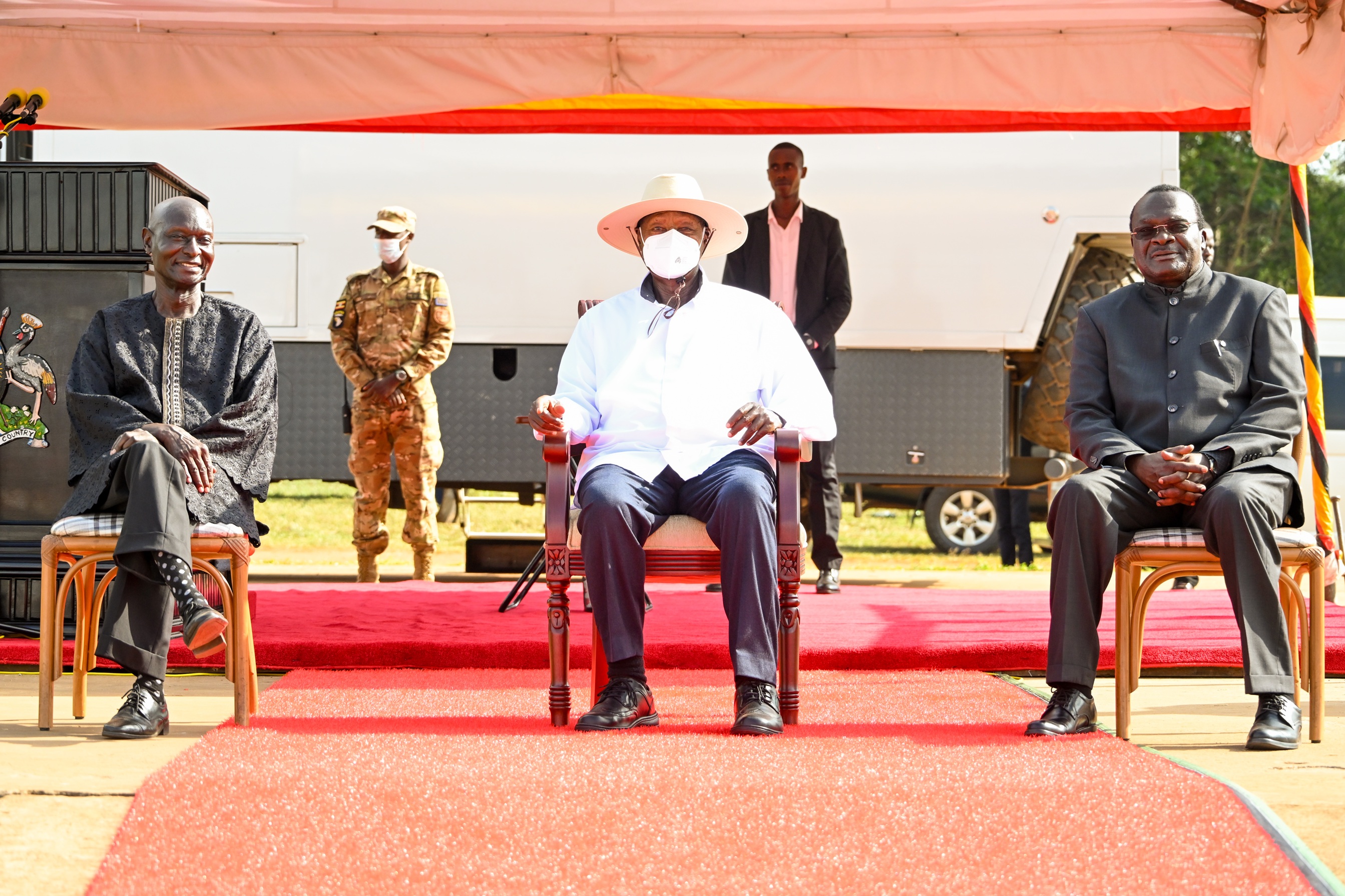
President Yoweri Kaguta Museveni has today hosted leaders of the AU–EAC–SADC panel of facilitators of the Democratic Republic of Congo (DRC) Peace Process at State House, Entebbe. The meeting was part of the ongoing efforts to advance dialogue and stability in Eastern DRC. The high-level panel of facilitators, which is on a working visit to Uganda, was chaired by H.E. Faure Essozimna Gnassingbé, President of the Republic of Togo, and brings together former African heads of state mandated to support regional dialogue and strengthen collective efforts toward sustainable peace and stability in Eastern DRC. The panel included H. E. Olusegun Obasanjo (former President of Nigeria), H.E. Uhuru Kenyatta (former President of Kenya), H.E. Sahle-Work Zewde (former President of Ethiopia), H.E. Dr. Mokgweetsi Eric Keabetswe Masisi (former President of Botswana), and H.E. Catherine Samba-Panza (former President of the Central African Republic). During the meeting, President Museveni said the conflict in the DRC is well understood within the region and should not be allowed to persist, given its long-standing humanitarian and historical impact on neighbouring countries. “This problem is very well known to us. We currently have more than 500,000 Congolese refugees in Uganda. They are part of nearly two million refugees we host from the region.” He noted that many of the refugees come from neighbouring countries and share ethnic and cultural ties with communities in Uganda, particularly in western and South-Western parts of the country. “Many of these people are members of our own tribes, those from Congo are the same as those in western and south-Western Uganda. We know this problem very well,” he said. President Museveni also expressed concern that despite the long history of the conflict and its clearly identifiable grievances, progress toward a lasting solution has been slow. “It is a shame that it is taking so long to solve,” he said. Placing the crisis in its historical context, the President recalled earlier international debates over Congo’s future, noting that the nature of the conflict has evolved over time. “In the past, there were even discussions about breaking up Congo, the Katanga Secession and all that but luckily today, nobody is talking about breaking up Congo. What we are dealing with now are grievances,” he highlighted. He said such grievances can be addressed through sustained dialogue and a clear understanding of the realities on the ground. President Museveni further welcomed the visiting panel, led by President Gnassingbé, and thanked its members for engaging on an issue that continues to affect the entire Great Lakes region. “I thank His Excellency, the President of Togo, for coming with this delegation. We are very happy to welcome you here,” the President said. On his part, President Gnassingbé thanked President Museveni for hosting the delegation and commended Uganda’s continued commitment to regional peace and stability. “On behalf of the delegation, I would like to sincerely thank Your Excellency for the warm reception accorded to us,” President Gnassingbé said. He acknowledged President Museveni’s longstanding role in regional mediation efforts, noting that the panel values his experience and guidance in addressing complex conflicts on the continent. On the other hand, H.E Obasanjo emphasised that sustainable peace in Eastern DRC requires solutions that are rooted in Africa’s realities, warning against overreliance on externally driven approaches. “This crisis is not only about the M23. There are many grievances that have not been adequately addressed. Solutions imported from Washington, Doha, Paris, or elsewhere may be helpful, but they cannot by themselves provide a complete or lasting solution.” He said the panel had deliberately taken responsibility to pursue African-led responses to African challenges, while remaining open to constructive support from international partners. “As facilitators, we have taken it upon ourselves to find African solutions to African problems. We see President Museveni as uniquely positioned, and we are walking with him to see how these African solutions can be realised,” H.E Obasanjo said. He added that the involvement of partners outside the continent should be complementary, not dominant. “We are not pushing away those who have shown interest whether from Washington, Qatar, France, or elsewhere because they are helpful in the process we are trying to advance,” he said. He also thanked President Museveni for receiving the delegation at short notice and underscored the importance of correctly diagnosing the root causes of the DRC conflict. “The issue that has brought us together is one we are all familiar with. It is the challenge of managing or mismanaging diversity within the DRC, and the relationship between the DRC and its neighbours,” he said. “In order to solve the problem, we must diagnose it properly and administer the right medicine.” H.E Obasanjo welcomed the African Union’s leadership in the peace process, including the establishment of a joint headquarters in Addis Ababa, and reiterated the need for Africa to take ownership of its peace and security agenda. “We have taken it upon ourselves to find African solutions to African problems,” he noted. The high-level meeting was also attended by Uganda's government officials including; Ministers, Ambassador and Permanent Representative of Uganda to the United Nations, Adonia Ayebare, and former Prime Minister, Rt. Hon. Amama Mbabazi.

img
28 January 2026

PRESIDENT MUSEVENI CALLS ON LEADERS TO ADDRESS PEOPLE'S PRACTICAL NEEDS AS UPDF ELECTS MPS

President Yoweri Kaguta Museveni who is also the commander-in-Chief of the Uganda People’s Defence Forces (UPDF) has called on leaders to focus on identifying and solving people’s practical needs, saying this has been the guiding philosophy of the National Resistance Movement (NRM) since the 1960s. The President made the remarks today while presiding over the election of UPDF representatives to Parliament at the Land Forces Headquarters in Bombo. During the Defence Council Delegates Conference, UPDF officers elected 10 representatives—seven men and three women—to serve in the 12th Parliament. The elected male representatives include; Lt. Gen. Sam Okiding, who received 340 votes, Lt. Gen. James Mugira with 303 votes, Lt. Gen. Sam Kavuma with 282 votes, Brig. Gen. Gonyi David with 266 votes, Maj. Gen. Henry Masiko with 251 votes, Maj. Gen. James Kinalwa with 241 votes, and Brig. Gen. Joseph Ssemwanga with 198 votes. The elected female representatives are Col. Ikiriza Knight, who garnered 307 votes, Col. Meeme Sylvia who got 314 votes, and Col. Nekesa Christine Situma who received 261 votes. In his address, President Museveni thanked the UPDF High Command for nominating the officers and reiterated the importance of leaders who are able to identify and work on citizens’ solvable needs. He referenced the Runyankore concept of “okukyenura”, which he described as the deliberate identification and resolution of people’s practical challenges. The President reflected on the NRM’s early achievements, noting that by 1996 the Movement had restored discipline within the army, firmly rejected sectarian politics, eliminated shortages of essential commodities, rebuilt infrastructure, and rolled out immunisation against the six killer diseases. He said these interventions earned the NRM massive public support at the time. He further highlighted the government efforts aimed at uplifting the poor through initiatives such as Entandikwa, Universal Primary Education, army schools, NAADS, Operation Wealth Creation, and the Parish Development Model, which he said is currently delivering positive results at the grassroots. The President added that the renewed enthusiasm witnessed around the NRM in the recent elections is a reflection of these efforts and the peace the movement has maintained. President Museveni further explained that UPDF representatives in Parliament act as observation posts to identify national issues early and report them to the army leadership, thereby helping to prevent policy mistakes. He cited the decision by Members of Parliament to increase their salaries as an example of an issue that could have been addressed earlier if such mechanisms were effectively utilized. On the other hand, President Museveni tasked the newly elected UPDF representatives to closely monitor government programmes including the Parish Development Model, free education, road construction and immunisation, while noting that although preventive healthcare has improved, challenges remain in curative services. On electoral governance, the President reiterated that the long-standing objective of the NRM has been to place Ugandans in charge of their country through one person, one vote by secret ballot. He revealed that irregularities were detected in the 2021 general elections, including the infiltration of an estimated 2.7 million votes, which informed his insistence on the use of biometric verification systems, although he noted that these had not been fully utilised. The President emphasized that for the country to remain stable, people in power must allow citizens to freely choose their leaders. He also commended the UPDF and other security agencies for providing security during the recently concluded elections. The Chairperson of the Independent Electoral Commission, Justice Simon Byabakama, congratulated UPDF officers for exhibiting discipline throughout the voting process and expressed hope that the same discipline would be exercised in other electoral processes across the country. He called on all stakeholders to settle down and embrace unity as the election season comes to an end. During the same ceremony, President Museveni commissioned three officer cadets presented by Maj. Gen. James Kinalwa, Joint Staff Human Resource Management. The commissioned officers are Bazalaki Timothy, who trained at General Sir John Kotelawala Defence University in Sri Lanka, Akoi Moses, and Piloya Vivian, both of whom completed their training in Tanzania. ENDS

img
25 January 2026

PRESIDENT MUSEVENI AWARDS SIX OUTSTANDING ENTREPRENEURS FOR THEIR CONTRIBUTION TO UGANDA’S ECONOMY

President Yoweri Kaguta Museveni yesterday awarded six (6) outstanding entrepreneurs and industrialists for their contribution to Uganda’s economic transformation at the Mustard Seed Awards 2025, held at Africa Coffee Park in Rwashameire, Ntungamo District. The event organised by Inspire Africa Coffee, was in celebration of 40 years of growth, and part of the President's third project inspection visit to Africa Coffee Park, a 150-acre state-of-the-art industrial hub positioned to become the largest coffee-processing and value-addition center in Eastern and Central Africa. The award recipients included among others, Jennifer Mwijukye, Chief Executive Officer and Founder of Unifreight Cargo Handling Ltd; Hao Zhang, Managing Director and Chairman of Liao Shen Industrial Park; Idro Taban, Chief Executive Officer Zero Waste; Barak Orland, Chief Executive Officer BAR Aviation. In his remarks, President Museveni who was in the company of the First Lady and Minister of Education and Sports, Maama Janet Museveni, congratulated the awardees and appreciated Uganda’s export earnings, which he said, are for the first time more than the import bill attributing it to value addition. “I’m so glad many people are waking up, and the rebirth of knowledge is now making sense. People like Nelson Tugume [CEO of Inspire Africa Coffee] are very useful having been provoked by my message. That is why we have supported and shall continue to support them,” he said. Referring to the four factors of production (land, labour, capital and entrepreneurship), which are the basis of production of goods and services, the President called on the people to mainly focus on entrepreneurship, describing it as the major coordinator. However, the President warned against uncontrolled hemorrhage /ekyejwiso /ekikulukuto, which he said is a major problem in Africa. “Africa's landmass is 12 times the size of India, with 1.5 billion people, yet its GDP is only $3 trillion, while the USA, which is about 1/4 of the land of Africa with 300million people, has a GDP of $32trillion,” he said. “It's a shame for such a small country to be 30 times richer than us.” The President saluted Mr. Tugume and all his colleagues at the Inspire Africa Coffee for not only being exemplary in emulating his wealth creation message, but also unlocking the potential of coffee husk organic fertilizer at the establishment to improve soil structure for long term productivity. President Museveni also expressed gratitude for the overwhelming support during the recently concluded presidential elections and the election of the NRM leaders. On her part, Maama Janet commended Mr. Tugume and Inspire Africa Coffee for its job creation potential. She noted that the massive investment into the coffee value chain has set a new trajectory for the sector. The Deputy Speaker of Parliament, Rt. Hon. Thomas Tayebwa, in celebration of President Museveni's resounding victory, thanked the people of Ntungamo for making history by scooping the second highest vote tally in the country, after Isingiro District. “This is a result of the trust people have in President Museveni's good leadership and the progress our country continues to make,” he noted. Rt. Hon. Tayebwa thanked Mr. Tugume for the establishment of a fertilizer plant that will provide affordable fertilisers to farmers to boost coffee yields and improve livelihoods. He further appreciated the establishment of a coffee resort to promote coffee tourism and the transformation Inspire Africa Coffee has done to the coffee sector. The Minister for Presidency, Hon Babirye Milly Babalanda, appreciated President Museveni's wealth creation philosophy that has empowered Ugandans into meaningful development. Hon. Babalanda further applauded the stewardship of Mr. Tugume who has demonstrated a big testimony of the power of vision, perseverance, and faith in one's country. Driven by conviction and enthusiasm, Hon. Babalanda revealed that what began as a heartfelt conversation between a son and a mother about coffee prices at their farm in 2018, has exposed coffee from the regions of Buganda, Kigezi, Ankole and Bugisu to the shelves of Turkey, USA and China. “This is how nations arise when private ambitions align with national purpose,” she said The Minister of Science, Technology and Innovation, Dr. Monica Musenero, on behalf of all scientists and innovators, hailed President Museveni for his full support that has enabled the sector to attain tangible results. “Science is now visible, and its impact on the economy can be understood by many,” she remarked. Mr. Tugume, a second coffee generation farmer taken after his late father, highlighted a remarkable display of a resilience journey he has undergone to achieve success. “I am so grateful to you, Your Excellency. This dream wouldn't have taken shape had it not been you.” The Inspire Africa Coffee project is aligned with Uganda’s 4th National Development Plan (NDP IV 2025/26–2029/30). With coffee identified as one of six priority agricultural value chains for value addition, the project aims to shift Uganda from a bulk coffee exporter to a high-value coffee producer and increase Uganda’s coffee value from USD 2 billion to USD 5 billion by 2030. Earlier in the day, President Museveni and the First Lady toured the fertiliser production plant on the shores of Lake Nyabihoko. The President later addressed the unstoppable victory rally that was organised to celebrate his recent election victory. The event was attended by Ministers, Members of Parliament, NRM Central Executive Committee (CEC) members, Senior Presidential Advisors, the clergy, RDCs, Ntungamo District Leadership and the business community.

img
26 January 2026

PRESIDENT MUSEVENI SAYS 70% OF UGANDANS ARE NOW IN THE MONEY ECONOMY AS NRM MARKS 40 YEARS

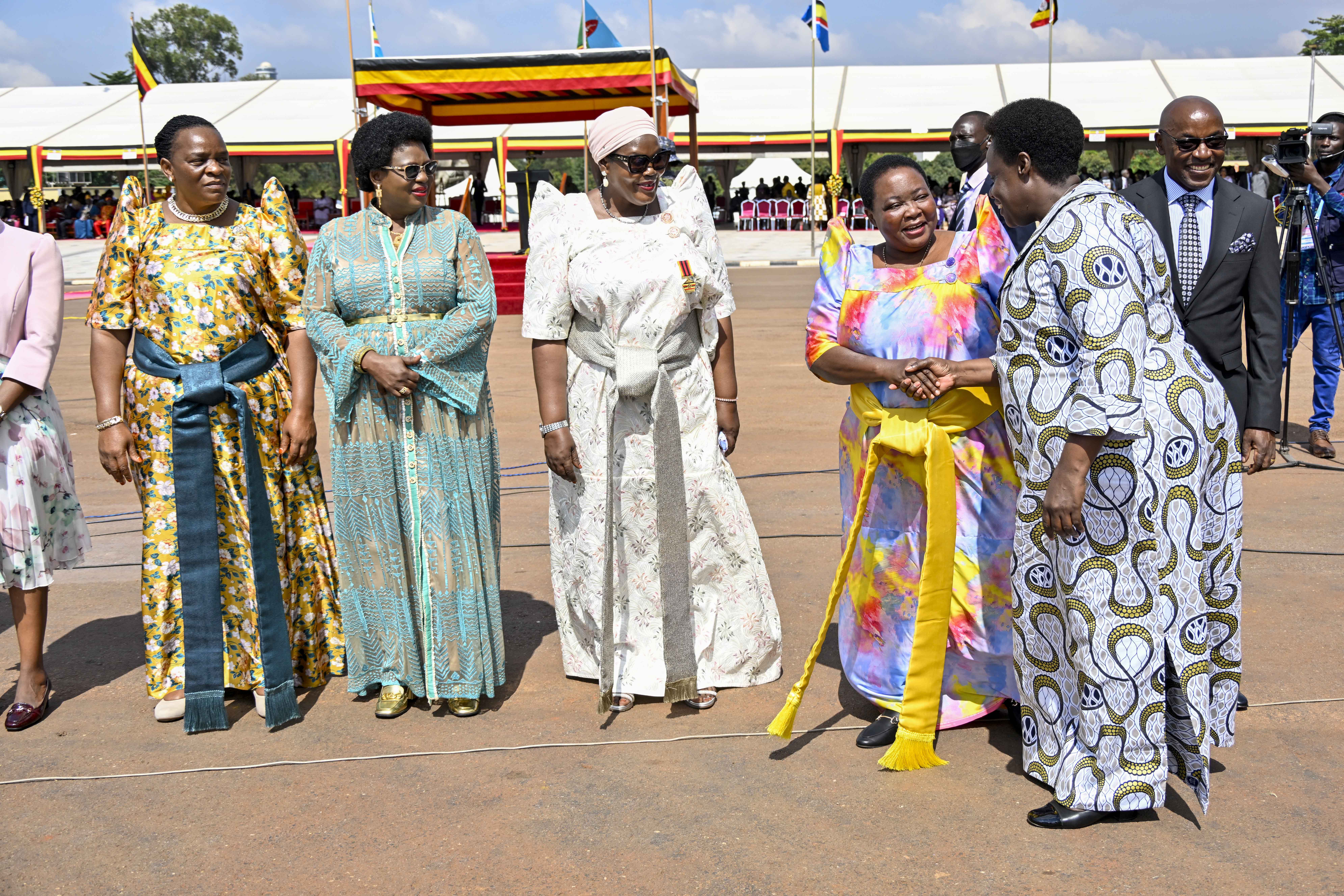
President Yoweri Kaguta Museveni has said that 70 percent of Ugandans are now participating in the money economy, a milestone he attributed to four decades of National Resistance Movement (NRM) rule and a series of state-led wealth creation programmes aimed at lifting households out of subsistence livelihoods. Speaking at the 40th Liberation Day celebrations held at the Kololo National Ceremonial Grounds on January 26, 2026, President Museveni said Uganda’s economic transformation had progressed steadily from post-war recovery to diversification, value addition, and, most recently, the emergence of a knowledge-based economy. The celebrations, held under the theme “Tribute to the Patriots who ushered in a fundamental change,” came just days after President Museveni secured another term in office in the recently concluded presidential elections, in which he was declared winner with 71 percent of the vote. In his address, the President thanked God and Ugandans for successfully completing the electoral process. “I thank God for having seen us through this big exercise of elections. Secondly, I salute all Ugandans for participating in the elections. I thank all the NRM members for supporting the NRM and its flag bearers,” he said. The President described the election outcome as a major political victory but expressed concern over what he termed as low voter turnout among NRM supporters. According to President Museveni, although he received about eight million votes, internal party data suggested that many more supporters were eligible to vote. “We are celebrating a big victory in politics. I got eight million votes, but ten million of my supporters of NRM did not turn up to vote,” he said, recounting challenges encountered during the party’s registration exercise and the national voters’ register verification process. He said that while the NRM had registered about 21 million supporters—18 million of whom were ready to vote—only eight million initially appeared on the Electoral Commission register. Although the party later ensured that at least 14 million supporters were registered in time, many still failed to cast their ballots. “But I got eight million votes. So where are the rest of the votes? That means some of our people did not turn up to vote,” he said. Gen. Museveni attributed the low turnout to two main factors: intimidation by opposition supporters and indiscipline within sections of the NRM leadership. “I hear the opposition wasting time talking nonsense. They are lucky because not all of my supporters turned up. If they had all turned up, there would be no opposition in Uganda,” President Museveni said. He alleged that some NRM supporters were threatened and attacked during the campaign period, while law enforcement agencies failed to act decisively. “People were threatening our supporters, telling them, ‘you are the reason why Museveni is still leading us.’ You have no right to say that. Why would the police hear this and do nothing?” he asked. The President also criticised what he described as selfishness and indiscipline among some NRM leaders, which he said discouraged citizens from exercising their civic rights. The Economy is moving very fast: Turning to the economy, President Museveni said Uganda was currently growing at about seven percent annually and projected even faster growth once oil production begins. “The economy is moving very fast, growing at seven percent now, and with the oil, we are going to go into double digits. This year, your oil will start flowing,” he said, adding that Uganda had resisted external attempts to control its petroleum resources. However, he acknowledged that despite overall growth, a significant segment of the population remained trapped in subsistence production. “These are the ones who are still in poverty,” President Museveni said, tracing the challenge back to colonial economic structures that excluded the majority of Africans from meaningful participation in the money economy. At independence in 1962, President Museveni said, only about nine percent of Ugandans were involved in the money economy. Although the proportion increased over time, progress remained slow until the NRM introduced wealth creation programmes, starting with early initiatives such as Entandikwa, which provided micro-credit to small-scale entrepreneurs. By 2013, he said, only about 32 percent of households were in the money economy, while 68 percent were producing mainly for subsistence. This, he explained, prompted the launch of Operation Wealth Creation (OWC), under which the Uganda People’s Defence Forces (UPDF) distributed seedlings and agricultural inputs across the country. “When we checked in 2019, 61 percent of Ugandans were in the money economy, while 39 percent were still in the subsistence economy,” President Museveni said. However, concerns emerged over what he described as “beegabira bokka”—elite capture of government programmes, leading to the introduction of the Parish Development Model (PDM), which channels funds directly to communities at the parish level. According to President Museveni, the proportion of Ugandans in the money economy has now risen to 70 percent, leaving about 30 percent still outside. “We don’t want a country of 70 percent rich people while 30 percent are poor,” he said, issuing a stern warning against the misuse of PDM funds, citing cases where local officials and committees had diverted money for personal gain. In some areas, he said, PDM resources had been monopolised by a few individuals, including parish chiefs and so-called focal persons, contrary to programme guidelines. “That’s not how the PDM is supposed to be. PDM needs a general meeting of the whole parish with everybody above 18 years, and the general meeting should elect a committee,” he said. President Museveni said the government would amend PDM guidelines, increase funding, especially in urban areas where parishes have larger populations, and enforce strict accountability. “We may have to put 300 or 400 million shillings per parish in towns because the homes there are many,” he said, adding that rural households could be fully covered within three years if funds are properly utilised. He warned that parish chiefs who violate PDM rules would be arrested, noting that officials in Buwambo, Maracha, and Iganga had already been apprehended following complaints from residents. While those who improperly formed committees would be barred from leadership positions and required to refund money, President Museveni said individuals who extorted funds from beneficiaries would face prosecution. Beyond PDM, President Museveni said the government would continue supporting other groups, including boda boda riders, ghetto youth, cultural and religious leaders, unemployed university graduates, and political leaders at the parish level. The goal, he said, was to ensure that all Ugandans are actively involved in wealth creation. “This will be emphasis number one,” President Museveni said. He added that once household incomes improve, the government would intensify investment in education and health, particularly in addressing curative health challenges, while preventive programmes such as immunisation continue to perform well. Infrastructure development, especially maintenance of rural roads, will also remain a priority. “We don’t want any unrepaired roads, whether tarmac or marram,” he said. Justice and corruption: On governance, President Museveni said the fight against corruption would extend to the judiciary, praising the new Chief Justice Dr Flavian Zeija, for taking a firm stance. “We don’t want corruption in the courts. The new Chief Justice is very active on that,” he said. The President also dismissed criticism from sections of the media and opposition figures who claim that Uganda has not changed over the last 40 years. “You have been hearing people say that the NRM has done nothing in the last 40 years,” President Museveni said, referencing a newspaper headline that read ‘No change for 40 years.’ To counter such claims, President Museveni presented what he described as five phases of Uganda’s economic recovery and transformation since 1986. These include minimum economic recovery after years of instability, expansion of the small colonial economy, diversification and value addition, and the current transition into a knowledge economy. He showcased video footage highlighting four key sectors he said define Uganda’s modern economy: commercial agriculture, manufacturing, services, and Information and Communication Technology (ICT). The films featured large-scale sugarcane plantations, coffee and cocoa farms, palm oil estates, livestock projects, and major industrial parks, including Namanve, Mbale-Sino, Kapeka, and Mukono–Mbalala. “That’s why somebody told me that when you go to the supermarkets now, 65 percent of the products are made in Uganda. In the past, it was 100 percent imported,” President Museveni said. He also reflected on Uganda’s troubled past, recalling the 1972 expulsion of Asians by former president Idi Amin. “At that time, there were only about 4,000 properties owned by Asians in the whole of Uganda. Now we have millions of properties owned by Ugandans,” he said, questioning the rationale behind Amin’s actions. On industrialisation, President Museveni cited the progress of the Kiira Motors project, noting that locally assembled vehicles had recently completed a return journey to South Africa. The Minister for the Presidency, Hon. Babirye Milly Babalanda, congratulated President Museveni on his re-election, describing the 40-year journey of the NRM as transformative. “Today’s commemoration is a reflection on four decades that have profoundly reshaped the destiny of our nation,” Hon. Babalanda said, thanking God for President Museveni’s leadership and resilience. She said the election victory reflected continued public confidence in President Museveni and the NRM. “Now that the elections are behind us, we face the greater responsibility of building Uganda. Let us move forward in unity, mutual respect, and shared national purpose,” she said. During the ceremony, the government awarded national medals to 33 distinguished Ugandans in recognition of their contributions to the liberation struggle and national development. January 26 marks the day in 1986 when National Resistance Army fighters captured Kampala, ending the rule of the UNLA junta led by the late Gen Tito Okello Lutwa. President Museveni, who led the NRA, was subsequently sworn in as Uganda’s ninth President. The event was attended by Vice President, H.E Jessica Alupo, Speaker of Parliament, Rt. Hon. Anita Among, Chief Justice, His Lordship Flavian Zeija, Deputy Speaker, Rt Hon. Thomas Tayebwa, Prime Minister, Rt. Hon. Robinah Nabbanja, senior NRM leaders, ministers, service chiefs, diplomats, religious and cultural leaders, and former national leaders, including Edward Kiwanuka Ssekandi, Ruhakana Rugunda, Amama Mbabazi, and Kintu Musoke. ENDS

img
24 January 2026

PRESIDENT MUSEVENI HAILS JUDICIAL CONVERGENCE AS DR. FLAVIAN ZEIJA TAKES OATH AS CHIEF JUSTICE

President Yoweri Kaguta Museveni has commended the growing judicial convergence in Uganda, saying it has strengthened stability and service delivery in the country. The President who was in the company of the First Lady and Minister of Education and Sports, Maama Janet Museveni, made the remarks today while presiding over the swearing-in of Dr. Flavian Zeija as Chief Justice at his country home in Kisozi, Gomba District. President Museveni said since the National Resistance Movement (NRM) came into power, leaders have been pursuing patriotism and transformation, thus enabling the Judiciary and the Executive to coexist and work harmoniously. He commended the outgoing Chief Justice, His Lordship Alfonse Owiny-Dollo, for efforts to rationalise court operations and improve efficiency. The President particularly welcomed the Judiciary’s focus on Alternative Dispute Resolution (ADR), noting that it provides an opportunity to blend cultural justice systems with modern courts, easing case backlog and promoting reconciliation. He also applauded Dr. Zeija for declaring zero tolerance to corruption, describing the vice as a major challenge undermining public trust in the justice system. President Museveni said listening to public opinion and using the “intelligence of the people” was critical, noting that during his recent countrywide engagements, he prioritised hearing citizens’ views rather than campaigning. The President further expressed support for the proposed dedicated unit to handle government infrastructure cases, saying it would help protect public investments and speed up project implementation. In his remarks, Dr. Zeija said leadership in public service is demanding and credited his journey to God’s grace. He thanked President Museveni for the continued trust placed in him, noting that this appointment marks his fourth presidential appointment within the Judiciary. Dr. Zeija outlined an ambitious reform agenda aimed at improving efficiency, accountability and access to justice. He pledged to operationalise magistrates’ courts, enforce strict action against absenteeism and underperformance, and conduct independent assessments of court performance. He also committed to reducing case delays by enforcing timelines, expanding the use of information and communication technology, and fully automating court systems to improve monitoring and evaluation. Dr. Zeija said automation would also help track the attendance and performance of judicial officers. He further promised to strengthen ADR mechanisms, prioritise judicial officers’ wellbeing, and train judges in artificial intelligence to keep pace with global developments. He pledged to transform the Industrial Court, run paperless courts supported by functional laptops and reliable internet, and enforce zero tolerance to corruption throughout his tenure. The Deputy Attorney General Jackson Kafuuzi, who represented the Minister of Justice and Constitutional Affairs, thanked President Museveni for providing exceptional leadership that ensures national stability and smooth institutional transitions, including the orderly change of leadership within the Judiciary. The outgoing Chief Justice, His Lordship Owiny-Dollo congratulated President Museveni on his electoral victory, saying the results reflected strong public support. He praised Dr. Zeija as energetic and hands-on, recalling that as Principal Judge, he traversed courts across the country and remained fully informed about judicial operations. Hon. Justice Owiny-Dollo said the incoming Chief Justice would firmly defend judicial independence and the rule of law. He also thanked the President for the opportunity to serve, noting that he was the first Deputy Chief Justice to rise to the position of Chief Justice. He attributed improvements during his tenure partly to increased funding for the Judiciary and appealed for further budget enhancement to ensure each district has a Chief Magistrate. Before his appointment as Chief Justice, Dr. Zeija was serving as Deputy Chief Justice. He also served as the Principal Judge.

img
18 January 2026

PRESIDENT MUSEVENI RECEIVES OFFICIAL DECLARATION OF VICTORY, PLEDGES ECONOMIC GROWTH AND POVERTY ERADICATION

President Yoweri Kaguta Museveni has today formally received the declaration of his re-election as President of Uganda, pledging to prioritize poverty eradication, unity, and disciplined governance in the new term. President Museveni, who won the recently concluded Presidential elections with more than 7 million votes according to provisional Electoral Commission figures, was officially presented with the declaration form by the National Resistance Movement (NRM) Central Executive Committee (CEC) at his country home in Rwakitura. In his acceptance remarks, the President began by thanking God and the First Lady, Maama Janet Museveni, for her steadfast support. “I want to thank God for this victory and for all the victories we have had over the last 55 years of struggle since 1971,” President Museveni said. “I also thank Maama Janet for her support.” He credited the win to collective effort, praising NRM members, party leaders, and institutions that he said played a critical role. “I want to thank the NRM members and all the leaders because they all played a critical role in this victory,” he said. The President also acknowledged the contribution of national institutions and community leaders, including the armed forces, religious leaders, and cultural leaders. “I thank the armed forces for their role, the religious leaders for praying for us, and the cultural leaders for being responsive and working for peace,” President Museveni said. Reflecting on voter turnout, President Museveni said a significant number of NRM supporters did not vote, a matter he said the party must study going forward. “About 10 million of our people did not turn up. Many of them are our members, and we must find out why.” He linked this reflection to what he described as a return to the founding principles of the NRM, emphasizing unity and stability, particularly in regions that had previously experienced conflict. “That atmosphere of maximum unity is coming back,” he said, citing peace in parts of northern and eastern Uganda. President Museveni highlighted government programs such as the Parish Development Model (PDM) and presidential skilling hubs, saying they have begun to restore hope among Ugandans. “PDM has given people hope that we can get rid of poverty,” he said, adding that skilling hubs are equipping young people with practical abilities. However, he acknowledged uneven implementation and said the government must critically assess what is working and what is not. “We must analyze and find out,” he said. On security, the President warned against what he described as isolated acts of violence linked to political extremism, while stressing that peace in Uganda is maintained not only by security forces but by citizens themselves. “It is not just the security forces who are maintaining peace,” President Museveni said. “It is all Ugandans, including members of the opposition.” He cautioned groups he accused of working with foreign interests to abandon violence. “This is a free warning from me,” he said. “Stop what you are doing. We shall maintain peace in Uganda.” Looking ahead to the new term, President Museveni outlined two broad economic priorities: supporting wealth creators to grow the economy and intensifying efforts to eliminate household poverty. “For about 70 percent of the people in the money economy, we must support them to continue growing,” he said. “For the remaining 30 percent, this is where we must decisively address poverty.” He said PDM funds are central to that effort, insisting that poverty must be eliminated at the household level. “We must end poverty in the homesteads,” he said. The President also emphasized the importance of free education in government schools, improved healthcare delivery, and strict action against corruption. “Corruption annoys our people,” President Museveni said, calling on elected leaders to closely monitor government programs, including drug availability in hospitals, justice delivery, land protection, road maintenance, and water access. “I will be very harsh in this Kisanja,” he warned. On job creation, President Museveni said the focus would remain on agriculture, manufacturing, and the private sector, rather than public service employment. Turning to regional integration and natural resources, the President said Uganda’s internal market is insufficient on its own and pointed to the East African Community as a critical economic opportunity. He confirmed that Uganda’s oil production is expected to begin this year and said revenues would be invested in long-term national assets. “Our oil will start flowing this year,” he said. “This money must be used for things that will last, like railways, power stations, roads, and science education.” President Museveni cautioned against proposals to directly distribute oil revenues to local governments, arguing that oil is a finite resource. “This oil will last about 20 years,” he said. “If you care about your country, you must use this exhaustible resource to build things that will endure.” He concluded by urging unity and discipline as Uganda looks toward the next electoral cycle. “If we do these things. We shall unite our people and build a stronger country.” In her remarks, the First Lady and Minister of Education and Sports, Maama Janet Museveni congratulated the extended National Resistance Movement family for the party’s electoral victory, calling on leaders to remain faithful to God and recommit themselves to guiding Ugandans on the right path. “I want to congratulate the extended family of the NRM,” the First Lady said. “I am deeply grateful to God for allowing this to be the first programme of this Kisanja, where we meet with the Central Executive Committee and the Secretariat to first thank Him, because only God made this possible.” She said the gathering was an opportunity not only to give thanks to God, but also to appreciate the collective effort that led to the victory. “God gives us the opportunity, and then we thank every one of you,” she said. Reflecting on the campaign period, Maama Janet commended party leaders and mobilizers for standing firmly with President Museveni throughout the process. “When I look at you, I remember that none of you left the President alone,” she said. “The contribution of each one of you made God’s divine purpose possible.” The First Lady also expressed gratitude to President Museveni, the NRM Central Executive Committee, the Secretariat, and religious leaders across the country, saying their efforts were instrumental in guiding the nation. “I thank the President himself, the CEC, the Secretariat, religious leaders, and above all, I thank God for His faithfulness,” she said. In her closing remarks, the First Lady urged leaders to reflect, renew themselves, and continue serving with purpose. “We must now re-educate ourselves,” she said. “If we do so, God will bless our efforts just as He did during these campaigns.” The Vice President, H.E. Jessica Alupo called on Ugandans to remain grateful to God and united following the recent presidential elections, saying the outcome is a moment for thanksgiving and national reflection. “On a day like this, we can only say glory be to God and thanks be to God,” H.E. Alupo said. She thanked President Museveni for inviting them to listen to his address to the nation, describing the occasion as significant for the country’s democratic journey. H.E. Alupo congratulated President Museveni, for what she described as an overwhelming victory in the just-concluded presidential elections. “Allow me to congratulate you, Your Excellency, and Maama for securing an overwhelming victory. Congratulations,” she said. The Vice President praised President Museveni’s resilience throughout the campaign period, noting that his leadership style helped galvanize support across the country. “This is not the day to give a detailed account of the campaign, but Your Excellency demonstrated a very fatherly approach that brought together people from all walks of life across Uganda.” She further applauded the National Resistance Movement Secretariat, led by the Secretary General, for working in a united and coordinated manner throughout the electoral process. The Electoral Commission (EC) was also praised for delivering the election results peacefully. “I would like to thank the EC for delivering the results in a very peaceful way,” H.E. Alupo said, adding that civic education efforts helped maintain calm across the country. She thanked the people of Uganda for demonstrating unity and overwhelmingly backing President Museveni. “I thank the people of Uganda for throwing their weight behind you, Your Excellency,” she said. The Speaker of Parliament and NRM Second National Vice Chairperson (Female), Rt. Hon. Anita Annet Among congratulated the President on what she described as a well-deserved victory in the recently concluded general elections, citing strong public confidence in the ruling party. “On my behalf, the NRM fraternity, and the people of Uganda, I want to congratulate you upon your win and this well-deserved victory,” she said. She also congratulated the President and the party on the landslide performance in the parliamentary elections, noting that so far, 352 Members of Parliament have been elected under the NRM flag. Rt. Hon. Among paid special tribute to the First Lady, Maama Janet for her role in mobilizing women across the country. “We thank Maama for standing up for this country. As women of Uganda, we were energized. We left our homes, mobilized, and here is the victory we have achieved. No wonder most women turned up to vote.” The Speaker said the declaration of the election results was a clear sign of the trust Ugandans have in the National Resistance Movement and in President Museveni’s leadership. “Yesterday’s declaration is a testament to the trust that the people of Uganda have in NRM and in you, Your Excellency,” she said. She commended the President for running a consistent and inclusive campaign, noting that he remained open to ideas from party leaders throughout the process. “We thank you for your consistent campaign and for always accepting our ideas as leaders, whether to add value or improve our approach,” Rt. Hon. Among said. She also praised the Central Executive Committee (CEC) and the NRM Secretariat, led by Rt. Hon. Richard Todwong, for strengthening the party’s campaign strategy. “I thank the CEC and the Secretariat for the work you did,” she said. “No wonder we moved from 58 percent to 72 percent. You incorporated new ideas and made a real difference in the campaign.” Speaking on behalf of the Parliament of Uganda, the Speaker thanked President Museveni for his continued support of the legislature and pledged Parliament’s commitment to work with the executive. “On behalf of the Parliament of Uganda, we thank you for your support, and we pledge to continue working with you as one government for the people of Uganda,” Rt. Hon. Among said. On the other hand, the NRM Secretary General, Rt. Hon. Todwong hailed the party’s performance in the recently concluded elections, describing the results as a clear demonstration of the National Resistance Movement’s strength as both a political party and a national movement. He said the outcome reflected deep-rooted support for the NRM across the country. “I can speak with pride that this percentage has demonstrated that the party has truly become a movement,” Rt. Hon. Todwong said. He noted that the NRM performed strongly at all levels, particularly in local government elections, where the party secured the majority of leadership positions. “At the local government level, we are winning across the board and we are well-positioned,” he said. Rt. Hon. Todwong said the party’s success was the result of an inclusive campaign strategy that deliberately reached out to members at the grassroots, re-energizing the NRM base. “We campaigned and reached out to every NRM member we could,” he said. “We saw that our base was awakened, and people responded.” He paid tribute to President Museveni for heeding the call of party members to once again contest for the presidency, recalling that the appeal was made during Parish Development Model tours across the country. “I want to thank you, Your Excellency, for accepting the call of your party members to contest. We remember asking you during the PDM tours, and you listened.” The Secretary General also acknowledged the role played by the First Lady, Maama Janet, in supporting the party throughout the campaign period. “Allow me to thank the First Lady, Maama, for always standing with us,” he said. “The support you give us encourages and strengthens the party.” He concluded by reaffirming the Secretariat’s commitment to strengthening party structures and supporting the President as he begins a new term in office. The event was attended by all members of the NRM Central Executive Committee (CEC), and several religious leaders, including Bishop Joshua Lwere, Pastor Robert Kayanja, Apostle Joseph Sserwadda, Bishop Nathan Ahimbisibwe, and the Rt. Rev. Alfred Muhoozi, Bishop of North Ankole Diocese.

img
21 January 2026

PRESIDENT MUSEVENI BIDS FAREWELL TO OUTGOING CHINESE AMBASSADOR

President Yoweri Kaguta Museveni has today bid farewell to the outgoing Ambassador of China to Uganda, H.E Zhang Lizhong who paid a courtesy call on him at his country home in Kisozi, Gomba District. During the meeting, President Museveni congratulated H.E Lizhong upon completing his tour of duty in Uganda. “I wish you well in your next assignment.” The President also expressed gratitude that the bilateral relationship between Uganda and China continues to grow stronger. “I am happy to note that Uganda’s exports to China have increased to USD 138 million, although this is still not enough and we should be able to do much more,” he said. President Museveni further welcomed the decision by the Chinese Government to remove taxes on Ugandan exports, which he said will greatly support the country’s trade and wealth creation efforts. “Regarding Chinese investments in Uganda, we have been supporting Chinese interests for a long time, and we shall continue to do so,” he noted. On his part, Ambassador Lizhong expressed gratitude to the President and the Ugandan government for the support and collaboration extended to him throughout his tenure.

img
05 January 2026

PRESIDENT MUSEVENI TASKS WAKISO RESIDENTS TO KEENLY MONITOR UTILISATION OF DEVELOPMENT FUNDS TO ATTAIN INTENDED PURPOSE

President Yoweri Kaguta Museveni, also the National Resistance Movement (NRM) Presidential flagbearer for the 2026 general elections, has tasked the people of Wakiso district to keenly monitor the utilisation of the government development funds to ensure that they serve the intended purpose. “The money for the Parish Development Model (PDM) and Emyooga is there and the people who steal that money can be easily arrested because they are here with us in Uganda,” he said. The President who was accompanied by the First Lady and Minister of Education and Sports, Maama Janet Museveni made the remarks today while addressing a campaign rally at Entebbe Municipality playgrounds, Wakiso District. The President revealed that the government has increased the PDM funding to Shs300 million and has also set up a special fund for leaders, markets, mechanics and fisheries, with an aim of improving their livelihoods through wealth creation. “Own up the PDM programme to counter corrupt officials,” he urged. President Museveni also noted that the NRM government has ably laid a stable foundation in different sectors employing millions of Ugandans, thus challenging residents of Wakiso to take advantage of the job opportunities in the planned development aspects such as industries, commercial agriculture, services including tourism, skill and artisanship. The President further assured residents of Entebbe and Wakiso district at large of plans to promptly complete construction works for Kisubi - Nakawuka - Mpigi road, Nakawuka - Nateete road and several other ongoing road construction projects across the district to improve mobility and business operations. On the other hand, he cautioned the electorate against opportunistic opposition politicians who he says constantly frustrate development programs and rallied them to vote for NRM flag bearers for effective service delivery. On her part, Maama Janet attributed the immense developmental achievements for Entebbe and Wakiso district to the NRM's strategic approach founded on peace and stability. She reminded the residents never to forget the critical role of the NRM government in the development of Uganda. “God has used the NRM government, President Museveni and the UPDF to protect the peace, unity and stability in Uganda all these many years,” Maama Janet said as she rallied the people of Wakiso to vote for President Museveni and other NRM candidates in the forthcoming general elections. The NRM First National Vice Chairperson, Alhaji Moses Kigongo tasked the NRM fraternity in Entebbe and Wakiso district to scale up mobilization efforts for the party at the grassroot for a resounding win in the forthcoming elections. He reminded NRM cadres of discipline and respect for each other during and after elections. The NRM second National Vice Chairperson and Speaker of Parliament, Rt. Hon. Anita Among highlighted the several additional development initiatives in Wakiso district fostered by the NRM government that include the 35 billion shillings Lubugumu - Busabala road project, the 15.5 billion shillings Kitoolo - Kawuku road project, the 23 billion shillings Entebe - Nakiwogo road and the planned bridge at the same location. She rallied the electorate of Entebbe and Wakiso district at large to vote for the NRM for more development interventions in the area.

img
04 January 2026

PRESIDENT MUSEVENI HOLDS TALKS WITH DIGITAL INFLUENCERS IN “JAZZ WITH JAJJA” CONVERSATION

President Yoweri Kaguta Museveni today held a candid and wide-ranging dialogue with young Ugandans (Bazukulu) during the Jazz with Jajja conversation at State Lodge, Nakasero. The interactive engagement, hosted by the First Daughter, Mrs. Natasha Museveni Karugire, brought together content creators, journalists, digital entrepreneurs and influencers. The event offered the attendees a rare opportunity to directly question the President on leadership, motivation, the digital economy, regional integration and youth livelihoods. In his remarks, President Museveni urged young people to look beyond entertainment and short-term pleasures and instead focus on the fundamentals of economic transformation. “It is interesting that many young people talk about dancing and football, which are good, but rarely talk about the regional market,” President Museveni said. “Those things are pleasure, but you must first have the basics. When I was also young, I would also dance, fight and study. The problem today is dancing all the time.” Responding to a question by TikTok influencer Sean Ibrahim, popularly known as Sean Styles, on what drives his long political journey, President Museveni traced his motivation to identity, history and a deep desire to protect Africa’s freedom. “What motivates me is that I love myself — as a Munyankore, as a Ugandan, and as an African. I love you people. I see you as my children and grandchildren,” he said. He cautioned that history has shown the world can be unforgiving to weak societies, stressing that his generation’s struggle was driven by the need to prevent Africans from disappearing or returning to servitude. “My motivation is freedom for the black race,” he said. The President also attributed his personal stamina and resilience to traditional African livelihoods, particularly cattle keeping, which he said instilled toughness and self-reliance. Broadcaster Isaac Katende, alias Kasuku, raised concerns about limited government support for digital media, particularly following the shutdown of social media platform; Facebook, despite the sector providing livelihoods for many young people. In response, President Museveni explained that Uganda had deliberately invested in undersea fibre-optic cables to reduce the historically high cost of the internet, which had previously relied on expensive satellite communication. “There were attempts by telephone companies to monopolize, and we said no,” he said, noting that government intervention significantly lowered data costs by expanding infrastructure. On Facebook, the President maintained that the shutdown was prompted by misuse of the platform. “We closed it because some people thought they could insult and play around with us,” he said, adding that the government remains open to engagement if platforms operate responsibly. President Museveni also revealed ongoing discussions with tech entrepreneur Elon Musk on the possibility of introducing Starlink satellite internet to Uganda, should it prove affordable. “If the satellite becomes cheaper, we shall allow it,” he said. In a question posed by journalist Simon Kaheru, the President reiterated that prosperity lies at the heart of the National Resistance Movement’s ideology, warning that Africa faces danger if young people fail to understand how wealth is created. “Prosperity does not come from begging. It comes from producing a good or service and selling it sustainably, with calculation — ekibaro.” He explained that Uganda’s diverse, multi-tribal structure created natural economic complementarities, which later informed the NRM’s ideological pillars of Patriotism, loving Uganda as a market, and Pan-Africanism, embracing the wider African market. “Uganda alone is not enough,” he said, noting that the country now produces surplus milk, maize, bananas, cement and steel, which rely on regional and continental markets to remain viable. Economy, Skills and Structural Transformation: Responding to questions from Christine Mawadri on Uganda’s youthful population, the creative sector and innovation, President Museveni traced the country’s economic challenges to the narrow colonial enclave economy based on raw exports. By independence, he said, Uganda’s economy revolved around the 3Cs- Cotton, Coffee and Copper and the 3Ts- Tobacco, Tea and Tourism covering only about four percent of homesteads. “When the NRM came to power in 1986, even that small economy had collapsed,” he said, explaining that the government had to rebuild from scratch. He outlined progress made since then, including restoring and expanding traditional exports, diversifying into dairy, fisheries, fruits and manufacturing, adding value to raw materials, and transitioning into a knowledge economy with local production of vehicles, vaccines and computers. However, he noted that by 2013, 68 percent of homesteads were still outside the money economy, prompting the introduction of Operation Wealth Creation and later the Parish Development Model (PDM). “The key is guiding people into enterprises that make economic sense for their land size,” President Museveni emphasized. On youth migration for work, raised by content creator Osman Kaweesa, popularly known as Jobless Billionaire, the President said many young people had not fully understood where jobs come from. “Jobs and wealth will mainly come from four sectors, commercial agriculture, manufacturing/ artisanship, services and ICT,” he said, once again stressing the Four-Acre Model as a practical pathway to household income. President Museveni also highlighted the role of Presidential skilling hubs and the ongoing education curriculum reform, saying Africa’s biggest challenge remains mindset. “We export coffee at $2.5 per kilo, but after value addition it can earn $40,” he said, noting that while coffee is a $460 billion global business, Africa earns a small fraction because it exports raw materials. “That is the mindset change we are struggling with,” he added. Closing the session, Mrs. Natasha thanked the President for opening space for dialogue and assured participants that similar engagements would continue. “There shall be more interactions like this. Thank you, Your Excellency, for allowing us to have this conversation,” she said.

img
03 January 2026

PRESIDENT MUSEVENI ASSURES BUIKWE ON MINIMUM WAGE, SAYS GOVERNMENT MUST FIRST LOWER COST OF DOING BUSINESS

President Yoweri Kaguta Museveni has assured Ugandans that the long-awaited minimum wage will be established once the government completes key interventions aimed at enabling investors to operate sustainably and profitably. Speaking on Saturday 3rd January 2026, during a campaign rally in Lugazi Municipality, Buikwe District, President Museveni said the government is deliberately sequencing reforms to avoid harming businesses and job creation. President Museveni, who is also the National Resistance Movement (NRM) flagbearer for the 2026 general elections, was accompanied by the First Lady and Minister of Education and Sports, Maama Janet Kataaha Museveni, as he addressed thousands of supporters who braved a heavy downpour to attend the rally. The President acknowledged growing public concern over low wages, especially among workers in factories, farms, and service industries, but emphasized that introducing a minimum wage prematurely could backfire. “We are still handling the issues of salaries, and we have not concluded. Why? It is because we are still organizing the manufacturing sector, and our job has been to attract more investors,” he said. He explained that Uganda’s strategy has focused on first creating conditions that reduce the cost of production, allowing investors to remain competitive while paying workers better in the long run. “These different forms of wealth — commercial agriculture, factories, hotels, and ICT — have created jobs and wealth for our people but there is the issue of wages or salaries for workers,” he said. President Museveni cited peace and regional market access as the foundation of Uganda’s industrial growth, noting that the East African Community (EAC) market provides a ready destination for locally manufactured goods. “First of all, we created peace. Secondly, we created the East African Community market so that when we produce, we have somewhere to sell,” he said. Lowering production costs: The President outlined three major areas the government is prioritizing before implementing a minimum wage: electricity costs, transport infrastructure, and access to affordable credit. “One of the things we must do is to get enough electricity so that investors can have low electricity costs,” President Museveni said, adding that energy affordability remains a key determinant of factory profitability. He also pointed to transport costs, particularly the movement of goods between Uganda and the Kenyan port of Mombasa. “That’s why our solution is the railway, which has lower transport costs than road transport,” he said, noting that cheaper logistics would allow manufacturers to save costs and improve worker pay. On access to finance, President Museveni said the government is working to reduce interest rates so that businesses can borrow at affordable terms. “The cost of money in the banks must come down so that investors can borrow at a low interest rate,” he said. According to President Museveni, once these structural challenges are addressed, the government will proceed with setting and enforcing a minimum wage. “When you hear people talking about the minimum wage, we are planning for it but we have not implemented it because we still have assignments on our side,” he explained. The NRM candidate cautioned that imposing wage regulations too early could push investors out of the country. “If we become harsh on them now, they will make losses and take their business elsewhere or collapse and go away from Uganda,” he said. The President also clarified the division of responsibility between the government and investors. “The assignment of the investor is to set up the factory using their money and create jobs. Ours is to make sure there is peace in the country, make electricity affordable, provide low-cost transport, and reduce the cost of money in the banks,” he said. Drawing from his guerrilla warfare background, President Museveni likened the government’s approach to military strategy. “We are guerrillas. While in Luwero, we did not attack Kampala immediately, even though it was very near. We could not do it until we were ready,” he said, adding that patience and timing are critical in economic transformation. President Museveni also addressed land disputes, particularly on Mailo land, which have increasingly affected communities in central Uganda. He announced that Attorney General Kiryowa Kiwanuka would be tasked to clarify the matter publicly. “I will ask the Attorney General to clarify the issue of land on TV so that people understand their rights,” President Museveni said. Turning to the NRM’s manifesto, President Museveni outlined what he described as the party’s seven key contributions to Uganda over the last four decades. “The first one is peace. Development is the second — roads, health centers, schools, electricity, and water,” he said, adding that government records demonstrate tangible progress in these areas. The third pillar, he said, is wealth creation at the household level. “The NRM insists on wealth per family and household. You don’t sleep on the tarmac road; you sleep in your house,” President Museveni said, revisiting the Four-Acre Model, first introduced in the 1996 NRM manifesto, which allocates land for coffee, fruits, pasture, and food crops, supported by backyard enterprises such as poultry, piggery, and fish farming. He cited success stories under the Parish Development Model (PDM), including that of Harriet Nampa from Mangaliba village in Mukono District. “This lady feared the Shs1 million PDM money because she had never touched one million in her entire life. She received Shs500,000 and invested in piggery,” he said. According to the President, Nampa’s piggery business grew to over Shs4 million, enabling her to buy a cow and venture into dairy farming. “These are small-scale people who are just starting, and many more are doing well,” he said. President Museveni also cited large-scale agricultural success stories, including Kalera Phillip of Gomba District, who operates a demonstration farm that began in 2003. He said Kalera diversified into Friesian dairy cows, coffee on 50 acres, poultry, and other ventures after initially struggling with poor rearing methods. “He harvests coffee twice a year, earning between Shs18 million and Shs20 million per acre, and Shs9 million from matooke alone per harvest,” President Museveni noted. The farmer reportedly earns over Shs1.5 billion annually in profit. On employment, the President emphasized that jobs are generated through commercial agriculture, manufacturing/artisanship, services, and ICT. He cited Johnson Basangwa of Jeka Poultry Farm in Kamuli District, who earns about Shs20 million daily from egg production and employs over 300 people. “You here in Lugazi have testimonies of sugar factories where many of your children are working,” President Museveni said. He highlighted industrial parks such as Sino-Mbale, which hosts 75 factories employing about 12,000 workers, and Namanve Industrial Park, with 273 factories employing over 24,000 people. “Mukono also has many factories employing our youths,” he added. President Museveni urged citizens to actively monitor PDM funds to prevent misuse. “All of you should ask the SACCO committee where the PDM money is. You need to learn to follow up on what belongs to you,” he said. He acknowledged past challenges with earlier programs such as Entandikwa, NAADS, and Operation Wealth Creation, which were criticized for benefiting a few individuals. “That’s why we decided to work directly with the poor people at the parish level,” President Museveni said. On her part, while addressing the crowd, the First Lady, Maama Janet praised residents for enduring the rain to attend the rally. “Sometimes we stand in the sun, sometimes in the rain, to build Uganda,” she said, crediting Uganda’s progress to peace, stability, and unity, urging voters to renew NRM’s mandate. “We must stretch out our hands and vote for NRM so that our children and grandchildren can be proud of the Uganda we are building,” she said. NRM Second National Vice Chairperson and Speaker of Parliament, Rt. Hon. Annet Anita Among informed the President that Buikwe District faces challenges of absentee landlords and alleged theft of PDM funds. She called for investigations into the misuse of public resources. The rally marked his final campaign stop in greater Mukono after canvassing Buvuma, Kayunga, and Mukono districts.

img
02 January 2026

PRESIDENT MUSEVENI TASKS KAYUNGA RESIDENTS TO USE THEIR POWERS TO HOLD LEADERS ACCOUNTABLE, ADDRESSES BAKUKU CITIZENSHIP CONCERNS

President Yoweri Kaguta Museveni, also the National Resistance Movement (NRM) Presidential flagbearer for the 2026 general elections, has today kicked-off his campaign trail in Greater Mukono where he tasked the residents of Kayunga District to use their power to hold leaders accountable and ensure effective service delivery in their area. “What I'm telling you is that all the powers are within your hands. The NRM government gave you powers to elect LCIs, LCIIIs, LCVs and Members of Parliament to represent your interests,” he said. The President who was accompanied by the First Lady and Minister of Education and Sports, Maama Janet Museveni made the remarks today while addressing a campaign rally at Busaana Town Council grounds, Kayunga District. According to President Museveni, when voters elect leaders, they have a responsibility to hold them accountable in that when they fail to fulfil their mandate, they vote them out. “We are proposing ways of dealing with non-performing leaders,” he noted. He challenged the electorate to vote for NRM leaders with the ability to monitor the implementation of government programs. The President also challenged the people of Kayunga to fight poverty and create wealth through embracing government poverty alleviation programs, among other initiatives. “I don't want poverty in homes,” he asserted. President Museveni warned against neglect of Parish Development Model (PDM) funds and tasked Kayunga residents to follow up with operationalization of the fund and report corrupt PDM officials. On the other hand, President Museveni tasked the residents of Kayunga to locate free vast land for the establishment of an industrial park in the area in order to increase job opportunities for them, especially the youth. He further unveiled job opportunity sectors fostered by the NRM government in aspects of commercial agriculture, manufacturing, services and ICT. The President also emphasized the viability of skills training as a job creation avenue demonstrated by graduates of the Presidential Zonal Industrial Skilling Hubs. Furthermore, President Museveni instructed the NRM Secretariat to extract land legislation provisions by the Constituent Assembly that safeguard tenants from unlawful evictions by landlords. He tasked the residents to comprehend their land safety legal provisions to counter land grabbers and evictions. He explained that the Constitution addresses all forms of land tenure and guarantees settlement for all including tenants without any disruptions. President Museveni further addressed the citizenship concerns by the Bakuku community who claim to be denied passports by the Ministry of Internal Affairs. He tasked Maj. General Apollo Gowa the Chief of Citizenship and Immigration Control to explain the different categories of Ugandan citizenship and redress the Bakuku community concerns. On her part, Maama Janet called for unity and strengthening of grassroots mobilisation for all NRM flag bearers until polling day. “We should ensure that on the 15th of this month, we all go out one by one, stand at that polling station and vote for the NRM,” she said. “Don't forget your grandmother at home, she also has a vote. Help her to go to the polling station and vote on her own. Each one of us has a vote. Our vote is a brick that we put on the house of Uganda.” The NRM first National Vice Chairperson Alhaji Moses Kigongo also warned “double faced” and indiscipline leaders to change their ways for the good of the party. He also talked the people of Kayunga to vote for President Museveni and other NRM flagbearers for continued development in the area. The NRM second National Vice Chairperson and Speaker of Parliament, Rt. Hon. Anita Among highlighted development strides in Kayunga District accomplished by the NRM government including improved infrastructure in the area. Mr. Moses Karangwa the Kayunga district NRM Chairperson read the district memorandum on behalf of the residents.

img
01 January 2026

PRESIDENT MUSEVENI HAILS PROPHET DAVID ISANGA FOR PRIORITISING WEALTH AND JOB CREATION MESSAGE AMONG BELIEVERS

President Yoweri Kaguta Museveni has commended Prophet David Isanga, the overseer and spiritual leader of the Universal Apostles Fellowship Church of Righteousness for prioritising the message of wealth and jobs creation in his ministry. “I thank you for encouraging the believers to work hard and embrace the government programs aimed at eradicating poverty,” he said. President Museveni made the remarks on Wednesday 31st December, 2025 in his message delivered by the Special Presidential Assistant- Press and Mobilization also Deputy Press Secretary, Haji Faruk Kirunda during the Church's End of Year Glorification and Thanksgiving Convention, held in Kilama, Kaliro District. The President explained that human beings have both spiritual and physical needs, which are equally important in life. “The spiritual needs are satisfied through praying to God, studying the scriptures, listening to religious and moral instruction, fasting, praise and worship, etc. These enable a believer to draw closer to God and impart good morals and discipline in relating with other people,” he said. “However, there are also physical needs that must be satisfied in order to achieve a happy, fulfilling and productive life. These include: food, water, shelter, medicine, hospitals, schools, clothes, transport, a job, etc. In a modern economy, you cannot obtain the goods and services which are necessary to sustain life without money.” He explained that to achieve a productive life, an individual or household must eliminate moneylessness or subsistence living, which satisfies only one need i.e. food. He said moneylessness can be eliminated by undertaking a profitable enterprise in one of the four sectors of: commercial agriculture, industries, services and ICT. “These are the four sectors where you can create jobs and wealth.” President Museveni further urged religious leaders to encourage the believers to work towards achieving decent and better standards of living. “This is a crucial point which some believers fail to understand and put into practice. In the process of working for heaven, some of the faithful become negligent about their earthly responsibilities and thereby end up perpetuating and entrenching socio-economic backwardness and poverty in their respective families and societies,” he said. The President implored the faithful to emulate Jesus Christ who prayed, healed the sick, fed the hungry and earned his bread by working alongside his earthly father Joseph as a carpenter. “He worked for both the spiritual and socio-economic uplift of his family and society. This is what all Christians must emulate,” he noted. President Museveni also thanked God for the continued peace, unity and stability in Uganda. “It is gratifying that Uganda has remained peaceful; and there is a lot of agricultural and industrial production. The shops are full and the markets are full. Yes, there is still poverty among the 30% of the households still outside the money economy (Abakolera ekiddakyoonka, tic me ic keken), but the way-out for them is well laid out and the resources to support the process are available and up-scalable (PDM, Emyooga, ghetto funds, bodaboda fund, etc.),” he said. “Finally, the future is bright. Let us pray for peace in the whole of Africa and more economic and political integration in Africa to continue to solve the problem of markets for our products and services and strategic security.” On his part, Prophet David thanked President Museveni for steering Uganda’s socio-economic transformation through various programs such as Parish Development Model and Emyooga. He also applauded him for consistently guaranteeing freedom of worship in Uganda, explaining that it's the reason why the Universal Apostles Fellowship Church of Righteousness exists. Prophet David further rallied believers to vote for President Museveni and other NRM flagbearers in the 2026 general elections for more development. The event was also attended by the Minister of State for Bunyoro Affairs, Hon. Jenipher Namuyangu, Bulamogi County MP, Hon. Bwiire Sanon, Kaliro Woman MP, Hon. Brenda Namukuta, among other leaders.