img
27 October 2025

PRESIDENT MUSEVENI ANNOUNCES PLAN TO SET-UP KIDEPO INTERNATIONAL AIRPORT AS HE HOLDS CAMPAIGN RALLY IN MOROTO

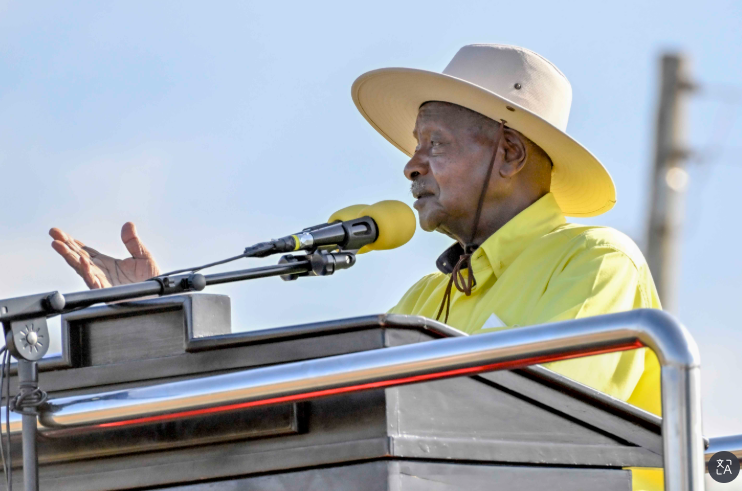
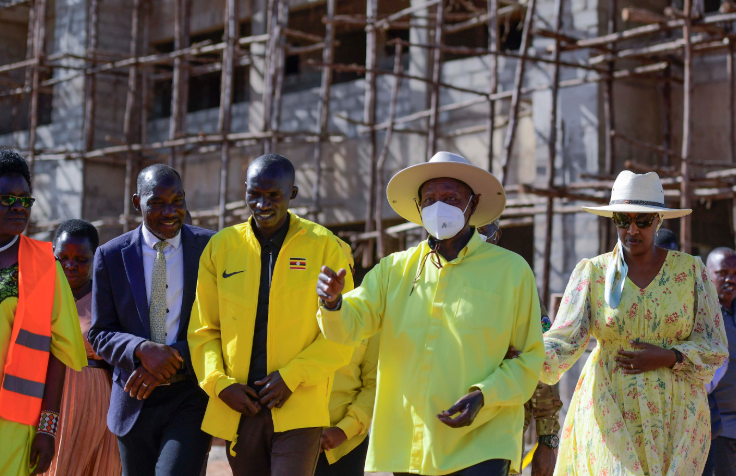
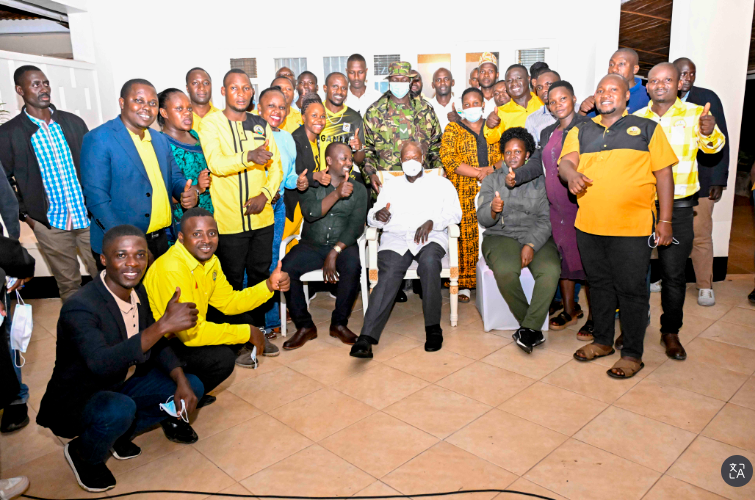
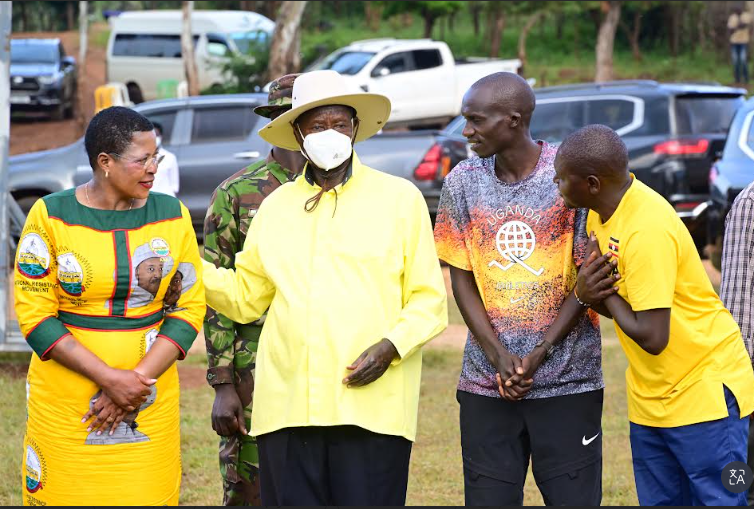
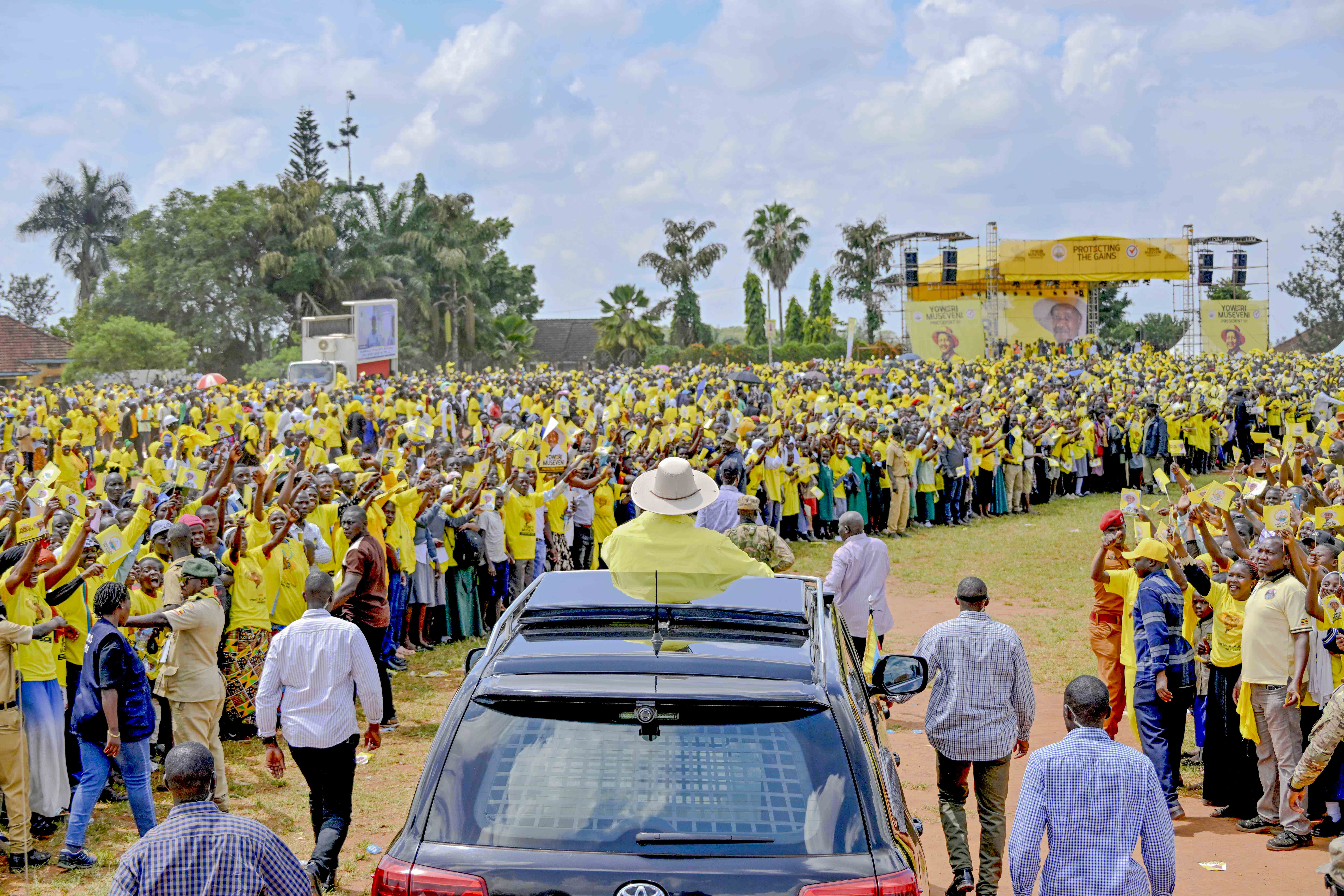
President Yoweri Kaguta Museveni, also the National Resistance Movement (NRM) presidential flag bearer, today unveiled ambitious development plans for Karamoja, including the construction of an international airport in Kidepo, comparable in scale to Entebbe. The announcement came during his public campaign rally held at Naitakwae Boma Grounds in Moroto District, where he highlighted the strides made in peace, infrastructure, and social services across the region. The President was in the company of the First Lady and Minister of Education and Sports, Maama Janet Kataaha Museveni. “We are going to build an international airport in Kidepo as big as Entebbe,” President Museveni said. “It is going to be built by private investors who will also construct hotels there. Why? Because our wild animals are like sports, people come to the stadium to watch football, to enjoy and relax, and they pay. That is what will happen in Kidepo. Rich people will come from all over the world with money to relax. This is part of economic infrastructure,” he said. The President reflected on the region’s journey from hardship to progress. “First of all, when I used to come to Karamoja, I would speak to small gatherings of 10 people. That was because the population was small. In 1980, Karamoja had 190,000 people. Today, it is more than 1.5 million. This growth is because of peace, health, and immunization. I can see all these young NRM supporters, they are alive because immunization has prevented diseases like measles,” he said. President Museveni credited peace in the region to the NRM’s politics of unity, which avoided sectarianism. “NRM was able to bring peace because of our politics of unity. That has helped us not only to build the national political party but also to develop the region,” he added. The President outlined significant infrastructure milestones in Moroto. “Electricity now stretches from Soroti to Karenga, roads are being upgraded and tarmacked, including the Moroto-Kaabong road, and piped water coverage is increasing across villages,” he highlighted. “I was informed that the road between Moroto and Kotido is impassable. Even if it’s murram, it should be passable with proper maintenance. I have spoken to the Ministry of Works about this issue.” On water development, President Museveni said that water is one of the key factors that he identified in Karamoja sub-region, noting that he is happy with the progress and the ongoing and planned projects. These include; Desilting of Kobebe Earth Dam is ongoing, Nadipal Valley Tank (20 million litres) was completed in Nadunget Sub-county in December 2023, Nakonyen Valley Dam (1.5 billion litres capacity) in Tapac Sub-county is set for completion in November 2025, Lokisile Dam desilting will take place this financial year, and construction of Naberu Dam (1.2 billion litres) is scheduled to start in November 2025 with 11 valley tanks and two wind-powered water systems already operational, while a solar irrigation system is under construction. “Water is critical for production, and we are expanding access not just for households but for agriculture, livestock in the region,” he said. President Museveni also touched on social infrastructure, including schools and health facilities, noting that Moroto District has 16 government primary schools and three secondary schools, with plans to establish a government primary school per parish and a secondary school per sub-county. He mentioned that the region also has one general referral hospital and five Health Centre IIIs, with further upgrades and new facilities underway. On wealth creation, the President reiterated the “Four-Acre Model” to transform households from subsistence to prosperity. “One acre for coffee, one for fruits, one for food crops, and one for pasture and livestock. Even backyard spaces can support poultry, piggery, or fish farming. This model is not just theory, it is the key to transforming households from subsistence to prosperity,” he said. On her part, the First Lady urged citizens to support the NRM and the President in the upcoming elections. “I do not doubt at all that Karamoja will vote for the Movement and the President. But I want to remind you, nobody should stay at home without voting for the President and the NRM. God bless Karamoja,” she said. Earlier, President Museveni made a stop over to inspect the progress of Yaobai International Holding Cement Uganda–SMC Ltd, the largest cement factory in Karamoja Sub-region. Once fully operational, this factory will produce approximately 12,000 tonnes of clinker per day from both production lines. “This will greatly contribute to our construction industry and create employment opportunities for our people,” he assured. NRM impact in Moroto: Moroto District and Municipality, which comprise four constituencies, 11 sub-counties and town councils, 45 parishes, and 244 villages, are witnessing gradual development, according to recent government reports. The district has a total population of 103,639, based on the 2024 census. The Parish Development Model (PDM) has reached thousands of households in the district. In 37 rural parishes, 10,650 households have received a total of Shs.10.65 billion, accounting for 91.83% of the allocated funds. Meanwhile, Moroto Municipality’s four parishes have disbursed Shs.1.03 billion to 1,049 beneficiary households. Economic empowerment through Emyooga SACCOs has also grown, with 70 SACCOs supporting 15,551 members. A total of Shs.2.91 billion has so far been disbursed to these grassroots savings and credit groups. The district’s education sector serves 21 government primary schools enrolling 16,522 pupils and five government secondary schools with 2,570 students. Plans are underway to expand facilities to ensure every parish and sub-county has access to quality schooling. Healthcare infrastructure includes one regional referral hospital and five Health Centre IIIs. Additional health facilities are planned and ongoing upgrades aim to expand access to essential medical services across the district. Access to safe water remains a priority. Out of 233 rural villages, 133, or 57%, currently have piped water, leaving 100 villages still without safe water. The government has committed to ongoing water development projects to improve coverage in the remaining areas. The campaign is running under the theme: “Protecting the Gains, Making a Qualitative Leap into High Middle-Income Status”. The event was graced by NRM Central Executive Committee (CEC) members, Members of Parliament, religious and cultural leaders, as well as thousands of supporters.

img
27 October 2025

KOTIDO: PRESIDENT MUSEVENI PLEDGES INDUSTRIAL TRANSFORMATION IN KARAMOJA

President Yoweri Kaguta Museveni, accompanied by the First Lady and Minister of Education and Sports, Maama Janet Museveni, has today held his campaign rally in Kotido District at Lomukura Primary School, Kotido Central Division in Kotido Municipality. President Museveni began his address by commending the people of Karamoja for embracing peace and supporting government efforts to disarm the region. “Our first point in the NRM Manifesto is peace. When we stopped guns, there was a woman in Nakapiripirit I will never forget — she had been married to nine men, and all of them died because of the gun,” the President recalled. He thanked the Karamojong who helped in the disarmament process and specifically appreciated individuals like Natuk Judith for convincing the Karachunas (youth warriors) to voluntarily hand over guns. “I want to thank the youth groups who helped me. Now you can see peace — not only in Karamoja but in the whole of Uganda. What was causing war was not much, only greed, where someone thinks about himself alone. The NRM rejected all that,” he said. President Museveni added that by rejecting the politics of tribe and religion, the NRM built a strong and united political movement that wins elections in the first round and has established solid state institutions such as the Army and Police. On development, the President noted that the government has extended electricity from Soroti through Kotido to Karenga, improving communication and connectivity in the region. “We were able to bring electricity all the way from Soroti to Kotido to Karenga. Your problem with telephones is now solved, and the next issue to tackle is roads — like the tarmac from Lira to Kitgum up to Sudan. We are also going to work on the Moroto–Kotido road,” he said. He cautioned that the government must prioritize infrastructure before increasing salaries. “When we tell our teachers to hold on as we construct roads, they say, ‘No, you have to pay us now.’ But development benefits everyone — wealth is yours alone, but development is for all,” President Museveni emphasized. The President revealed plans to transform Karamoja into an industrial hub for Uganda, citing ongoing and planned private investments such as cement factories which have been attracted by peace and stability. President Museveni also highlighted government efforts to improve water access in Kotido. “The water situation here is still low — out of 491 villages, only 125 have access to safe water. But we are working to change that,” he said. He noted that the government has already constructed three piped water systems in Kotido and several valley dams to support both human and livestock needs. “These include the Sinat Valley Dam with a capacity of 4.4 billion litres, Kaoyagorok Dam with 1.7 billion litres, and the Kailong Earth Dam with 167 million litres. Twenty-two valley tanks and solar-powered irrigation systems have also been completed,” President Museveni said, adding that more projects are under construction, including high-yielding boreholes and small-scale irrigation schemes. On education, the President reiterated his commitment to providing free education in government schools. “I have been having a challenge with school managers who charge fees in government schools. So, I decided to start skilling hubs per zone to show that free education is possible,” he said. “These skilling hubs train students for just six months for free, and they are now producing items that we used to import from China,” President Museveni explained. On health, President Museveni revealed that Kotido District has 15 sub-counties with one referral hospital and seven Health Centre IIIs. He pledged to continue upgrading and expanding health facilities across the district. “We are upgrading Kacheri Health Centre III to IV, and converting several others like Lokiding, Losakucha, Lopuyo, and Nakwakwa from Health Centre IIs to IIIs. New Health Centre IIIs will also be constructed in the West and North Divisions,” he said. Maama Janet, in her remarks, thanked the people of Karamoja for their overwhelming support. “I am so happy to be in Karamoja. Coming here is like coming home,” she said. She called on residents to embrace transformation in the next Kisanja (term), emphasizing that the government’s goal is to ensure that there are no more grass-thatched houses and that development spreads across the region. “The message of transformation is very important for Karamoja in the next Kisanja so that there will be tremendous development in the whole sub-region,” she added. Dr. Lokii John Baptist, the NRM Vice Chairperson for Karamoja region, thanked President Museveni for restoring democracy and peace in the region. He praised the UPDF for helping to remove illegal guns and pledged 100 percent support for the President in the upcoming elections. Dr. Lochap Paul, the NRM Chairperson for Kotido District, also thanked the President for upgrading central roads to tarmac, saying it has spurred local growth. He requested the creation of Kapeta District to bring services closer to the people and appealed for pardon of the Karachunas involved in past disarmament incidents. He further appreciated the establishment of the skilling hub in Napak District, which is training youth from across the Karamoja sub-region.

img
27 October 2025

PRESIDENT MUSEVENI RECEIVES $53M MILITARY EQUIPMENT FROM RUSSIA

President Yoweri Kaguta Museveni has hailed Russia as a historically and ideological partner in Africa’s liberation struggle, emphasizing that Uganda’s relationship with Moscow extends far beyond defense cooperation. The President made the remarks on Sunday, October 26, 2025, while officiating at a ceremony where the Russian Federation donated defense equipment valued at $53 million to the Uganda People’s Defense Forces (UPDF). He also launched the Military Mechanised Major Repair Facility at Gaddafi Military Barracks, Magamaga, and a workshop in Entebbe that is under construction. The donated equipment includes obstacle clearers, trench diggers, boats, workshops, and a coastal station, assets that the President described as “very important and practical contributions” to Uganda’s defense infrastructure. “I want to thank His Excellency Vladimir Putin for this donation of various equipment valued at $53 million. All of them are good, and they make work so easy.” H.E. Museveni said, adding that Russia’s gesture inspires further collaboration. President Museveni traced the roots of Africa’s political liberation and international solidarity, crediting the Soviet Union’s 1917 revolution as a turning point in global politics that gave hope to colonized nations. “By 1900, the whole of Africa, except for Ethiopia, had been colonized. The first Africans to organize for liberation were the South Africans, who formed the ANC in 1912. But globally, we were isolated. The only friends of African freedom fighters were African Americans,” he said. President Museveni further noted that the 1949 communist revolution in China cemented a new era of international solidarity, with both Russia and China providing material and ideological support to anti-colonial movements in Asia, Africa, and Latin America. “Therefore, our relationship with Russia is not just defense and security—it is ideological and strategic,” President Museveni emphasized. The Minister of Defense and Veteran Affairs, Hon. Jacob Oboth Oboth, expressed gratitude to President Museveni for his consistent guidance and prioritization of defense as a pillar of national development. “We want to thank you for the strategic guidance and leadership that you give to our ministry and the Uganda People’s Defense Forces. Your wise decisions in prioritizing security and defense matters as a precondition for development continue to shape our success,” Hon. Oboth said, while expressing gratitude to the Russian government for its continued generosity and support, and reaffirming Uganda’s readiness to strengthen its defense ties with Moscow. Representing the Chief of Defense Forces, Lt. Gen. Kayanja Muhanga, Commander of Land Forces, lauded Russia’s gesture as a sign of genuine partnership and historical continuity. “This assistance is not just equipment and resources. It represents a powerful commitment to security, peace, and stability for all,” Gen. Kayanja said, emphasizing that the new support would empower the UPDF to perform its duties with increased efficiency. The Ambassador of the Russian Federation to Uganda, H.E Vladlen Semivolos reaffirmed the long-standing friendship between Russia and Uganda, grounded in principles of mutual trust, non-interference, and respect for national sovereignty, adding that Russia was among the first countries to recognize Uganda’s independence. He also lauded President Museveni for his leadership in fostering national independence and regional stability. “We are pleased to see that under His Excellency Yoweri Kaguta Museveni, Uganda continues to develop as a strong, independent, democratic, and prosperous country,” Ambassador Vladlen said, referencing the meeting between Presidents Museveni and Russia’s Putin at the Second Russia–Africa Summit in 2023, which he said laid a strong foundation for deepening bilateral relations. In recognition of the longstanding partnership, 10 Russian dignitaries were awarded the National Independence Diamond Jubilee Medal for their contributions to strengthening Uganda’s sovereignty and defense. The medal, conferred under Section 3 of the National Honors and Awards Act (2001, Cap 173), recognizes individuals who have rendered outstanding service and loyalty to the country, especially those who have contributed significantly to the protection and promotion of Uganda’s independence. The event drew a high-level audience from Uganda’s defense and security establishment. Among those present were: Ms. Rosette Byengoma, Permanent Secretary, Ministry of Defense and Veteran Affairs, Lt. Gen. Jack Agonza Bakasumba, UPDF Chief of Joint Staff, Maj. Gen. D.K. Sande, Commander of the UPDF Armored Division. Others were Maj. Gen. Moses Rwakitarate, Commander of the 3rd Headquarters Vital Assets Infantry Brigade, Maj. Gen. Don Nabasa, Joint Staff (Policy and Strategy), Brig. Gen. Richard Wakainja, Head, CBT Engineers Brigade, Brig. Gen. Goodwin Karugaba, Joint Staff (Logistics), Brig. Gen. Robert Mugabe, Joint Staff (Finance), Brig. Gen. Akankunda, Joint Staff (Operations), and Senior Superintendent of Police Kyeyune Edirisa, the Regional Police Commander for Busoga Eastern Region.

img
27 October 2025

PRESIDENT MUSEVENI COMMENDS INDIAN COMMUNITY FOR POSITIVE CONTRIBUTION TOWARDS UGANDA’S ECONOMY

Despite making up less than one per cent of Uganda’s population, the Indian Community, according to reports from the Ministry of Finance, Planning and Economic Development, contributes at least 65 per cent of the nation's income tax revenue. This contribution was the basis for President Yoweri Kaguta Museveni’s speech, in which he commended the Indian Community for shielding Uganda’s economy through investment in industry and services. President Museveni made the remarks at State House, Entebbe during the Diwali, also known as the Festival of Lights, celebrations on Sunday, 26th October, 2025. “The economy is growing on account of your entrepreneurial capacities. By investing in factories and services, you are helping us to create a middle and skilled working class and revenue base for the government from which we can get money to educate Ugandans so that through business and education, we can create a modern society. I therefore appreciate what you are doing,” President Museveni said. He thanked the Indian Community for restoring their trust in Uganda despite initial setbacks climaxed by the 1972 economic war orchestrated by Idi Amin Dada that saw at least 80,000 Indians expelled from Uganda. “I went to an Indian temple in London and found some Indians there who were lamenting about Amin’s actions. I told them that Amin did more damage to Africans than Indians; he damaged our economy and killed several people. I am therefore very glad that you came back when we called you, thank you for trusting Uganda again,” he added. By 1972, Uganda had a population of 80,000 Indians with property totaling to 40,000. Today, the Indian Community is estimated to have about 40,000 members, many of whom are rooted in enterprises that support production, supply chains and employment across the country. The Indian High Commissioner to Uganda, H.E Singh Rawat expressed gratitude to President Museveni for his public acknowledgement of the Indian community’s substantial contribution to Uganda’s socio-economic development. “We welcome your continued encouragement for investment in value-addition and manufacturing. We also commend the steps taken under your administration to restore property rights and welcome back members of the diaspora who have revived economic activity,” H.E. Rawat noted. The Minister for Presidency, Hon. Babirye Milly Babalanda, also commended the Indian community for “shielding our economy and President Museveni for enabling the environment.” She called for more Indian investors in Uganda. “We should use this year's Diwali to attract other strategic friends to join you in investing in Uganda.” Mr. Paresh Mehta, the chairman of the Indian Association of Uganda, concurred with President Museveni that the expulsion of Asians was more painful to Ugandans than it was for Asians themselves. “Uganda lost a part of its productive and enterprising spirit, but it is the same land, the same people, only the vision has changed. But under your Excellency’s leadership, the vision has transformed Uganda into a country of opportunity and progress.” An example of Indian families, Ruparelias, Madhvanis and Mehtas stand as pillars of Uganda’s industrial and social progress. Sudhir Ruparelia specifically arrived in Uganda with 25,000 USD (Shs86m) but through an opportunity under the NRM government, he has managed to build a business empire worth USD 1.6bn. On an international level, Uganda and India share deep historical ties that have matured into broad engagement across trade, investment, development cooperation, technology transfer and defence cooperation. Accordingly, bilateral trade between the two countries has crossed the $1.2 billion USD mark. From a humanitarian perspective, so far, the Indian community has sent 238 children to India for life-saving heart surgeries along with their caretakers, and another 100 children will be sent next year. The community has also collectively donated 65,000 units of blood through their ongoing drives to celebrate Diwali, including the most recent at Singo Military Training School in Nakaseke and at the Sai Centre on Mawanda Road in Kampala. This is the 8th Diwali Dinner being hosted by President Museveni since 2013.

img
26 October 2025

PRESIDENT MUSEVENI TO CATHOLICS: WORK HARD TO SUPPORT THE CHURCH, STATE AND YOUR FAMILIES

President Yoweri Kaguta Museveni has today challenged congregants at St. Mary’s Cathedral Lubaga to take seriously the examples from the parable of talents and St Paul’s Thessalonians message on hard work, provision and community support. “I call upon you all to concentrate more on the parable of talents and the message of St Paul; whoever does not work, will not eat. My challenge to you, therefore, is to work so you get out of poverty, that you may support the church, the state and your families; this is the message I and the NRM concur with. It is the best Christian Doctrine besides one that says love your neighbour as you love yourself.” President Museveni made the remarks during the Cathedral’s Centenary Celebrations at Lubaga hill, Kampala. The event attracted over 5,000 worshipers, preceded by a Holy Mass at 10:00 am, led by Kampala’s Archbishop Paul Ssemogerere. Also present were government dignitaries led by the Prime Minister, Rt. Hon. Robinah Nabbanja, as well as top brass from the Mengo kingdom led by the Premier, Owek. Charles Peter Mayiga. Also present were the Apostolic Nuncio, Archbishop Augustine Kasujja and all the Bishops of the Kampala Archdiocese. The President, also while using the parable of the good Samaritan, called for unity among Ugandans, urging that the NRM’s message is premised on the pillar of interest rather than identity. According to the Parable of the Good Samaritan, a man was robbed, beaten and left for dead; he was not helped by a priest and Levite but by another passerby, a samaritan who was a member of a disliked group by the jews. “We shall know them by their fruits,” President Museveni quoted, adding that, “In the NRM, we do not care about who but what the person has done. Just like the bible says, let your light shine before men, that they may see your works and glorify the Father who is in heaven. We therefore need to be real Christians guided by this parable.” Speaking at the same event, Archbishop Ssemogerere thanked the President for continuously standing in solidarity with the church, urging that it is a testimony that faith remains a “pillar in building our nation”. “We thank you for the collaborations in education and health. Many of our schools and hospitals continue to save lives and serve our people because of the environment your government provides. We also thank you for honouring this occasion and recognising the role of the church,” the Archbishop said. He prayed for the nation for peace to prevail in the election season, and called upon the youth to use their energy to build rather than break the country. The Archbishop also cautioned leaders to inspire unity and love for God and the country. He appealed to the government to make swift interventions in the issues of land grabbing, which he says have plagued the country. “We draw your attention to concerns in our country regarding land grabbing. We appeal to your continued leadership and interventions so that this issue can be addressed firmly and justly,” he said. The Cathedral was constructed in 1925 through a community effort, 48 years following the arrival of the Catholic Missionaries. Bishop Henri Streicher and Brother Cyprian oversaw the work, including training local craftsmen at a skilling centre in Kasubi. The land on which the Cathedral was built was a generous offer from Kabaka Mwanga II to French Catholic Missionaries, also known as White Fathers. It was originally hosting a palace belonging to Kabaka Mutesa I but was abandoned after fires razed the place. Towering on 24 pillars, the religious marvel put together by over 2.5 million locally made bricks also has a historic relevance, having hosted the African Bishops Synod in 1969.

img
25 October 2025

PRESIDENT MUSEVENI HAILS NRM FOR CREATING PEACE IN KARAMOJA

President Yoweri Kaguta Museveni has hailed the National Resistance Movement (NRM) for its pivotal role in restoring peace and stability in the Karamoja sub-region. The President made the remarks today while addressing a campaign rally in Kaabong District, where he was warmly received by thousands of supporters. “I want to thank God for the work of the NRM in Uganda. When I see this huge crowd, I feel very happy. Even in Karenga and Abim where I was yesterday, I saw large turnouts. In 1980, when I was campaigning, the population of Karamoja was 190,000, but now Kaabong alone has 260,000 people. This is because children no longer die from diseases like polio and measles, thanks to the NRM’s strong immunization program,” President Museveni said. The President noted that peace in Karamoja was one of the NRM’s greatest achievements, saying it was not easy to bring peace to the region. “That peace was not easy to bring because the Karamojong were deceived that to have peace you must have guns from the Pokot, Toposa, and Turkana. Some even said that to disarm Karamoja, you must first disarm the Turkana and others from Kenya. I told them my work is not to disarm Africa but to disarm the Karamojong,” he said. On development, President Museveni highlighted key infrastructure projects, noting that electricity had reached Kaabong from Moroto and that tarmacked roads were being extended from Soroti through Moroto to Lokitanyala on the Kenyan border, linking with Namalu and Kween in the Sebei region. He added that the government had also constructed major water sources including the Longoromit Dam with a capacity of 1.4 billion litres and the Usake Valley Dam with 2.8 billion litres. “We are also building an international airport at Kidepo National Park. Some people wrongly think national parks are only for animals. If you don’t want parks, then why do you have stadiums for football? Parks attract tourists who come and spend money here. When they visit, they will drink milk from Karamoja, so I challenge you to produce more milk for sale,” he said. On education, the President said Kaabong District currently has 32 primary schools and two secondary schools, with plans to have one primary school per parish and one secondary school per sub-county. He renewed his call for free education in all government schools. “This is what I have wanted since 1995. It had started, but I don’t know how headteachers began charging fees. That’s why I started skilling hubs. I have contributed Shs 50 million to SACCOs for graduates of the skilling hubs, and I want these SACCOs to be in every district. In the next government, I plan to recruit 50,000 teachers to ensure free education,” the President said. On health, he announced that Kaabong has one hospital and seven Health Centre IIIs, with plans to upgrade several Health Centre IIs, including Usake, Loleria, Lodiko, Lobongia, Lotim, Morulem, Timu, Lokerui, and Kamacharikol, to Health Centre IIIs. The President also emphasized the distinction between development and wealth. “Now that tarmac roads have reached Moroto and Nakapiripirit, ask them if they sleep on the tarmac. No, they sleep in their homes. Development is ours as a government, but wealth is yours as a family. Poverty too is yours. We want our people to get out of poverty,” he said. He encouraged people to use government programs like the Parish Development Model (PDM) effectively, saying more funds would be added. “We shall add Shs 15 million for leaders, create funds for graduates who have been jobless for two years, for religious leaders, cultural leaders, and ghetto youth. Use this money well and return it after two years,” President Museveni said. The NRM Vice Chairperson for Karamoja, Hon. Dr. John Baptist Lokii, thanked the President for transforming the sub-region. “Unlike past leaders, you have gone the extra mile to develop Karamoja. We thank you for disarming the warriors and creating peace. Karamoja now has universities, hospitals, and factories. We no longer have to go to Kampala for services. On behalf of Karamoja, we pledge to support you 99.9%,” Dr. Lokii said. The NRM Chairperson for Kaabong District, Hon. Lokwang Hillary, also thanked the President for ensuring peace in Karamoja and for supporting local SACCOs that have helped communities abandon cattle rustling. He also appreciated the ongoing fencing of Kidepo National Park, saying it would help prevent wildlife from invading communities. He further requested the President to upgrade Kaabong Hospital to a referral hospital to serve neighboring districts.

img
28 October 2025

ARTICLE BY HIS EXCELLENCY YOWERI KAGUTA MUSEVENI REGARDING BAD FISHING

*THE REPUBLIC OF UGANDA* *ARTICLE* *BY* *HIS EXCELLENCY YOWERI KAGUTA MUSEVENI* *PRESIDENT OF THE REPUBLIC OF UGANDA* *REGARDING* *BAD FISHING* *20TH OCTOBER, 2025* *BAD FISHING IS AGAINST SCIENCE AND AGAINST TRADITION* Fellow Ugandans, there is controversy going on about the Fisheries Protection Unit of the UPDF and those who are accused of bad fishing practices. This is the story of fishing as I know it. Fishing (okujuba) is part of the ancient myooga (livelihood specializations) of this area. In the Ankore – Mpororo – Kyigyezi – Tooro – Bunyoro area, I grew up seeing fish from a distance because many of the Banyankore did not eat fish in the past. I, however, would see People using entukuru (basket snares) and emikoyo (some sort of fungus got from ant-hills), to catch eshoonzi (mud-fish). In 1958, I was part of a School trip of Kyamate Boys’ School, when we visited the Katunguru fishing processing centre and another centre known as TUFMUC on Lake George. At Mbarara High School and Ntare, we would see Peugeot 204 pick-ups, travelling at dangerous speeds, rushing to Kampala, taking the fish from the Katunguru area and even Lake Nyakyivaale (they were calling it Maziinga, then). These vehicles were called: “Zivuunda” (“the fish is in danger of rotting!”). The implication was that they must drive recklessly fast and reach Kampala before the fish rots. Many of these happenings in Uganda got off my screen during the 16 years we were in the resistance (1971-1986). In 1986 and even by 1980 after Amin, there was no more TUFMAC and no more Zivuunda. About the Entukuru (the basket snares for the mud fish), I did not get time to check. I inquired whether there was any modern fish processing facility in Uganda and there was none. Fortunately, after being in State House for a few days, an Italian Minister, Professor Francisco Forte, came to see me. In our conversation, he told me that there was USD 20 million that the Italian Government had put aside for Uganda. However, given the instability of the Country prior to NRM’s coming into Government, the money had not been touched. I immediately requested him to build a Fish Processing Factory for Uganda. The Italian Government used USD 14 million to build the Masese Fish Processing Factory. I can, therefore, be accused of being the instigator of the fish rush onto the lakes. The moment People knew there was money in fish, factories flocked in and so did the bad fishermen. By 2010, there were 22 factories bringing into the Country USD 158.5 million per year and employing 5.3 million Ugandans. However, at the same time, illegal fishing also started. The illegal fishing uses nets with small holes that catch young fish. Responsible fishing should ensure that only a fish of 11 inches (tilapia) should be caught. This would be weighing more than 1kg and would already have laid eggs at least more than once. Each time a fish such as tilapia lays eggs, it lays 100 to 1500 eggs. It is such a productive industry. However, when you use a net with holes below 5 inches, you catch fish that is still below 1kg and it has not laid eggs. It is a real genocide against fish. These bad fishermen, do not only eat enyena of fish (the female calves of fish), they also destroy the breeding bays of fish known as ebyoondo in Luganda. This is where tilapia and other types of fish lay their eggs. The Nile Perch lays its eggs deep in the lake in the rocks known as ebyeema. These bad fishermen, do not follow either Science or tradition. In tradition, they had some taboos that protected the lake and the fishing industry. One taboo, for instance, was “the Ancestors would tell other fishermen that places spared for fish breeding had marine spirits (Emisambwa). But this was not true, they were just sparing such places for fish breeding.” These bad fishermen, ignored all these taboos. As a consequence of all these mistakes, the fish stocks in lakes dropped and the factories that had flooded in, started closing. By the time, I brought in the Fish Protection Unit, only 8 factories out of the 22 were still open and they were also about to close. 12 factories are now open. My questions to the People of the fishing areas were: “Who are these that do not observe science and do not observe tradition?” “Why are the traditional fishing Communities not protecting the fishing industry like the Banyankore protected the Ankore long-horn cattle, the other Ugandans have protected the millet, the bananas, etc?” The answer I got, was that these invaders came with a lot of force and could not listen to the indigenous elders and their guidance. What, therefore, is needed, is for the indigenous fishing groups, area by area, to take the lead so that they supplement the science with their traditional knowledge so that the Fisheries Industry is preserved. Our plan is to develop a massive fish farming Industry, using Government equipment to excavate fish ponds on the periphery of all the swamps in Busoga, Bukedi, Teso, Lango, the Luwero area and the Nile Valley. Therefore, the Communities will be helped to use the wetlands more profitably and also restore the wetlands so that they keep the water for irrigation for the terrestrial Parts of the Country. It is, therefore, not necessary to go on crowding into the lakes using hazardous ways of fishing. Even if you did not care about the Fishing Industry in the lakes and rivers and, out of cheap popularity you said that let the lake invaders do whatever they want, we would face bigger problems. Yes, the remaining factories would close and the invaders would deplete all the fish from the lakes and the rivers. However, that would not be all. The fish in the lake are part of the balance of nature. In the lakes, the fish are eaten but they also eat. The Nile Perch eats the other fish. However, they also eat planktons — these are microscopic plants and animals. Some of these take oxygen from the lakes. When they are eaten by fish, they remain in check. If, however, they are not eaten when the fish has disappeared, they will multiply so much, take all the oxygen from the water, leading to the death of all living animals in the lakes: the toads, the frogs, the snakes etc. These help to keep the balance of nature by eating the larvae of mosquitoes, the other insects like the lake flies, etc. Therefore, the fish are not only for the economy and food for some of the People, but also important for the ecological balance and even for Public Health by controlling mosquitoes. Working with the indigenous fishing Communities as the lead-agents area by area, we should study how to implement the following: (1) Create a fishing fund, separate from PDM to enable the legitimate and legal local fishermen to acquire the right boats and the right fishing nets that will only catch the mature fish but not the mudeke (the enyena — female calves of fish). (2) Only allow a limited, appropriate number and stop the mujuzo (flooding into the lakes and the rivers). Even Namboole has a limit as to how many spectators should be allowed in the stadium. Here you need legitimate criteria. That is why I emphasize the indigenous communities, area by area. This does not exclude the others. However, you must have a clear criteria as to why A and not B. (3) All the fish breeding areas, must be identified, gazetted and protected. Nobody should fish there or build there — landing sites, resorts, etc. How about cultivating on the nearby shores? The fisheries experts will guide us. The breeding centres near the shore are called ebyoondo which means mud in Runyankore. These are for the tilapia (engege). The Nile Perch breeds in the rocks, deep in the lake. They are called ebyeema, which means a bull mounting a cow in Runyankore. These must also be appropriately protected. (4) However, the real answer to fish production is fish-farming at the edges of the swamps in Busoga, the Luwero area, Bukedi, Teso, Lango, Acholi and the Nile Valley. This is literally a gold mine. The global demand for fish and fish products is USD 391billion while that of coffee is USD 460 billion. From my fish pond in Lango, under Dr. Ocen, as part of my 4 acres model, I get Ug. Sh. 100 million per harvest of the fish, after feeding them for 8-9 months. All the experiments I have done in Kawumu, Kabaale, Limoto, etc, show that fish-farming is a gold mine. It would end the misuse of the wetlands by growing rice from where you only get Sh. 1.3 million per acre per year. In an acre, you can have 2 fish ponds of 20 metres by 50 metres. The fishermen are 7,000 years behind the cattle keepers, who started domesticating cows that far back. Fish farming would shift economic use from the centre of the swamp, as is with rice now, to the periphery of swamp (Mwiga); thereby restoring the swamp in the centre, restoring the water in the centre that can be used for irrigation and the swamp grasses such as the bigugu (Cyperum Latifolia) that is always used for mulching gardens (kwarira). Therefore, bad fishing is both dangerous and unnecessary. Dr. Muranga at Bushenyi, through the use of irrigation and fertilizers, gets 53 tonnes of bananas per hectare per year while the nearby Banyankore get only 5.3 tonnes per hectare, per year. (5) There are other economic diversification efforts that the State House Staff, led by Dr. Hillary Musoke and team, have already started in the areas of Najja, Ngogwe, Nyenga, Bukunja and Kiyindi in Buikwe District. They help the former fishermen to engage in alternative enterprises which include: Fish fingerlings, feeds for both cage and pond fish farming, poultry farming, cattle keeping, piggery, etc. These efforts will be expanded and intensified. Yoweri Kaguta Museveni PRESIDENT OF THE REPUBLIC OF UGANDA

img
25 October 2025

PRESIDENT MUSEVENI COMMENDS DISARMAMENT AND STABILITY IN KARAMOJA

President Yoweri Kaguta Museveni, the National Resistance Movement (NRM) presidential flag bearer, has hailed the gains of peace in Karamoja, calling it the foundation for the region’s development. Speaking to thousands of supporters during a campaign rally today at Jubilee 2000 Secondary School in Karenga District, President Museveni reflected on the challenges, achievements and future plans for the area. “I came here with my delegation to ask for your support and to speak to you about what we have done in the last 40 years and our next plans,” President Museveni said. From Cattle Rustling to Peace: Peace, the President emphasized, has been the cornerstone of progress in Karamoja. “When we first came here, the main challenge was insecurity caused by cattle rustling. What began as a cultural practice for paying bride price had turned into commercial crime. Stolen cows were being sold cheaply in distant markets; some were even taken to Kalerwe in Kampala. Many innocent people were being killed,” he said. As Uganda’s leader, President Museveni said he could not allow citizens to continue dying. “Some people said, ‘You cannot disarm the Karamojong unless you disarm the Turkana, Somalia, or Ethiopia.’ I told them, my responsibility is Uganda. I will disarm my people and protect their lives.” He also highlighted the social impact of the violence. “There was a woman in Nakapiripirit who had been married nine times, and all her husbands had been killed by the guns. What sort of country is that?” Today, Karamoja is enjoying peace,” he said. “Children are now going to school, and health services like immunization have improved because there is no more death by gun. The population is growing because people are surviving.” With peace restored, development began to follow: “Electricity has arrived here in Karenga. Years ago, power stopped in Soroti and Lira, and the economy had collapsed. Through prioritization, we extended electricity to Moroto, Kotido, Kaabong, and now Karenga,” he said. Communication infrastructure also improved through strategic partnerships with the private sector. “All they needed was peace and good policy. Now, everyone has a phone in their pocket,” he noted. President Museveni further outlined ongoing infrastructure projects, highlighting road improvements as a key priority. “We have already brought tarmac near you. From Kitgum, the road has reached close, and from Moroto, tarmac is already in Kotido and Kaabong. The next plan is to connect Kitgum– Namukora– Karenga–Kidepo and improve the Moroto–Kotido–Kaabong road.” Despite development, President Museveni reminded residents that personal wealth must be actively pursued. “Don’t be diverted by roads, electricity, and other developments. Poverty is personal, and so is wealth. The NRM has, since the 1960s, taught people how to create wealth. For decades, we have been campaigning for wealth creation for everyone.” He urged locals to use government programs such as Entandikwa, NAADS, OWC, Emyooga, and the Parish Development Model (PDM) to lift themselves out of poverty. “These opportunities are not for the rich, they are for the ordinary people.” The President also handed over the NRM flags to NRM aspiring Members of Parliament, LC V chairpersons, councillors, and other party candidates in Karenga District, formally endorsing their participation in the upcoming elections. Hon. Baatom Ben Koryang, MP for Dodoth West, praised the peace and development in Karenga. “Through your wise leadership, we are enjoying peace. Karenga has received 11.2 billion shillings under the Parish Development Model, and Lokole Seed School will soon open thanks to Maama Janet, the Minister of Education and Sports for her support,” he said. “We are also addressing human-wildlife conflicts, with 60 km of fencing already commissioned.” NRM impact in Karenga: Karenga District, one of Uganda’s newest districts, has made significant strides in development since its creation in 2019, benefiting from government initiatives such as the Parish Development Model (PDM) and Emyooga. According to official figures, Karenga has 10 Sub-Counties and Town Councils, 37 parishes, and 228 villages, with a population of 100,375 as per the 2024 Census. Since its establishment, the district has received 11.4 billion shillings under the PDM, directly benefiting 8,856 households, representing 45.8% of the district’s total households. Under the Emyooga program, Karenga boasts 33 Savings and Credit Cooperative Organizations (SACCOs) with 5,659 registered members, and a total of 1.01 billion shillings has been disbursed to support local entrepreneurship. The district has 21 government primary schools, one government secondary school, and a Seed Secondary School currently under construction. Health infrastructure includes one HCIV and four HCIIIs, with ongoing upgrades and new constructions to expand services. Access to safe water has reached 129 of the 228 villages (60%), leaving 99 villages still in need of reliable water sources. The campaign is running under the theme: “Protecting the Gains, Making a Qualitative Leap into High Middle-Income Status”. The event was attended by NRM Central Executive Committee (CEC) members, Members of Parliament, religious and cultural leaders, as well as thousands of supporters.

img
24 October 2025

PRESIDENT MUSEVENI LAUNCHES PRESIDENTIAL CAMPAIGNS IN KARAMOJA, REAFFIRMS NRM’S LEGACY OF PEACE AND DEVELOPMENT

President Yoweri Kaguta Museveni, the National Resistance Movement (NRM) presidential flag bearer for the 2026 general elections, today officially launched his campaign in the Karamoja Sub-region with a rally at Abim Primary School grounds in Abim District. The event marked the start of his regional campaign trail under the NRM theme: “Protecting the Gains, As We Make a Qualitative Leap into High Middle-Income Status”. Addressing thousands of supporters, President Museveni placed peace and security at the heart of his message, reminding the people of Abim and the wider Karamoja region of the NRM’s long-standing contribution to stability and development over the past four decades. President Museveni reflected on the turbulent history of the Karamoja sub-region, marked by insecurity and cattle rustling that plagued the area for decades, citing his party’s disarmament campaign as one of its most significant achievements in restoring order and protecting lives. “The NRM felt very sad for the suffering of the Karamojong,” H.E. Museveni said. “In Nakapiripirit, there was a woman who had been married to nine husbands, and all of them died in war. That’s why we said the gun must get out of the population, and we removed 41,000 guns from the people of Karamoja,” Gen. Museveni added, while contrasting the disarmament figures with the strength of past national armies to emphasize the magnitude of the operation. “When Obote was overthrown, his army was 8,000 soldiers. When we defeated Idi Amin in 1980, his army was 20,000. But in Karamoja alone, we recovered 41,000 guns. That was suicide,” President Museveni noted, saying the stability ushered in by NRM policies has directly translated into population growth and improved livelihoods. “When I came here in 1979, the whole population of Karamoja was 190,000. The Labwor people were fewer than 20,000, but now you’re over 144,000 in Labwor alone. The size of Karamoja is now more than 2.5 million. The population has gone up more than ten times because there has been less instability and more immunization,” he emphasized. President Museveni added that peace and immunization have been critical drivers of population growth and stability, calling them NRM’s first and most enduring contributions to Uganda’s progress. The President attributed NRM’s ability to maintain peace to its deliberate rejection of bad politics based on tribe and religion. “We were able to maintain peace because of good politics, the politics of rejecting sectarianism, which has helped us build national institutions like the Army, Police, Judiciary, and Prisons,” he said, further urging the people of Abim to continue supporting the NRM for sustaining peace and unity. “If somebody asks you why you vote for the NRM, tell them it’s because of peace,” President Museveni said, drawing applause from the crowd. Regarding economic infrastructure in the region, H.E. Museveni highlighted progress in connecting Karamoja to the national electricity grid and the expansion of road infrastructure across the region. He recalled his efforts to extend power to Abim, despite initial challenges. “I struggled to bring electricity here. When the NRM came to power, electricity stopped in Lira, and there was none in West Nile and Karamoja. The Swedish wanted to help us push electricity from Lira to Patongo and Abim, but in 2006, when we had a shortage of power, I told the NRM cadres that we must prioritize roads and electricity, and we did it ourselves,” he said. Among the completed projects in the region, President Museveni listed the paving of 180.4 kilometers of roads, including the Nadunget–Iriiri (65.6 km), Kokeris–Matany (5.5 km), Namalu–Nakapiripirit (17 km), and Akisim–Moroto–Lokitanyala (92.3 km) roads. Other key routes, such as the Lira–Acanp–Abim (146 km), Soroti–Amuria–Abim (142 km), and Moroto–Abim–Omoro–Gulu (320 km) roads have also been prioritized for regional connectivity. The President, however, expressed concern over the maintenance of existing roads, blaming poor drainage systems for persistent damage. “The Ministry of Works has made mistakes in not maintaining the marram roads and not putting in drainage channels. When it rains, the roads become like a swimming pool,” he said, adding that he had instructed the Minister for Works and Transport, Gen. Katumba Wamala, to address the issue. Development through prioritization: Drawing lessons from his military background, Gen. Museveni emphasized the importance of prioritizing limited national resources to achieve sustainable development. “Recently, there was a strike by teachers wanting higher salaries, but the road helps all of us. We in the UPDF know how to prioritize,” he said, explaining that when resources were scarce, the government focused on strengthening defense before improving welfare. “Up to now, there are grass-thatched houses in Gulu barracks, but we said, let’s first buy good weapons. Salaries and good houses can come later. That’s why we can defend ourselves without the UN coming to protect us,” H.E. Museveni added. He urged citizens to support a disciplined approach to resource allocation, with defense, roads, electricity, railways, schools, and health centers as the top priorities. “That policy of touching so many things at once is a mistake you should avoid,” he cautioned. Fixing Water, Health, and Education gaps in Abim: President Museveni’s address also covered the social infrastructure challenges still facing Abim District. He acknowledged that only 151 of the 534 villages in Abim have access to safe water, representing 28% coverage, while 72% remain without clean water sources. Major achievements cited in the water sector include the construction of Kawomeri Earth Dam (capacity of 1.3 billion liters), 11 valley tanks, 2 solar-powered irrigation systems (Puno and Akado Kulo), and 2 wind-powered abstraction systems. These interventions, he said, have enhanced livestock watering, irrigation and reduced water stress for over 10,000 residents. In the health sector, President Museveni noted that Abim currently has one government hospital and three HCIIIs, leaving 12 sub-counties without any health facility. He listed plans to upgrade and construct new HCIIIs in several locations, including Lotuke, Morulem, Atunga, and Abuk, as well as ongoing upgrades in Awach, Arembwola, and Wilela. He pledged to follow up on why Abim Hospital has not been renovated for years. Turning to education, President Museveni reported that Abim District has 35 government primary schools and 25 private ones, with five government and three private secondary schools. Of the district’s 72 parishes, only 26 have a government primary school. He was happy to learn that four secondary schools are under construction, which will reduce the number of sub-counties without a government secondary school from 11 to 7. President Museveni reassured the people of Abim that Uganda’s oil production, set to begin next year, will significantly boost the country’s revenue base and enable the government to fix many pending infrastructure challenges. “Our oil will start flowing next year, and many development challenges, like the roads, will be fixed,” he said. The President reiterated his long-standing call for free education in government schools, lamenting that many head teachers still burden children with school fees, which in turn leads to school dropouts. He pointed to the establishment of 19 regional skilling hubs across the country, offering free training in welding, tailoring, carpentry, hairdressing, bakery, and shoe-making. The hub in Napak has so far skilled 1,044 youth in Karamoja. “These children dropped out of school because of fees, but after six months of training, they can now tailor clothes, make soap, metallic doors, and shoes that we used to import from countries like India and China,” H.E. Museveni said. President Museveni promised to treat Abim as a special case, noting that the Labwor suffered during cattle rustling despite being largely non-participants in the conflict. He also said each district, including Abim, would receive Shs. 50 million for a SACCO to support graduates from skilling centers. President Museveni further differentiated between public infrastructure like roads, electricity, and water, and private wealth creation and urged residents to embrace government programs such as the Parish Development Model (PDM) in order to join the money economy. The President emphasized that while infrastructure remains important, wealth creation at the household level is crucial for individual prosperity. “Even in Kampala, there are people in the ghettos who don’t have what to eat, yet they have had good roads and electricity for a long time. That’s why I urge you to use government programs like PDM to get out of poverty,” he advised. According to statistics, Abim District, with 72 parishes, has so far received Shs. 22.2 billion under PDM, of which Shs. 22.1 billion (99.74%) has been disbursed to 22,778 beneficiary households, representing 57 percent of all households. The remaining 17,164 households are yet to benefit. Abim’s support for President Museveni: According to official data, Abim District has 16 sub-counties, 72 parishes, and 534 villages with a total population of 144,084, based on the 2024 census. In the 2021 elections, the district had 36,539 registered voters, of whom 24,463 (67%) voted. President Museveni polled 18,254 votes (77.4%), followed by the National Unity Platform (NUP) candidate with 3,956 votes (16.8%). For the 2026 elections, the number of registered voters has risen to 45,726, with polling stations increasing from 105 to 132. NRM officials believe this growing voter base and the region’s visible development record position the party favorably for an even stronger showing. NRM leaders in Karamoja and Abim welcomed President Museveni’s visit, describing it as a homecoming for a leader who has consistently prioritized the region in his development agenda. Hon. Lokii John Baptist, NRM Vice Chairperson for Karamoja, thanked the President for maintaining peace in the region through the disarmament campaign. “You removed illegal guns in Karamoja, which had brought untold suffering and loss of lives. The leaders of Karamoja are ready to protect this peace that you initiated,” Lokii said. He pledged to increase President Museveni’s support in the region, noting that the NRM secured 77 percent of the presidential votes in Karamoja in 2021. “We have sat as leaders and want to raise that to over 97 percent in 2026,” Lokii added. Abim NRM Chairperson, Engorok Obin appealed to the President to rehabilitate Abim Hospital and to extend electricity to the remaining four sub-counties not yet connected to the grid. He also requested compensation for livestock losses similar to that provided to communities in Acholi, Lango, and Teso.

img
24 October 2025

PRESIDENT MUSEVENI WRAPS UP ACHOLI CAMPAIGN TRAIL WITH EMPHASIS ON PEACE, DEVELOPMENT AND WEALTH CREATION

President Yoweri Kaguta Museveni, the National Resistance Movement (NRM) Presidential flag bearer, today concluded his campaign rallies in the Acholi sub-region, with the final stop in Agago District. The President, who now begins his campaign trail in the Karamoja sub-region starting with Abim District, addressed residents on the NRM’s achievements and future plans, emphasizing peace, development, and wealth creation. The campaign is running under the theme: “Protecting the Gains, Making a Qualitative Leap into High Middle-Income Status”. Addressing thousands of supporters at Paul Lokech Memorial Grounds in Agago, President Museveni said, “Greetings to the people of Agago. I am here to ask for your support, to share the achievements of the NRM, and to present the plans we have for this nation.” He briefly introduced the NRM manifesto, promising detailed copies would be delivered to parish levels, but provided a summary highlighting the seven major contributions the NRM has made to Uganda over the last 40 years. “However, my message to you today focuses on three key pillars: Peace, Development, and Wealth Creation,” he added. Peace Restored: President Museveni reflected on the area’s troubled past, marked by rebel activity and cattle rustling. “The last time I was nearby, in Baralegi, we discussed the issue of cattle rustling. What I discovered then was that the army had the capacity to end the problem, but it wasn’t being fully used,” he said. He drew an analogy between food and work, saying, “When you want to eat food, you must ensure there’s sauce and water; otherwise, it can choke you. The same applies to work even when you have the capacity, you must use it well.” The President explained that soldiers had previously been overworked, walking long distances on foot, while rustlers operated from the bush. “Yet, the rustlers were easier targets when we used air surveillance (UAVs). Today, because we built a strong army and a strong political movement (NRM), peace has returned to this area,” he noted. He credited local communities for their role in peace, saying: “All of you have contributed by providing information about troublemakers. Through NRM’s politics of unity not sectarianism we have built both peace and strong national institutions like the UPDF.” Even challenges like elephants destroying crops have been addressed technically. “Where electric fences have been installed in areas like Queen Elizabeth and Murchison, elephants no longer invade,” President Museveni said. He also addressed the issue of protected kraals. “I was surprised to learn that some of you still have protected kraals here. I was guided long ago that only people, not cows, should be in protected camps. People can find food and survive, but cows must graze. Quick communication from kraals to command centers allows UAVs to respond immediately to any cattle theft. For instance, if cows are stolen in Patongo at night, UAVs can track the rustlers until they are captured. This is how technology strengthens our security systems,” he said. President Museveni also spoke about infrastructure achievements in Agago. “Electricity used to stop in Lira. I decided that it must be extended all the way to West Nile through Kitgum. At one stage, the Swedish partners who were supposed to fund the transmission lines from Patongo–Kolongo–Adilang withdrew. We said: no problem, we shall do it ourselves. This is why prioritization is key,” he said. On education, the President noted both progress and gaps. “Agago has 112 government primary schools and 117 parishes. However, only 42 parishes currently host a government primary school, leaving 75 parishes without one. I have instructed the Minister of Education to study this distribution carefully. Every parish should have at least one government primary school,” he said. “Agago District also has nine government secondary schools and 12 private secondary schools, all offering Universal Secondary Education (USE) and Universal Post-Ordinary Level Education and Training (UPOLET) with construction of additional Seed Secondary Schools underway.” President Museveni reminded residents that physical infrastructure alone does not eliminate poverty. “Do not be diverted by roads, electricity, and other public infrastructure. Those are collective assets; poverty is personal, and wealth is personal. Each individual, family, and company must take responsibility for creating wealth. That is how we achieve total transformation for our people and country,” he said. He highlighted government programs designed to help Ugandans create wealth, including Entandikwa, NAADS, Operation Wealth Creation (OWC), Emyooga, and the Parish Development Model (PDM). “These programs are not for the rich; they are for ordinary Ugandans ready to work and improve their livelihoods,” he emphasized. Agago District NRM Chairperson, Mr. Walter Oketta Ogwang, welcomed the President to the district, saying: “Thank you, Mzee, for your leadership and dedication to serving this nation. Today, you have reached our district, and we are most grateful.” NRM Impact In Agago: In Agago District, 36,075 households (53.2% of the total 67,760) have benefited from PDM, with cumulative disbursements of over Shs. 36bn. The Emyooga initiative has reached 17,429 members across 54 SACCOs, with Shs. 2.05bn disbursed. Cattle compensation has also been implemented, with 1,389 claimants in Agago receiving Shs. 5.83bn. Agago has 26 sub-counties, with 1,142 villages. Out of 26 sub-counties, 1 has HCIV, 12 have HCIIIs, and 13 sub-counties currently lack health facilities. Planned upgrades include Patongo HCIV to a General Hospital and several HCII upgrades across the district. Water access has improved, with 817 villages (71%) being served by safe water sources. Urban and rural water projects include piped water in Patongo, Agago, Paimol, and Kalongo, alongside solar-powered water systems in Kotomor and Agengo sub-counties. Irrigation projects are underway, such as the 12-acre Orama Tebung system in Patongo and 14-acre Odom scheme in Adilang. Plans for the next five years include the Geregere Earth Dam, solar-powered irrigation schemes, and positioning Agago as a regional hub for sustainable agriculture. President Museveni concluded by urging residents to continue supporting the NRM, use government programs effectively, and actively participate in wealth creation initiatives. The event was graced by NRM Central Executive Committee (CEC) members, Members of Parliament, religious and cultural leaders, as well as thousands of supporters.

img
23 October 2025

PRESIDENT MUSEVENI RALLIES KITGUM TO CONTINUE SUPPORTING NRM TO CONSOLIDATE PEACE, DEVELOPMENT, WEALTH CREATION AND EDUCATION

President Yoweri Kaguta Museveni has today called on Ugandans to embrace the four pillars of peace, development, wealth creation, and free education as the foundation for transforming their communities and the country at large. The President made the remarks while addressing a mammoth crowd at his campaign rally in Kitgum Municipality, where he emphasized that the NRM government has brought peace and unity by rejecting the politics of tribe and religion. “The NRM has brought peace. It is not easy to create peace in a pre-industrial country. In underdeveloped countries, people are often confused about which question is right — politics of tribe or politics of interest,” President Museveni said. He noted that the foundation of Uganda’s peace was laid when the NRM refused to embrace sectarian politics. “The first thing that helped us achieve peace was that we did not accept the politics of sectarianism, religion, or tribe. The NRM made it clear that we don’t care about your tribe or religion; what we care about is whether you know what to do. That is how we built a strong army,” he added. President Museveni said that after peace, the second priority for the NRM government has been development, particularly in building economic and social infrastructure. He pointed to the tarmac road from Olwiyo–Anaka–Kitgum, electricity extension from Lira to Lamwo up to the South Sudan border, and the railway from Tororo–Lira–Gulu–Pakwach as evidence of steady progress in Northern Uganda. The President also commended the region’s progress in water access, noting that out of 686 rural villages, 572 now have access to safe water, representing 83% coverage, while efforts continue to connect the remaining villages. He cautioned leaders and citizens against attempting to implement all development projects at once, advising them to prioritize strategically. “The problem is that people try to do everything at the same time. That is not how the NRA works. If you cannot do all things at the same time, ask yourself what comes first. For me, I recommend defense so that you are safe, then roads, electricity, and education. The rest can come after,” he said. President Museveni further listed ongoing road projects in the region, including the Gulu–Awere–Kochokilak–Patongo–Abim road, and plans to upgrade several Health Centre IIs to Health Centre IIIs in sub-counties across Kitgum and Lamwo districts. On education, the President expressed concern that some parishes still lack government schools despite the presence of 88 government primary schools and 8 government secondary schools in the district. “We have 72 parishes and 88 government schools, meaning schools are more than the parishes, yet there are 30 parishes without government schools. Who allows this? In the next government plan, we shall construct more schools,” he said. He also spoke about his commitment to free education, noting that when he met resistance in government schools, he personally initiated skilling hubs through the State House to promote technical and vocational training. “Because I faced opposition in implementing free education, I used my power through the State House to build skilling hubs where no one could resist my idea. Those children who had lost hope are now producing things like hospital beds, shoes, and other products that were being imported from China,” he said. Turning to wealth creation, President Museveni urged residents not to confuse development with personal wealth, explaining that while the government can provide infrastructure, individuals must use it to create their own prosperity. “Don’t mix development with wealth. Development is good, but wealth and poverty are mine alone. This message of wealth creation is for everyone,” he said. He revealed that the government's restocking program will resume to reinforce wealth creation efforts in Northern Uganda. “We had started restocking but faced some legal issues. We had paid Shs.159 billion, then held meetings with leaders and elders. I proposed giving five cows per homestead in all regions, and that idea was adopted. The Acholi leaders agreed but also asked that war claimants be compensated because the war lasted longer in Acholi compared to other regions. We shall look into that because it’s true—the war lasted longer here,” the President said. He added that once households receive livestock and engage in productive enterprises, their livelihoods will significantly improve. Hon. Okello Oryem, Minister of State for Foreign Affairs, thanked the President for the peace and development in the region and requested urgent action to address the problem of elephants straying into communities, as well as the creation of Chua East District, a pledge the President had made earlier. The Minister of State for Environment, Hon. Beatrice Anywar commended the President for the wealth creation programs and affirmed Kitgum’s unwavering support for the NRM government, saying the people will not let go of the progress achieved under its leadership. The Minister of State for Disaster Preparedness, Relief and Refugees, also Kitgum District Woman MP, Hon. Lillian Aber appealed to the President to upgrade Kitgum Hospital to a regional referral hospital, noting that it serves a large population from both Kitgum and Lamwo districts. The NRM District Chairperson for Kitgum, Mr. Ongom Lapyem, thanked the President for transforming education in the district, recalling that in 1986, Kitgum had only two secondary schools, yet now every sub-county has at least one. He also lauded the President for initiating the Parish Development Model (PDM), which has lifted many households out of poverty, and raised the issue of wild animals from Kidepo National Park disturbing communities. “Before talking about other NRM gains, I must thank the President personally for sponsoring my education. I am one of the NRM’s own success stories,” Mr. Lapyem added. President Museveni concluded his address by urging the people of Kitgum to continue supporting the NRM for the consolidation of peace, development, wealth creation, and education. KITGUM DISTRICT FACTSHEET • Population (2024 Census): 239,655 • Total Voters (2025): 119,812 • Constituencies: 4 • Sub-Counties/Town Councils: 22 • Parishes: 83 • Villages: 687 Cattle Compensation: 4,836 claimants have been compensated a total of Shs.43.6 billion. In Kitgum, 700 claimants have received Shs.5.97 billion. Parish Development Model (PDM): Kitgum District and Municipality have cumulatively received Shs.25.49 billion, with over 98% disbursed to 25,339 households (50.8% coverage). Emyooga Program: 54 SACCOs with 22,398 members have received a total of Shs.2.02 billion. Education: 99 government primary schools (70,034 pupils) and 9 government secondary schools (3,608 students). Plans are underway to construct three new seed schools under UgIFT and USEEP. Thirty parishes still lack government primary schools. Health: Out of 22 sub-counties, 12 have a health facility (HCIII, HCIV, or Hospital). Plans are in place to upgrade several HCIIs to HCIIIs and construct new ones in Namokora, Omiya Anyima, Mucwini East, and Tager Division. Kitgum Municipality has a government hospital, while Namokora HCIV serves Chua East. Water and Sanitation: 572 of 686 rural villages (83%) have access to safe water. Piped water systems serve Kitgum, Lagoro, Namokora, and Mucwini. Dog Dam B Solar Irrigation Scheme is at 50% completion, with Oget and Luguric Solar Irrigation Schemes planned.

img
23 October 2025

PADER: PRESIDENT MUSEVENI REAFFIRMS FREE EDUCATION, PEACE AND WEALTH CREATION AS CORNERSTONES OF UGANDA’S PROGRESS

President Yoweri Kaguta Museveni, the National Resistance Movement (NRM) Presidential flag bearer, has once again reaffirmed his government’s commitment to delivering free and quality education, consolidating peace, and deepening wealth creation across Uganda. Addressing thousands of jubilant supporters in Pader District, Acholi Sub-region, on Thursday October 23, 2025, during a campaign rally, H.E. Museveni strongly condemned the practice of charging school fees in government schools, equating it to “murder” because it denies children their right to education. “Charging school fees in government schools is murder and it must stop,” President Museveni declared amid loud cheers from the crowd. “We started free education, but some people refused to implement it. Now I am going to recruit 50,000 teachers to solve the problem of understaffing and ensure every child studies free of charge,” he added. The rally was part of President Museveni’s ongoing nationwide campaign trail ahead of the 2026 general elections, as he seeks another mandate to consolidate the NRM’s achievements in peace, development, and wealth creation. The President expressed disappointment that some headteachers continue to impose illegal charges on parents, pushing many children out of school. He said his next term of office will focus on enforcing genuine free education in all government schools. President Museveni also highlighted that Pader has made significant progress in education infrastructure. Pader district boasts 77 government primary schools and 107 private ones, alongside 9 government secondary schools, all offering Universal Secondary Education (USE) and Universal Post-Ordinary Level Education and Training (UPOLET). “When I see that Pader alone, which is just a small part of the Acholi region, has nine government secondary schools, three of which have A-Level sections, I say Apoyo Lubanga (thank you, God),” the President remarked, recalling his school days at Ntare School, where many of his classmates were from Acholi because at that time there were only six A-Level schools in the whole country. He revealed that the government is constructing three new seed secondary schools in Pader, which will reduce the number of sub-counties without a government secondary school from 14 to 11. President Museveni further explained that because free education has not been fully implemented, many children drop out and miss opportunities, a gap the NRM government has sought to fill through the Presidential Industrial Skilling Hubs, now established in all regions of Uganda. “I started 19 skilling hubs to teach vocational skills for free. After six months, students can make furniture, shoes, clothes, and metallic doors. Many are already creating jobs,” he said, visibly impressed after buying a pair of shoes made by 18-year-old Okol Jonathan, a student of the Gulu Presidential Industrial Skilling Hub, for UGX 500,000. He added that the maintenance of these hubs is costly because the government provides accommodation and meals for trainees, underscoring how free education would reduce such expenses by keeping children in regular schools. President Museveni reminded the people of Pader that the peace they enjoy today was not by accident, but a result of NRM’s deliberate political strategy and strong national institutions. “In the last 40 years, we have been able to bring peace to Uganda. You people of Pader are witnesses because you saw the wars-from Kabalega’s resistance to the wars of Idi Amin, Obote, and even the LRA insurgency. But now, all that is behind us,” he said. President Museveni further explained that before 1986, Uganda’s politics was sectarian, divided along religious and tribal lines, which weakened parties and fueled instability. “In 1962, no party got 50% of the vote because politics was based on religion and tribe. UPC had to form a coalition with Kabaka Yekka which collapsed in two years. NRM built a national, non-sectarian political movement that unites Ugandans regardless of tribe or religion, that’s why we have lasting peace,” President Museveni emphasized. He noted that NRM’s good politics has built strong national institutions such as the Uganda People’s Defence Forces (UPDF), Police, and Intelligence Services, all of which maintain peace and security nationwide. “When we talk of peace, we have proof,” President Museveni said, adding that unity and prioritization have guided NRM’s leadership. “I have lived 55 years as a soldier without a good salary because we prioritized weapons and defense first,” he said. The President emphasized the importance of prioritizing key sectors such as defence, roads, electricity, education, and health — before addressing less urgent demands like administrative expenditures and new districts. “If we try to do everything at once, we end up with half-baked work. Prioritization is key,” President Museveni said, citing several major road projects in Northern Uganda such as Karuma–Gulu–Atiak–Nimule and Oluo–Kitgum, and assured that with continued prioritization, Pader’s roads will be worked on one by one. The President also expressed satisfaction with the ongoing extension of electricity distribution in Northern Uganda, urging local leaders to monitor quality and maintenance of roads. “If it’s a tarmac road, maintain it as tarmac. Marrum roads must also be graded properly with drainage channels, not like swimming pools when it rains,” he cautioned road engineers. On water access, President Museveni praised Pader’s progress, with 770 out of 871 villages having access to safe water — a coverage of 88%. Several piped water systems managed by the National Water and Sewerage Corporation (NWSC) and the Umbrella of Water and Sanitation North are already operational in Pajule, Pader Town, Lacekocot, Puranga, Aweere, and Corner Kilak. “In the next term (Kisanja), we shall ensure piped water reaches every village,” the President pledged. Healthcare expansion in Pader: President Museveni noted that out of 23 sub-counties in Pader, only one has a Health Centre IV, while 13 have Health Centre IIIs. He announced plans to ensure every sub-county gets at least a HCIII or HCIV, with a district hospital also in the pipeline. Ongoing and planned projects include: the construction of new HCIIIs at Tenam and Pukor, upgrading Lutanya, Oryang, Latigi, Amilobo, Lawire, and Paiula HCIIs to HCIIIs, construction of new Outpatient Departments at Tenam and Pukor, and a Medicine Store at Pajule HCIV. “In the coming Kisanja, every sub-county will have a health centre, including a district hospital,” President Museveni assured the crowd. Cattle compensation: Addressing the long-standing issue of cattle compensation in Northern Uganda, President Museveni appreciated local leaders for supporting his new compensation model, which he said was fairer and more manageable. “When I checked, the government had allocated UGX 59 billion for compensation. I suggested a flat rate of five cows per household, a fair and equal method,” he said, further explaining that this program will help revitalize livelihoods and complement other poverty reduction initiatives such as the Parish Development Model (PDM). The President urged Ugandans to understand the difference between development (public infrastructure) and wealth creation (personal income). “We have roads, schools, and hospitals, but you don’t sleep there. You sleep in your house. So, development is ours, but wealth is mine, my family’s, or my company’s,” he said, encouraging Pader residents to embrace modern commercial agriculture and other income-generating activities supported by government programs like PDM. Pader has 95 parishes, and under PDM, it has received UGX 29.17 billion, of which UGX 28.8 billion (98.7%) has been disbursed to 28,844 beneficiary households. With 52,627 total households in the district, 54% have already benefited, leaving 23,783 households yet to receive funds. President Museveni promised that all will benefit in the next phase. “We are adding a special fund for religious leaders, another for university graduates who fail to get jobs, and 15 million shillings for local leaders,” he announced. The President screened a video of George Matongo, a livestock farmer from Nakaseke, who produces 900 litres of milk daily and earns UGX 29 million a month despite limited education. “If Matongo can prosper without a tarmac road, what excuse do you have?” President Museveni challenged the crowd, reinforcing his message of self-reliance and household wealth creation. President Museveni urged the people of Pader and Acholi sub-region to consolidate the gains of peace and development by voting NRM. “NRM is the only party that can show you what it has done and what it will continue to do. We brought peace, we are building the economy, and we are creating wealth. Do not be misled by those who only talk,” President Museveni said. The NRM chairperson for Pader, Hon. Lowila C.D. Oketa hailed President Museveni for empowering women across all levels of leadership, citing that the Vice President, Speaker of Parliament, Prime Minister, and herself as Pader NRM Chairperson are all women. “Our people appreciate you for championing women emancipation and leadership,” she said. She further thanked the President for ending the insurgency in Northern Uganda and promoting peace, which has enabled communities to rebuild their lives and join government programs like PDM. The event was graced by several senior leaders, including the Government Chief Whip Hon. Denis Hamson Obua, who described a vote for President Museveni as “a vote for sustainable peace and household income.” Pader’s support for candidate Museveni: Statistics show that the district has consistently voted overwhelmingly for President Museveni. In the 2021 elections, out of 82,298 registered voters, 47,623 (58.9%) turned up to vote, and President Museveni polled 28,233 votes (63.6%), far ahead of his competitors. For 2025, the district now has 99,041 registered voters, up from 82,298 in 2021 — an increase of 16,743 new voters and 268 polling stations (up from 215). “In 2021, we gave President Museveni 63.6%. This time, we are aiming for 80%,” declared Hon. Lowila, as the crowd chanted in agreement.